By Charles Pitts
The global race for magnet metals has found a new, high-latitude anchor point. In southern Greenland, the Tanbreez Rare Earth Project is transitioning from a massive geological resource to a central pillar of the Western critical minerals strategy. For years, the project was defined by its sheer scale; today, it is defined by its commercial de-risking and its proximity to production.
The recent 15-year Letter of Intent (LOI) with REalloys Inc. marks a decisive shift for the project’s owner, Critical Metals Corp. (Nasdaq: CRML). By earmarking 15% of the project’s projected production for a vertically integrated U.S. partner, Tanbreez has secured a “bankable” pathway that bypasses traditional market volatility and addresses the urgent demand for Heavy Rare Earth Elements (HREEs) in North America and Europe.
The REalloys Offtake: Strategic De-risking
Securing offtake in the rare earths sector is notoriously difficult. Unlike gold or copper, rare earths require specialized processing routes tailored to specific mineralogies. The agreement with REalloys Inc. involves the supply of up to 6.75 million metric tons of rare earth concentrate.
More Read

When combined with the existing LOI from Ucore Rare Metals, nearly 25% of Tanbreez’s projected output is now directed toward U.S. customers. This concentration of offtake is not merely a sales win; it is a geopolitical signal. It demonstrates that the infrastructure for a non-Chinese supply chain is maturing, moving from high-level policy discussions to concrete commercial frameworks.

For investors and operators, the 15-year duration of the REalloys arrangement provides the long-term visibility required to justify the high capital expenditure (CAPEX) associated with Arctic mining. It effectively bridges the gap between extraction in Greenland and high-value magnet manufacturing in the United States.
The Heavy Rare Earth Advantage: Dysprosium and Terbium
The primary value driver for Tanbreez is its rare earth distribution. Most global rare earth deposits are dominated by Light Rare Earth Elements (LREEs) such as Lanthanum and Cerium, which are currently in oversupply. Tanbreez, however, is hosted in eudialyte, a complex silicate mineral known for its high HREE content.
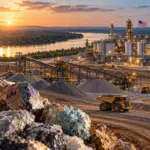

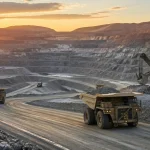
The scale of extraction required for Tanbreez involves significant logistical and operational planning.
According to project filings, HREEs represent approximately 27% of the total rare earth content at Tanbreez. Within this basket, Dysprosium (Dy) and Terbium (Tb) are the critical targets. These elements are essential for high-performance permanent magnets used in electric vehicle (EV) motors and offshore wind turbines, as they allow the magnets to maintain their properties at high operating temperatures.
Table 1: Tanbreez Project Snapshot (2026 Estimates)
| Metric | Detail |
|---|---|
| Deposit Type | Eudialyte-hosted Rare Earths |
| Total Rare Earth Content (TREO) | ~27% Heavy Rare Earth Elements (HREE) |
| Offtake Secured (LOIs) | ~25% of projected production |
| Key Partners | REalloys Inc. (15%), Ucore Rare Metals (10%) |
| Logistics | Year-round deep-water fjord access |
| Jurisdiction | Greenland (Kingdom of Denmark) |
The concentration of Dysprosium and Terbium in the Tanbreez ore body allows for a more favorable “basket price” compared to LREE-heavy deposits. This geological advantage is compounded by the project’s low thorium and uranium levels, which simplifies the permitting and processing requirements: a stark contrast to other Greenlandic projects like Kvanefjeld.
Greenland: A “Safe Harbor” in the Arctic
Greenland’s role as a mining jurisdiction has evolved rapidly. While the 2021 uranium ban effectively halted projects where uranium was a major byproduct, it clarified the regulatory landscape for “clean” mineral projects like Tanbreez.
The Greenlandic government, supported by the Kingdom of Denmark and increasingly aligned with EU Critical Raw Materials Act (CRMA) goals, has positioned the island as a stable, Western-aligned source of materials. For operators, Greenland offers:
- Low Sovereign Risk: A stable democracy with strong legal protections tied to Denmark.
- Geographic Proximity: Direct shipping routes to both North American and European ports via the North Atlantic.
- Logistical Innovation: Tanbreez benefits from year-round deep-water fjords, allowing for the direct export of concentrate without the need for extensive road or rail infrastructure.

Eudialyte ore is prized for its high ratio of heavy rare earth elements compared to traditional monazite or bastnasite sources.
However, the “Arctic discount” remains a reality. High energy costs and the necessity of building self-contained worker camps and power facilities mean that execution over speculation is the mandate for 2026. The Tanbreez team has focused on modular infrastructure to manage these costs, a strategy that is becoming the standard for remote operations.
Supply Chain Security: The EU and North American Nexus
The Tanbreez project sits at the intersection of two major strategic shifts. The European Union is targeting 10% of its critical raw material consumption from domestic extraction by 2030, while the United States is aggressively funding midstream processing to break the dependency on Chinese refining.
Tanbreez serves both masters. The concentrate produced in southern Greenland is designed to be shipped to facilities like those planned by REalloys and Ucore, where it will be separated into individual oxides and then reduced to metals. By controlling the source material, these Western companies can guarantee the provenance and ESG standards of their supply: a requirement that is becoming non-negotiable for automotive and defense contractors.
The geopolitical weight of the project was further highlighted by the establishment of the U.S.-Denmark-Greenland high-level working group. This group aims to coordinate security and resource development, ensuring that strategic assets like Tanbreez remain under the influence of the North Atlantic alliance.
The Path to 2030: Infrastructure and Milestones
Despite the commercial progress, the physical path to production remains challenging. As of mid-2026, the focus has shifted from exploration to final engineering and environmental mitigation.

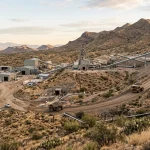
Advanced telemetry and real-time monitoring will be critical for managing the remote Tanbreez site efficiently.
The upcoming milestones for the project include:
- Finalization of Binding Offtakes: Converting the current LOIs into definitive, bankable supply contracts.
- Site Preparation: Beginning the construction of the modular processing plant and docking facilities at the fjord site.
- Financial Close: Securing the remaining debt and equity required to move into full-scale construction, likely involving support from export credit agencies.
While some industry analysts remain cautious about the aggressive timelines (with ground-breaking targeted for the late 2020s), the 15-year REalloys commitment significantly lowers the barrier to financing.
Analysis: A New Model for Rare Earth Mining
The Tanbreez project represents a new model for rare earth development. Unlike the first wave of REE explorers who focused solely on discovery, Critical Metals Corp. is focusing on the entire value chain. By securing the “tail end” of the process through long-term offtakes, they have effectively solved the most difficult part of the rare earth puzzle: who will buy the product?

Autonomous and high-capacity equipment will be necessary to overcome the high operating costs of the Greenlandic frontier.
For the mining industry at large, Tanbreez is a test case for Greenland’s viability as a major producer. If the project can navigate the logistical hurdles of the Arctic and meet its delivery obligations to REalloys, it will open the door for a surge of investment into other Greenlandic prospects, from graphite to base metals.
The era of Greenland as a “strategic reserve” is ending. The era of Greenland as an active, industrial contributor to the global energy transition is beginning.