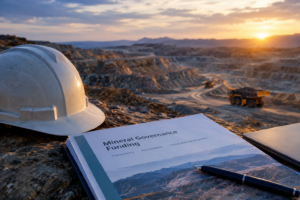
Artificial intelligence requires massive amounts of power.
Data centers run on constant electricity.
Mining companies provide the necessary fuel sources.
Mineral extraction builds the digital world’s foundation.
Copper, lithium, and uranium enable this growth.
Energy security is now a primary concern.
Global leaders are securing these vital resources.
This list highlights five key mining pioneers.
They drive the current AI-energy nexus forward.
Their work secures the global digital future.
Each leader manages a critical mineral supply.
Their decisions impact the entire tech sector.
Infrastructure demand continues to rise every day.
Investors watch these companies very closely now.
Mining is the backbone of modern intelligence.

1. Tim Gitzel (Cameco)
Tim Gitzel leads Cameco with clear vision.
Uranium is the ultimate baseload power source.
AI data centers need 24/7 carbon-free energy.
Gitzel is consolidating the Cigar Lake mine.
Cameco recently increased its ownership in the asset.
They purchased a stake from TEPCO Resources.
This deal cost roughly C$115.75 million dollars.
Cigar Lake is a world-class uranium mine.
It produces the highest grade ore globally.
The mine is located in northern Saskatchewan.
Production targets remain very strong for 2026.
Cameco aims for 18 million pounds annually.
Gitzel sees nuclear power as the solution.
Nuclear provides stable energy for tech giants.
Big tech companies are seeking nuclear contracts.
Microsoft and Amazon need massive power blocks.
Gitzel positions Cameco as a primary supplier.
The company also owns a stake in Westinghouse.
This vertical integration creates internal fuel demand.
Uranium prices reflect this new structural reality.
The uranium bull cycle is currently accelerating fast.
Gitzel manages the world’s most valuable assets.
His strategy secures long-term utility supply contracts.

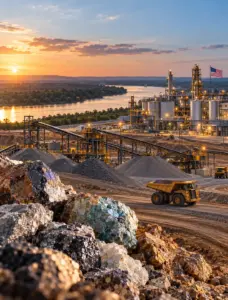
Cameco’s underground operations focus on high-grade uranium extraction.
2. Stuart Tonkin (Northern Star)
Stuart Tonkin manages Northern Star Resources effectively.
Gold serves as a strategic financial hedge.
Data centers require significant financial capital investment.
Elliott Management recently entered the company’s register.
The activist firm built a $1 billion stake.
This move followed Tonkin’s planned leadership transition.
Elliott seeks to unlock more shareholder value.
They want a thorough strategic company review.
Gold miners face higher operational costs lately.
Activist pressure often leads to asset sales.
Northern Star owns the Kalgoorlie Super Pit.
This is a tier-one gold mining operation.
The asset is critical for global production.
Tonkin navigated complex market conditions for years.
He grew Northern Star into a giant.
Investors now watch for a potential re-rating.
Gold remains a vital store of value.
The AI-driven economy needs stable financial backing.
Mining stocks are attracting major hedge funds.
Elliott Management sees deep value in gold.
Tonkin’s legacy involves massive production growth targets.
The strategic entry signals a new era.
Northern Star remains a top gold producer.

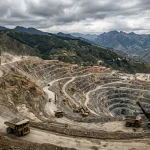
Northern Star manages large-scale open-pit gold assets in Australia.
3. Andrew Forrest (Fortescue)
Andrew Forrest champions the green energy transition.
Fortescue pursues a bold “Real Zero” target.
They want zero emissions by the year 2030.
Forrest avoids the use of carbon offsets.
He invests heavily in green hydrogen technology.
The company is building a massive green grid.
They committed US$6.2 billion to this goal.
AI requires sustainable power to grow responsibly.
Forrest believes mining must lead the change.
Fortescue is deploying electric mining equipment now.
They use AI to manage grid demand.
Their Pilbara operations now use solar power.
Renewable energy lowers their long-term fuel costs.
Forrest criticizes the slow pace of competitors.
He calls for the removal of diesel subsidies.
Green iron is the next major frontier.
Forrest sees high demand for green steel.
Technology companies want low-carbon supply chains.
Fortescue delivers minerals with a green footprint.
The transition requires massive new solar farms.
Forrest builds the infrastructure for tomorrow’s energy.
His vision combines mining with tech innovation.


Fortescue is transitioning its massive haulage fleet to zero-emission power.
4. Jakob Stausholm (Rio Tinto)
Jakob Stausholm pushes the Resolution Copper project.
Copper is essential for all AI infrastructure.
Data centers use miles of copper wiring.
The US needs domestic copper supply chains.
Resolution Copper could meet 25% of demand.
Stausholm recently cleared a major legal hurdle.
The Ninth Circuit Court allowed a land swap.
This project sits deep in Arizona’s crust.
It is one of the largest deposits globally.
Rio Tinto partners with BHP on this.
Stausholm lobbied the US government for approval.
Energy security depends on domestic mineral mining.
Copper prices are reaching new record highs.
The copper supercycle is now a market reality.
Stausholm focuses on tier-one long-life assets.
He transitioned Rio Tinto toward critical minerals.
Resolution Copper faces some ongoing local opposition.
The company is committed to UN principles.
They seek free and prior community consent.
Stausholm believes in the project’s strategic value.
American technology needs this Arizona copper ore.
The mine will support thousands of jobs.
Rio Tinto secures the future of electrification.
More Read
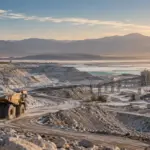

Resolution Copper aims to be a primary source for US tech.
5. Peter Oliver (Q2 Metals)
Peter Oliver chairs Q2 Metals with focus.
The Mia Lithium Project is a priority.
Lithium feeds the AI-driven battery surge today.
The company recently delivered massive drill intercepts.
These results show high-grade lithium mineralization.
The project is located in Quebec’s James Bay.
Quebec is a premier mining jurisdiction now.
Oliver sees a supply gap coming soon.
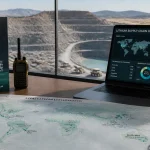
The 2026 Lithium Power Map shows rising demand.
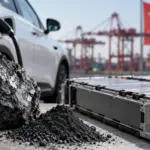
AI devices need advanced lithium-ion battery storage.
Electric grids use batteries to store power.
Q2 Metals explores for hard-rock spodumene ore.
Spodumene is the preferred source for batteries.
The Mia project continues to expand rapidly.
Oliver brings decades of industry experience here.
He previously led major lithium production companies.
Junior miners are essential for discovery success.
The AI nexus requires new mineral discoveries.
Oliver positions Q2 Metals for potential takeover.
Major miners seek to acquire lithium assets.
The market reset favors high-quality exploration projects now.
Q2 Metals is a key explorer to watch.

Mineral exploration at the Mia project targets high-grade lithium.
The Mining Backbone of AI
The AI revolution is not just software.
It requires massive amounts of physical hardware.
Hard infrastructure demands huge volumes of minerals.
These five leaders secure the global supply.
They manage the mines that power intelligence.
Investors must look at the supply side.
Energy and minerals are the new gold.
Skillings Mining Review monitors these key players.
The 2026 landscape is defined by resource.
Mining is more important than ever before.
Our digital future starts in the ground.
By Charles Pitts