By Charles Pitts

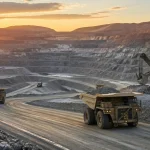
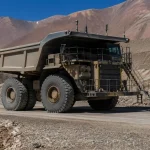
In the early morning mist of a Tier-1 copper operation in the Andes, a fleet of 400-tonne haul trucks moves with a rhythmic, mathematical precision that would have been unrecognizable a decade ago. There are no operators in the cabs, no shift-change pauses, and no variability in braking patterns. This is the reality of mining in 2026, where Autonomous Haulage Systems (AHS) have transitioned from high-cost experiments to the baseline requirement for staying competitive in a high-inflation environment.
For years, the industry debated whether the steep upfront capital expenditure for AHS could be justified. In 2026, the data is in. With the global autonomous truck market reaching an estimated $46.6 billion this year, the shift is no longer driven by novelty but by the brutal necessity of lowering the All-In Sustaining Cost (AISC) in an era of volatile energy prices and labor shortages.
The Economics of Autonomy: Where the Savings Live
The transition to autonomous hauling is often framed as a labor-saving play, but the true economic impact is a multi-layered reduction in operating expenses (OPEX). While removing the operator eliminates a significant salary and benefits line item, the most profound savings are found in the “invisible” efficiencies of machine consistency.
1. Fuel Efficiency and Smoother Acceleration
Autonomous trucks do not experience fatigue, nor do they “push” the engine unnecessarily to make up for a late start. Data from 2026 deployments indicates that AHS-equipped fleets achieve between 5% and 15% better fuel economy per tonne moved compared to manned fleets. By optimizing speed on grades and maintaining consistent throttle positions, the system avoids the aggressive acceleration and harsh braking that characterize human-driven cycles. In a 2026 landscape where fuel costs remain a top-three expense for open-pit operators, this 10% average reduction can represent millions in annual savings.
2. Tire Life Extension
Tires for ultra-class haul trucks remain one of the most constrained and expensive consumables in the industry. Human operators, even those with years of experience, occasionally clip berms or take corners too sharply, leading to sidewall damage or accelerated tread wear. Autonomous systems follow a “digital rail”: a geofenced path accurate to within centimeters. This precision has resulted in a 15–20% increase in tire life across several 2026 case studies. When each tire can cost upwards of $50,000, extending their life by 20% across a fleet of 50 trucks provides a direct boost to the bottom line.


Productivity and the 22-Hour Day
The most significant advantage of AHS in 2026 is the near-elimination of “non-productive time.” In a traditional manned operation, the clock stops for shift changes, lunch breaks, and operator fatigue management. These small gaps add up to hours of lost production every day.
Autonomous trucks, by contrast, are designed to operate for 22 out of every 24 hours. The remaining two hours are reserved for fueling and scheduled maintenance.
Key Productivity Drivers in 2026:
- Continuous Operation: No downtime for operator swaps on the pit floor.
- Predictable Cycle Times: Tighter distributions in cycle time allow for better dispatching and fewer queues at the primary crusher.
- Higher Throughput: Mines deploying AHS at scale report a 15–30% increase in total tonnes hauled per truck per year.
For many operators, this productivity uplift means they can achieve their production targets with a fleet that is 15% smaller than originally planned, significantly reducing the initial capital outlay and subsequent maintenance overhead.
Market Snapshot: Manned vs. Autonomous Performance (2026 Benchmarks)
The following table outlines the comparative performance metrics observed in large-scale open-pit operations as of Q2 2026.
| Metric | Manned Fleet (Avg) | Autonomous Fleet (Avg) | Delta / Impact |
|---|---|---|---|
| Utilization (Hrs/Day) | 17.5 – 18.5 | 21.0 – 22.5 | +20% Capacity |
| Fuel Consumption | Baseline | 8% – 12% Reduction | Significant OPEX Saving |
| Tire Life (Hours) | 4,500 | 5,400 – 5,850 | 20% Life Extension |
| HPIs (per 1M Hours) | 4.2 | 0.6 | 85% Reduction |
| Haulage Cost per Tonne | $1.15 | $0.86 – $0.98 | 15-25% Cost Reduction |
Source: Skillings Mining Intelligence internal analysis and OEM aggregate data.
Safety as an Economic Driver
While productivity and fuel are easily quantified, the safety impact of autonomous hauling is perhaps its most transformative feature. In 2026, the “Red Zone”: the area of the pit where heavy machinery and light vehicles interact: is increasingly human-free.
High-potential incidents (HPIs), such as vehicle-on-vehicle collisions or berm breaches, have dropped by more than 80% in mines that have fully transitioned to AHS. This isn’t just a social or ethical win; it’s an economic one. A single major collision can shutter a haul road for days, triggering investigations, insurance premiums hikes, and massive production losses. By removing human error: the root cause of over 90% of mining incidents: automation provides a level of operational “insurance” that traditional fleets cannot match.

Implementation: The 2026 Reality Check
Despite the clear benefits, the transition to autonomous hauling is not a “plug-and-play” solution. Success in 2026 depends on more than just the hardware.
1. The Infrastructure Barrier
Autonomous trucks require robust, low-latency communication networks. Many 2026 sites have invested heavily in private 5G networks to ensure the fleet remains connected even in the deepest parts of the pit. Without this digital foundation, the cost savings are quickly eroded by “system-halt” events where trucks stop moving due to signal loss.
2. The Workforce Shift
The narrative of automation replacing workers has shifted in 2026 to one of “re-skilling.” While there are fewer drivers in the pit, there is a burgeoning demand for fleet controllers, data analysts, and AHS maintenance technicians. These roles are often performed in comfortable, climate-controlled environments: like those seen in the latest project updates: improving the industry’s ability to attract younger talent who may be averse to traditional site-based work.
3. Brownfield vs. Greenfield
In 2026, we are seeing a surge in brownfield retrofits. Technology kits now allow older trucks to be converted to autonomous operation for a fraction of the cost of a new machine. This has democratized the technology, allowing mid-tier miners to compete with the majors on haulage efficiency.

2026 Outlook: The Bottom Line
The business case for autonomous haul trucks has matured. In 2026, the question for a board of directors is no longer “Can we afford to go autonomous?” but “Can we afford not to?”
With labor costs rising and the grades of major deposits declining, the 10–30% reduction in load-haul cost per tonne offered by AHS is often the difference between a project’s viability and its suspension. As we look toward the 2026 supply gaps in critical minerals like lithium, the efficiency of the haulage fleet will be the primary lever for meeting global demand.
The “Lights-Out” pit: an operation that runs autonomously with minimal human intervention: is no longer a futurist’s dream. It is a 2026 operational standard that is reshaping the mining industry’s cost curve from the ground up.