By Charles Pitts

LUSAKA, Zambia : The Zambian government has formalized a series of aggressive tax reforms aimed at revitalizing its copper sector, signaling a definitive move to reach a national production target of 3 million tonnes (Mt) per year by 2031. The policy shift, which addresses long-standing industry grievances over “double taxation,” comes as global mining news focuses on a projected supply crunch driven by the rapid expansion of energy-intensive technologies.
President Hakainde Hichilema’s administration has pivoted toward a more stable, price-based royalty regime, a move that major operators including First Quantum Minerals and Barrick Gold say has already unlocked billions in deferred capital expenditure. By aligning the fiscal framework with international standards, Zambia seeks to position itself as the primary alternative to traditional copper hubs in South America, where regulatory uncertainty has slowed project pipelines.
Ending the “Double Taxation” Era
Central to the new regime is the deductibility of mineral royalties for corporate income tax purposes. Historically, Zambian miners were taxed on gross revenue through royalties without the ability to offset those payments against their final income tax liability: a practice the industry argued stifled reinvestment.
“The previous system was essentially a tax on a tax,” noted a regional mining analyst based in Lusaka. “By allowing deductibility, the government is effectively lowering the breakeven point for low-grade or deep-level operations. It’s a pragmatic admission that to get to 3Mt, the state needs to share the risk of price volatility with the operator.”

The reforms also refine the sliding-scale royalty structure, which now adjusts more predictably based on London Metal Exchange (LME) copper prices. This stability is intended to replace the “nine revisions in fifteen years” that characterized the previous two decades of Zambian mining policy, providing the 10-year visibility required for large-scale development.


Corporate Giants Respond with Multi-Billion Dollar Commitments
The fiscal pivot has already triggered a wave of “proof of concept” investments from the Copperbelt’s largest stakeholders.
First Quantum Minerals (FQM), the country’s largest producer, announced a US$1.3 billion investment package shortly after the initial tax signals were sent. The funds are earmarked for the expansion of the Kansanshi copper mine and the completion of the Enterprise nickel project. FQM’s commitment is viewed as a bellwether for the region, suggesting that the “New Dawn” administration’s policies are translating into tangible operational growth.
Simultaneously, Barrick Gold has signaled a major expansion at its Lumwana mine. Mark Bristow, Barrick’s President and CEO, has stated that the revised tax regime provides the necessary cash flow to transform Lumwana into a “tier-one” asset. The company has extended the mine’s life-of-mine (LOM) to 2060, with plans to scale production significantly through the development of a “super pit” that would consolidate several smaller operations into one massive, low-cost extraction site.
The Macro Driver: Copper Demand and the 2026 AI Nexus
While Zambia’s internal reforms provide the supply-side incentive, the global demand forecast provides the urgency. A critical emerging pillar of the copper bull case is the explosive growth of high-performance computing.
Industry projections for copper demand AI data centers 2026 suggest that the infrastructure required to support generative AI: including high-voltage cabling, massive power transformers, and advanced liquid cooling systems: will require hundreds of thousands of tonnes of incremental copper annually. Unlike traditional office buildings, AI-specialized data centers require significantly more copper per square foot to handle the high power density of modern GPUs.
Combined with the ongoing electrification of the global vehicle fleet and the expansion of renewable energy grids, the 2026-2030 window is expected to see a structural deficit. Zambia’s target to more than triple its current output of approximately 800,000 tonnes per year is a direct attempt to capture this premium market share.

Data Points: Zambia’s Path to 3Mt
To reach the 3Mt threshold, Zambia must not only expand existing mines but also accelerate exploration through advanced technology. KoBold Metals, a Silicon Valley-backed firm using AI to map mineral deposits, is currently developing the Mingomba project. Analysts suggest Mingomba could become one of the highest-grade copper mines in the world, utilizing machine learning to bypass traditional exploration bottlenecks.
| Project / Operator | Current Status | Projected Capacity (ktpa) | Key Development |
|---|---|---|---|
| Kansanshi (FQM) | Expansion Underway | 250+ | US$1.25bn S3 expansion |
| Lumwana (Barrick) | Feasibility / Expansion | 240+ | Transition to “Super Pit” model |
| Konkola Copper Mines | Restart / Ramp-up | 200+ | Resolution of legal ownership |
| Mingomba (KoBold) | Exploration / Development | 300+ | AI-driven deposit mapping |
| Mopani Copper Mines | Recapitalization | 200+ | New strategic partner (IRH) |
Data compiled from Skillings Mining Intelligence and company filings.
Regulatory Headwinds: The Minerals Regulation Commission Bill
Despite the fiscal optimism, the road to 3Mt is not without friction. The Zambian government is currently debating the Minerals Regulation Commission Bill, which proposes the creation of a new, more powerful regulator.
Critics, including the Zambia Chamber of Mines, have expressed concern that the bill could allow for state intervention in private exploration licenses or require “carried interests” for the government in new projects. While the tax reforms have improved the cost of doing business, the regulatory bill has introduced a new layer of jurisdictional concern.
“Investors hate a vacuum, but they fear an overreach even more,” said one mining executive. “The tax reforms are the carrot; the industry is watching closely to ensure the new regulator doesn’t become the stick.”
Operational Outlook: Scaling the Infrastructure
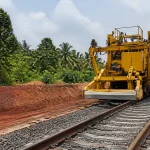
Achieving the 2031 target will require more than just fiscal stability. Zambia faces significant logistical hurdles, including power reliability and cross-border transport bottlenecks. The government has prioritized the Lobito Corridor: a rail link connecting the Copperbelt to the Atlantic port of Lobito in Angola: to reduce reliance on the congested South African ports of Durban and Richards Bay.
Furthermore, the expansion of copper production will require a concomitant increase in energy supply. With climate-driven droughts impacting Zambia’s hydroelectric capacity, the mining sector is increasingly turning to private-sector solar and wind projects to de-risk their power requirements.

Conclusion
The Zambian tax reforms represent a high-stakes bet on the “Red Metal.” By dismantling the “double taxation” structure and focusing on fiscal predictability, the Hichilema administration has secured the first wave of capital needed to stay competitive in a global market defined by the energy transition and AI-driven infrastructure demand.
As Barrick and First Quantum ramp up their respective Copperbelt footprints, the success of the 3Mt target will ultimately depend on whether the government can balance its need for state oversight with the industry’s requirement for operational autonomy. For now, the “New Dawn” for Zambian mining appears to be yielding its first major dividends.
Related Analysis from Skillings: