By Charles Pitts

The intersection of artificial intelligence and global energy demand has moved from a theoretical “what if” to the primary driver of mining valuations in June 2026. This week, the market is not just watching commodity prices; it is watching the infrastructure, the activists, and the logistics kings who control the flow of electrons and atoms. From high-stakes board sessions in Perth to autonomous dynamite blasts in Utah, the industry is recalibrating for a future where a mine is as much a data center as it is a hole in the ground.
Here is the 10-player Power List defining the mining market this week.
1. Elliott Investment Management: The Catalyst
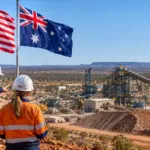
Elliott Management has officially moved from the sidelines to the center of the ring. With a significant stake in Northern Star Resources, the activist juggernaut is testing the thesis that even major gold producers cannot hide behind “leadership transitions” when operational performance lags. Elliott’s public demand for a formal strategic review has effectively put one of the world’s premier gold miners “in play.” In a week where capital efficiency is the only metric that matters, Elliott is the force reminding boards that the 2026 market has zero patience for guidance cuts.
2. Northern Star Resources: The Target
Northern Star finds itself at a historical crossroads. While Chair Michael Chaney has rejected Elliott’s push for a sale, the focus on the Kalgoorlie processing issues has exposed a broader industry nerve: the rising cost of complexity. For Northern Star, this week is a battle for narrative control. Can they convince the market that their “portfolio configuration” is optimal, or will the gravitational pull of activist-driven restructuring prove too strong? Their status on this list is a bellwether for the entire mid-tier gold sector.
More Read


3. Mariana Minerals: The Autonomous Pioneer
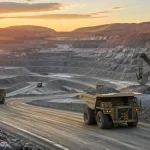
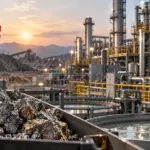
If you wanted a glimpse of the 2030s, you looked at Utah this week. Mariana Minerals has successfully restarted the “Copper One” project as the world’s first autonomy-first mine and refinery. By integrating their MarianaOS: a software stack managing everything from robotic haul trucks to heap bioleaching: they are betting that the labor shortages of the 2020s can be engineered away. With 50,000 metric tons per year in their sights, Mariana is proving that “Frontier Mining” isn’t just about geography; it’s about the tech stack.
4. Cameco Corp: The Uranium Logistics King
Uranium is no longer just a commodity; it is a logistics game. As the AI-driven data center boom demands 24/7 carbon-free power, Cameco’s role as the Western anchor of the nuclear fuel cycle has never been more critical. This week, the focus is on their ability to navigate the increasingly complex web of global transport and delivery. In a market where supply is tight and the geopolitical map is shifting, Cameco’s mastery of the “last mile” in nuclear fuel delivery keeps them at the top of the power list.
More Read

5. KoBold Metals: The AI Prospector
KoBold continues to redefine exploration through its “Terra” AI platform. While traditional exploration often feels like a high-stakes guessing game, KoBold’s data-first approach has made them the darling of investors looking for the next Zambian copper elephant. This week, the industry is closely watching their latest drilling results, which serve as a real-time validation of whether machine learning can truly shorten the discovery-to-development pipeline for critical minerals.
6. Nvidia: The Invisible Miner
Nvidia doesn’t own a single excavator, yet they are perhaps the most influential entity in the mining sector today. From the chips powering Mariana Minerals’ autonomous fleet to the Blackwell-Mining Systems being integrated into global control rooms, Nvidia is the “Intel Inside” of the modern mine. As the energy nexus tightens, Nvidia’s hardware is what allows miners to optimize crushing and grinding: the industry’s biggest power hogs: in ways that were impossible three years ago.
7. Microsoft: The Ultimate Off-taker
Microsoft’s appetite for carbon-free power is reshaping mining finance. By signing massive, multi-decade offtake agreements for clean energy and the critical minerals needed to build it, Microsoft has effectively become a shadow financier for the industry. Their “Energy Nexus” strategy is forcing miners to prove their ESG credentials before the first drill bit hits the ground. If you want to build a mine in 2026, you don’t just talk to banks; you talk to Redmond.
8. Orano: The Processing Powerhouse
While Cameco handles the logistics, France’s Orano remains the master of the uranium fuel cycle’s most complex technical hurdles. Their specialized transport and storage solutions are the backbone of the European and North American nuclear renaissance. This week, Orano’s focus on recycling and integrated logistics has made them indispensable as utilities scramble to secure fuel for the next generation of Small Modular Reactors (SMRs).
9. Rio Tinto: The Legacy Innovator
Rio Tinto is proving that you can teach an old dog new tricks: if the dog has enough capital. Their Nuton bio-leaching technology and heavy investment in AI-driven operational efficiency have kept them relevant in a market dominated by tech-first upstarts. This week, Rio’s ability to integrate high-tech solutions into their massive iron ore and copper footprints shows that the giants are not ready to cede the “innovation” tag to the juniors just yet.
10. The International Seabed Authority (ISA): The Gatekeeper
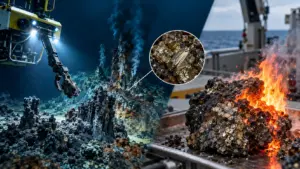
Frontier mining has a new regulator-in-chief. As the race for polymetallic nodules in the Clarion-Clipperton Zone heats up, the ISA is the entity that determines who gets to tap the ocean floor. This week, as new regulations regarding deep-sea mining technology come under scrutiny, the ISA’s decisions are the only thing standing between the status quo and a literal sea change in global mineral supply.
The Frontier Outlook: AI vs. Infrastructure
The divergence in the market this week is clear. Companies that have solved the “Energy-AI Nexus” are trading at a premium, while those struggling with legacy operational issues (like Northern Star) are facing the wrath of activists.
| Company / Entity | Primary Power Driver | 2026 Strategic Focus |
|---|---|---|
| Mariana Minerals | Autonomous Tech | 50ktpa Copper Production |
| Cameco | Uranium Logistics | Secure Western Supply Chain |
| Elliott Management | Activist Capital | Unlocking Mid-Tier Value |
| Nvidia | Processing AI | Mining Control Systems |
| The ISA | Regulation | Deep-Sea Permitting |
Why It Matters for Operators and Investors
For the mine manager in 2026, the takeaway is simple: energy efficiency is no longer an ESG “nice-to-have”: it is the core of your operational margin. For the investor, the “Mining Power List” highlights that the highest returns are no longer found in just “finding ore,” but in the China critical minerals strategy or in the companies that can deliver that ore using 40% less energy and 0 human cab-operators.
As we look toward the second half of 2026, the question is not whether mining will change, but who will be left standing when the AI-Energy Nexus fully consolidates the market.