By Charles Pitts

FORT SASKATCHEWAN, Alberta : Sherritt International Corp. has officially shuttered its nickel and cobalt refinery in Fort Saskatchewan, Alberta, after a tightening web of U.S. sanctions on Cuba severed the facility’s primary feedstock supply. The closure marks a major turning point for North America’s battery materials sector. As a result, Canada loses its only domestic source of refined cobalt. It also loses a major producer of high-purity Class I nickel.
The shutdown, announced June 22, 2026, follows the exhaustion of mixed sulfide inventories that were previously shipped from the Moa joint venture in Cuba. While the refinery had been operating on stockpiled material since early May, the prolonged suspension of the Moa mining operations: triggered by secondary sanctions from the U.S. Treasury: has left the Alberta facility without the raw materials required to sustain production.
The Sanctions Trigger: GAESA and the Moa Disruption
The operational paralysis began on May 7, 2026, when the U.S. Treasury’s Office of Foreign Assets Control (OFAC) imposed sweeping sanctions on GAESA, the Cuban military-run conglomerate that oversees significant portions of the island’s economy, including its mining interests. Critically, the sanctions extended to Moa Nickel S.A., the joint venture in which Sherritt holds a 50% interest.
Unlike earlier sanctions, these measures include broad secondary provisions. As a result, the U.S. government can penalize foreign companies and financial institutions that continue doing business with sanctioned Cuban entities. For Sherritt, a Canadian company with deep ties to the U.S. financial and logistics networks, the risk of being de-banked or excluded from American markets forced an immediate suspension of its participation in the Moa joint venture.
More Read

“The decision to idle the Fort Saskatchewan refinery is the direct result of the supply chain disruption originating at the Moa site,” the company stated in its latest operational update. “While we continue to evaluate legal and diplomatic avenues, the current regulatory environment makes it impossible to continue the flow of mixed sulfides into Canada.”

Supply Chain Impact: Cobalt and Nickel Markets in Flux
The Fort Saskatchewan refinery is not just a corporate asset; it is a strategic hub for the North American energy transition. It specializes in the hydrometallurgical processing of lateritic ores into high-purity nickel and cobalt metals and chemicals.
1. Cobalt Shortfall
Canada’s reliance on Sherritt for domestic cobalt refining is absolute. The refinery typically produces cobalt in the form of briquettes and powders, which are essential for the production of aerospace alloys and lithium-ion batteries. With this facility offline, North American battery manufacturers may be forced to look further afield: primarily to Chinese refineries or high-cost European alternatives: to secure processed cobalt that complies with the U.S. Inflation Reduction Act (IRA) sourcing requirements.
More Read

2. Class I Nickel Constraints
While the global nickel market has seen a surplus of Class II nickel (nickel pig iron) from Indonesia, the supply of Class I nickel: the high-purity material required for the London Metal Exchange (LME) and for high-performance EV batteries: remains more balanced. The removal of Sherritt’s output from the Western market tightens the availability of Western-produced Class I nickel at a time when copper deficits and critical mineral squeezes are already weighing on industrial consumers.

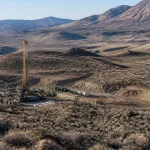
Close-up of nickel ore formation embedded in a hard rock wall, highlighting the raw material essential for the energy transition.
Market Snapshot: Sherritt Operational Metrics (Pre-Closure)
The following table outlines the scale of production that has been removed from the market following the June 2026 shutdown.
| Metric | Annualized Capacity (Est.) | Primary Market Impact |
|---|---|---|
| Refined Nickel (Class I) | 35,000 Tonnes | Aerospace, EV Batteries, Stainless Steel |
| Refined Cobalt | 3,500 Tonnes | Superalloys, Battery Cathodes |
| Ammonium Sulphate | 250,000 Tonnes | Western Canadian Agricultural Fertilizer |
| Feedstock Source | Moa, Cuba (Mixed Sulphides) | Direct Geopolitical Exposure |
The Fertilizer Fallout: A Secondary Shock
The shutdown has unexpected consequences beyond the metals market. The Fort Saskatchewan refinery is a major producer of ammonium sulphate, a byproduct of the metal refining process that serves as a critical fertilizer for the Western Canadian agricultural sector.
Industry analysts suggest that the loss of this domestic supply could lead to localized price spikes for farmers in Alberta and Saskatchewan. “Any prolonged drop in output removes a significant volume of high-quality fertilizer from the market during a period where global logistics are already strained,” noted one regional agricultural economist.

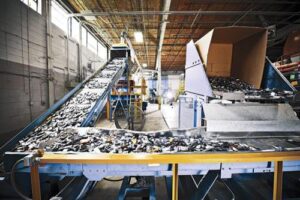
A mining operations control room where specialists coordinate logistics and oversee real-time data integration.
Stock Reaction and Financial Outlook
Sherritt (S.TO) shares have faced intense downward pressure since the initial sanctions announcement in May. The transition from “potential impact” to a “full shutdown” has exacerbated investor concerns regarding the company’s liquidity and its ability to service debt without the cash flow generated by its core metallurgical business.
As of late June 2026, Sherritt has moved into a “care and maintenance” phase. The company plans to keep essential staff on-site to maintain the integrity of the high-pressure acid leach (HPAL) equipment and the feed pipeline, but hundreds of operational roles are expected to be furloughed.
The financial community is now closely watching for any signs of a “sanctions carve-out” or a diplomatic resolution between Ottawa and Washington. However, given the current geopolitical climate, a rapid reversal of U.S. policy toward Cuban-linked entities appears unlikely.
Strategic Implications for Canada’s Critical Minerals Strategy
The closure of the Fort Saskatchewan refinery highlights a glaring vulnerability in Canada’s Critical Minerals Strategy. While the federal government has committed billions to developing new mines and processing hubs, the loss of an existing, functional refinery due to foreign policy shifts elsewhere illustrates the fragility of the “friend-shoring” model.
If Sherritt cannot find an alternative source of feedstock: a difficult task given that the refinery was specifically engineered to process the unique chemical signature of Moa’s mixed sulfides: Canada may face a multi-year gap in its domestic cobalt refining capacity. This could hamper efforts to attract more battery cell manufacturing to Ontario and Quebec, where companies have cited “end-to-end domestic supply chains” as a primary reason for investment.

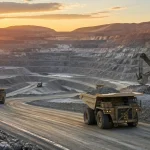
Large-scale hauling logistics that are critical to the movement of ore from mine sites to refineries.
2026 Outlook: Base, Bull, and Bear Cases
The future of the Fort Saskatchewan facility rests on three potential scenarios for the remainder of 2026:
- Base Case: The refinery remains in care and maintenance through the end of the year. Sherritt explores sourcing third-party intermediate products from Australian or Indonesian producers, though the technical challenges of retrofitting the refinery for new feedstock remain high.
- Bull Case: A diplomatic breakthrough leads to a specific OFAC license for Sherritt, allowing for the resumption of “legacy” shipments from Moa. This would allow for a rapid restart of operations by Q4 2026, restoring critical mineral supply to North America.
- Bear Case: The refinery remains shuttered indefinitely. Sherritt is forced to take a significant impairment charge on the Alberta asset, and the site eventually transitions from a production facility to a logistics terminal, permanently ending Canada’s domestic cobalt refining capability.
For now, the industrial heart of Fort Saskatchewan remains quiet. The steam plumes that once signaled 24/7 production have dissipated, replaced by the uncertainty of a global supply chain caught in the crosshairs of geopolitical rivalry.
For more in-depth analysis on the evolving critical minerals landscape, read our recent report on Antimony Price Breakouts and how the U.S. Pentagon is betting on domestic rare earth dominance.