By Charles Pitts

The narrative of Australian mineral exploration has long been dominated by the “Big Three”: iron ore, gold, and nickel. However, a recent breakthrough in the remote West Musgrave region is forcing a rewrite of the continent’s geological potential. Terra Metals (ASX: TMK) has announced a significant intercept at its Dante Project, uncovering a 157-meter interval of continuous Platinum Group Element (PGE) reef mineralisation.
With a headline grade of 1.27 g/t PGE3 (platinum, palladium, and gold), the discovery at the “Southwest” prospect represents more than just a successful drill hole; it signals the identification of a Bushveld-style layered mafic intrusion on Australian soil. For industry veterans and investors alike, the implications are profound. This discovery suggests that Western Australia may finally host a PGM province capable of competing with the world-class deposits of South Africa’s Bushveld Complex and Russia’s Norilsk.
The Southwest Breakthrough: Dimensions and Data
The primary catalyst for this shift in sentiment is the sheer scale of the mineralised intercept. Reverse circulation (RC) drilling at the Southwest prospect returned 157 meters of continuous reef mineralisation from nearly surface. Within this massive interval, the 1.27 g/t PGE3 grade stands out not for its peak intensity, but for its remarkable consistency.
Unlike narrow-vein deposits that require complex underground mining, the Dante Project’s reef appears to be a bulk-tonnage, near-surface prospect. The Southwest system has now been traced across a 950-meter strike length and remains open in all directions. This continuity is a hallmark of the “Giles Complex,” a suite of rocks that geologists have long suspected could host massive magmatic sulphide and reef-style deposits.
More Read



The mineralisation identified includes not only platinum and palladium but significant credits of copper, nickel, and cobalt. This multi-commodity profile aligns with the global shift toward critical minerals required for the energy transition. As analyzed in recent copper deficit forecasts, the inclusion of copper as a byproduct in PGM operations can significantly lower the net cost of production, enhancing the project’s overall economic resilience.
Comparing Dante to the Global Gold Standard: The Merensky Reef
To understand why a 157-meter intercept at 1.27 g/t PGE3 is revolutionary, one must look to South Africa. The Bushveld Igneous Complex is the world’s premier source of PGMs, specifically the Merensky Reef and the UG2 Chromitite Layer.
More Read

The Merensky Reef typically grades between 4.0 and 6.0 g/t 3PGE. At first glance, Dante’s 1.27 g/t might seem modest by comparison. However, the critical difference lies in the thickness.
- Merensky Reef: Typically less than 1 meter thick. Mining requires labor-intensive, deep underground operations, often exceeding 1,000 meters in depth.
- Dante Southwest Reef: 157 meters thick. The mineralisation starts just 5 meters below the surface.
In mining, “grade is king,” but “margin is the emperor.” A 1.27 g/t reef that can be mined via a low-cost, high-volume open pit is an entirely different economic beast than a 5 g/t reef that must be chased miles underground. The “thickness-to-grade” ratio at Dante suggests a potential for multi-generational mine life with operational flexibility that underground PGM mines simply cannot match.
Strategic Location: The West Musgrave Context
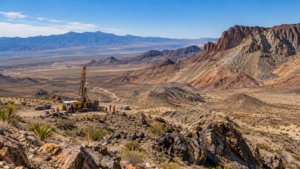
The Dante Project does not exist in a vacuum. It is situated in the West Musgrave region, a frontier province that is rapidly maturing into a major industrial hub. The project is located in close proximity to BHP’s West Musgrave project (formerly OZ Minerals), which hosts the world-class Nebo-Babel nickel-copper deposits.
The infrastructure footprint being established by BHP: including renewable energy hubs, haulage roads, and processing facilities: significantly de-risks regional exploration for companies like Terra Metals. The “neighborhood effect” in the Giles Complex is real; the geological processes that formed Nebo-Babel are related to the magmatic events that created the Jameson Layered Intrusion, which hosts the Dante Reefs.

This regional synergy is essential for mining finance in the digital age, where institutional investors prioritize projects that can leverage existing infrastructure to reduce initial capital expenditure (CAPEX).
The Path to 2026: Maiden Resource and Technical Hurdles
While the discovery is significant, Terra Metals is now entering the “definition” phase of exploration. The immediate focus for the remainder of 2025 and into early 2026 is the delivery of a maiden JORC-compliant Mineral Resource Estimate (MRE).
Key milestones on the path to 2026 include:
- Infill Drilling: Testing the 950m strike to confirm internal grade continuity and identify higher-grade “sweet spots” within the 157m envelope.
- Metallurgical Testing: Confirming the recovery rates for the PGEs, copper, and nickel. Initial indicators suggest the sulphides are coarse-grained, which typically bodes well for conventional flotation processing.
- Step-out Drilling: Testing the extension of the Southwest prospect along the projected 42km of strike length that remains largely untested at depth.
The transition from “discovery” to “resource” is where many exploration stories falter. However, the thickness of the Dante Reef provides a substantial buffer. Even a slight variation in grade across a 157-meter interval allows for massive tonnage accumulation, which is the cornerstone of Tier-1 asset development.
Redefining Australia’s PGM Potential
For decades, Australia’s PGM production has been largely limited to byproduct output from nickel mines. Terra Metals’ Southwest discovery changes that dynamic. It presents a legitimate path toward a standalone PGM-focused operation that utilizes the scale of the Giles Complex to overcome the grade-heavy dominance of the Bushveld.

As the world looks to diversify supply chains for critical minerals, discoveries like the 157m Dante Reef are no longer just geological curiosities: they are strategic assets. If the 2026 maiden resource confirms the scale and continuity suggested by current drilling, Dante will not only redefine Western Australia’s mineral potential; it will secure Australia’s place as a global player in the platinum group metals market.