By Charles Pitts

WASHINGTON, D.C. : President Donald Trump signed an executive order on Tuesday, July 14, 2026, that drastically reduces the size of two major national monuments in Utah, effectively opening nearly 3 million acres of federal land to mining, drilling, and energy development. The order slashes the Bears Ears and Grand Staircase-Escalante national monuments by approximately 90% each, a move the administration describes as a necessary step to secure the domestic supply chain for critical minerals and restore “energy dominance.”
The combined protected area, which spanned roughly 3.23 million acres under the previous administration, will be reduced to approximately 303,000 acres. This policy reversal targets mineral-rich regions that contain significant deposits of uranium, coal, copper, silver, and zinc: resources that Interior Secretary Doug Burgum characterized as vital to U.S. national security.
“For too long, the federal government has locked up our own natural wealth behind arbitrary boundaries,” Secretary Burgum stated during the signing ceremony. “Today, we are treating America’s public lands as the strategic assets they are. We are moving at Trump speed to ensure that the minerals required for our defense and technology sectors are mined right here at home.”
The Mineral Wealth of the San Juan and Kane Basins
The reduction of Bears Ears National Monument in San Juan County is particularly significant for the domestic uranium sector. The region hosts some of the most productive uranium and vanadium districts in the United States, including the White Canyon and Elk Ridge districts. With the global race for nuclear fuel intensifying, opening these federal lands provides immediate access to hundreds of existing claims that were previously restricted.
More Read

In Kane and Garfield Counties, the Grand Staircase-Escalante reduction centers on the Kaiparowits Plateau. This area overlies one of the largest coal fields in the country, with an estimated 11.36 billion tons of recoverable coal. Beyond fossil fuels, the plateau and surrounding regions have recently been identified as high-potential targets for cobalt, copper, and nickel: minerals essential for the battery and semiconductor industries.

The move comes at a time when analysts are closely watching the copper deficit forecast for 2026, as global supply struggles to meet rising industrial demand. By removing monument protections, the administration aims to fast-track exploration in these high-grade zones.

High-capacity processing infrastructure is expected to see renewed investment as uranium districts in Utah are reopened to extraction.
More Read

National Security and the Critical Minerals Pivot
The July 14 order is part of a broader “Critical Minerals Dominance” strategy spearheaded by Secretary Burgum. The Interior Department has been tasked with identifying all emergency authorities to accelerate the permitting and leasing of federal lands. This includes a review of all public lands currently withdrawn from mining, with an eye toward those hosting “Tier 1” strategic materials.
The administration’s stance is that domestic production is the only viable hedge against foreign supply chain vulnerabilities. This echoes previous shifts in critical minerals investment, where the federal government has increasingly sought to incentivize domestic extraction over international reliance.
“This isn’t just about mining; it’s about defense,” said one senior Interior official. “When you look at the geopolitics of antimony and other defense-critical metals, you realize that we cannot afford to leave these resources in the ground while our adversaries expand their own reserves.”
Regional Support and Economic Incentives
Utah officials, including Governor Spencer Cox and the state’s congressional delegation, welcomed the executive order. They have long argued that the original monument designations: made by Presidents Bill Clinton in 1996 and Barack Obama in 2016: were examples of “federal overreach” that stifled local economies and ignored the multi-use mandate of federal lands.
The state expects the opening of these lands to trigger a multi-billion dollar surge in capital expenditure. State agencies have already begun preparing for a wave of new permit applications for coal and copper projects on the Kaiparowits Plateau.

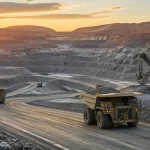
Large-scale extraction equipment, like this ultra-class haul truck, is central to the planned expansion of coal and base metal mining in Utah’s interior.
Immediate Legal and Tribal Challenges
The order was met with immediate and fierce opposition from conservation groups and Tribal leaders. The Bears Ears Inter-Tribal Coalition: comprising the Hopi, Navajo, Ute, Ute Mountain Ute, and Zuni tribes: vowed to file a federal lawsuit to block the reductions.
“Bears Ears is a living landscape, a place of healing and history,” said a spokesperson for the Coalition. “This is a direct violation of our sovereignty and a betrayal of the protections promised to these sacred lands. We will fight this in the courts, just as we have before.”
Environmental legal groups, including Earthjustice and the Natural Resources Defense Council (NRDC), argue that the Antiquities Act of 1906 grants the president the power to create national monuments, but not to abolish or significantly reduce them. They maintain that only Congress has the authority to shrink a monument once it has been established. This legal “one-way ratchet” theory will likely be the centerpiece of the litigation expected to reach the Tenth Circuit Court of Appeals by late 2026.

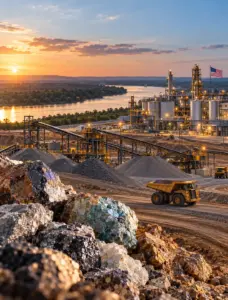
As legal battles loom, the Department of the Interior continues to modernize its oversight of federal mineral tracts through advanced monitoring technology.
2026 Outlook for Utah Operations
Despite the looming legal battles, the mining industry is moving forward with exploration plans. Several junior explorers and major producers have already indicated they will begin geophysical surveys in the newly opened acreage as soon as the Bureau of Land Management (BLM) updates its land status records.
The 2026 outlook for the region remains tied to the speed of the judicial review. If the administration successfully defends the order, Utah could see its first new uranium production in decades within the next three to five years. For copper and coal, the timeline may be longer due to the scale of infrastructure required, but the initial staking rush is expected to begin before the end of the month.

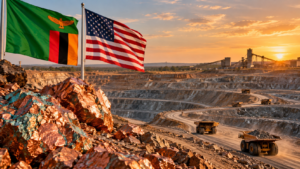
The expansion of copper mining on federal lands is a key pillar of the 2026 strategy to address the projected global supply shortfall.
As of this afternoon, the BLM has been instructed to begin accepting mineral lease applications for the lands formerly within the monument boundaries. For investors and operators, the “Utah Mining Expansion” represents one of the most significant shifts in federal land policy in a generation, signaling a new era of industrial activity in the American West.