For decades, the story of African mining was written in the wake of “dig and ship” economics: a model where raw ore left the continent in bulk, leaving only depleted pits and minimal local revenue behind. In July 2026, that narrative is being rewritten in the Endo community of Nasarawa State, Nigeria.

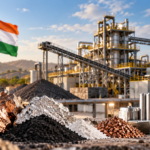
The commissioning of Nigeria’s first 6,000 tonnes-per-day (TPD) lithium processing plant marks a decisive break from the colonial export model. Operated by Diamond New Energy in partnership with Jiuling Lithium and Canmax Technologies, the $250 million facility is the largest of its kind in West Africa. It represents the flagship achievement of the “Alake Agenda”: a federal policy named after Solid Minerals Minister Dele Alake that mandates local value addition for all critical minerals.
As the global energy transition accelerates, Nigeria is positioning itself not just as a source of raw spodumene, but as a central hub for processed battery-grade concentrates. This shift is not merely a domestic industrial milestone; it is a structural intervention in the global lithium supply chain that is already influencing market price floors and regional trade flows.
The Nasarawa Hub: Scaling Beyond Raw Exports
The Nasarawa facility is designed to process approximately 3 million metric tonnes of lithium ore per year. By converting raw ore into high-value concentrates on-site, Nigeria effectively captures a greater share of the profit margin that previously accrued to foreign refineries.
This plant is the second major downstream asset to come online in the region, following the earlier commissioning of Avatar New Energy’s 4,000 TPD facility. Together, these projects transform Nasarawa into a dense industrial corridor for battery metals.
More Read

Comparison of Key Lithium Assets in Nasarawa State
| Feature | Diamond New Energy (Endo) | Avatar New Energy |
|---|---|---|
| Capacity | 6,000 TPD (~3M TPY) | 4,000 TPD |
| Investment | $250 Million | $100 Million |
| Partners | Jiuling Lithium, Canmax | Avatar Energy |
| Primary Focus | Lithium Concentrate | Lithium Beneficiation |
| Status | Fully Operational | Operational |
This surge in capacity is the direct result of a 2023 federal directive that made mining licenses conditional on local processing. Under current regulations, no company is permitted to export raw solid minerals from Nigeria without demonstrating at least 30% value addition. This policy mirrors similar moves in Zimbabwe and Namibia, signaling a broader trend of resource nationalism across the African continent.


Impact on the $19,000 Lithium Price Floor
The global lithium market has transitioned from the supply-crunch mania of 2022 into a more mature, cost-sensitive phase. As noted in recent lithium price forecasts for 2026, the emergence of massive processing capacity in higher-cost jurisdictions like West Africa is providing a new structural floor for commodity prices.
More Read
Analysts suggest that the $19,000/tonne level for battery-grade carbonate is becoming an “incentive floor” for the industry. While spot prices remain volatile, the capital intensity of projects like the Diamond New Energy plant: combined with Nigeria’s export restrictions: removes a significant volume of “cheap” raw ore from the global market.
When Nigeria and Zimbabwe restrict raw exports, they force the global supply curve to account for the costs of local power, industrial logistics, and ESG-compliant processing. This effectively tightens the supply of low-grade feedstock to Chinese merchant converters, supporting a higher baseline price for finished lithium salts. For investors, this adds a layer of predictability to market valuations as the industry scales to meet 2030 EV targets.
Decoupling and Industrialization Milestones
Nigeria’s pivot is as much about domestic economics as it is about global supply. The Nasarawa plant is expected to create thousands of direct and indirect jobs, ranging from chemical engineering roles to logistics and facility maintenance.
The technical partnership with Chinese firms like Canmax Technologies: a Shenzhen-listed company with deep roots in the battery supply chain: brings critical technology transfer to the Nigerian workforce. This isn’t just about building a factory; it’s about developing the technical expertise required to manage high-throughput mineral separation and beneficiation.

Furthermore, the “Alake Agenda” seeks to solve the infrastructure gaps that have historically plagued Nigerian industry. By anchoring $2.6 billion in mining-related investments over the last two years, the government is incentivizing the development of captive power solutions and improved rail-to-port logistics. The success of these lithium plants serves as a proof-of-concept for other critical minerals, including rare earths and copper, which are also targeted for mandatory local processing.
Geopolitical Implications for the Battery Map
The concentration of lithium processing in West Africa creates a new node on the global battery metals map. Traditionally, the supply chain flowed from mines in Australia or South America directly to refineries in China. Now, a significant “middle-tier” of processing is emerging within Africa.
For European and North American automakers looking to diversify their supply chains away from total Chinese dependence, Nigeria offers a strategic opportunity. While Chinese firms are currently the primary investors in Nasarawa, the regulatory framework allows for a variety of international partners, provided they commit to the local value-addition mandate.
As we have seen with strategic rare earth deals, the ability to process minerals domestically is becoming a prerequisite for participation in the global energy transition.
2026 Outlook: A New Standard for African Mining
The 6,000 TPD plant in Nasarawa is a bellwether for the future of African mining. If the facility maintains its operational targets and the government continues to enforce its value-addition policies, Nigeria could see its mining sector revenue climb toward $4.2 billion by the end of 2026.
However, risks remain. The successful scaling of these plants depends on consistent power supply and the stability of the regulatory environment. Critics, including the Centre for the Promotion of Private Enterprise (CPPE), have warned that a hard ban on raw exports must be matched by massive improvements in the “enabling environment” to avoid strangling production.
Despite these challenges, the momentum is clear. Nigeria has moved from a passive supplier to an active industrial player. The 6,000 TPD pivot in Nasarawa is the first of many steps toward a future where Africa processes the materials that will power the 21st century.
Market Data Snapshot: Global Lithium Cost Incentives
Data indicates the approximate price levels required to sustain new project development in emerging jurisdictions.
| Jurisdiction | Estimated Incentive Price (LCE) | Policy Environment |
|---|---|---|
| Nigeria | $17,000 – $19,500 | Mandatory local processing |
| Australia (Hard Rock) | $15,000 – $18,000 | Mature, established infra |
| Zimbabwe | $18,000 – $21,000 | Export ban on concentrates |
| South America (Brine) | $12,000 – $15,000 | Low op-ex, high cap-ex |
By Charles Pitts