By Charles Pitts

PAGO PAGO, American Samoa : The U.S. Department of the Interior has formally announced plans to auction approximately 33 million acres of seabed off the coast of American Samoa for deep-sea mining, marking the first commercial lease sale of its kind in United States history.
The proposal, finalized by the Bureau of Ocean Energy Management (BOEM) on July 17, 2026, targets a vast expanse of the Pacific Outer Continental Shelf known to be rich in polymetallic nodules. These small, mineral-heavy rocks contain high concentrations of manganese, cobalt, copper, and nickel: materials essential for high-capacity batteries, renewable energy infrastructure, and advanced defense systems.
The auction, currently scheduled for November 19, 2026, represents a significant pivot in American resource policy. Driven by a 2025 executive order aimed at securing domestic supplies of critical minerals, the federal government is moving to reduce its reliance on foreign supply chains, particularly those controlled by China. However, the move has triggered a sharp confrontation with the territorial government of American Samoa and a broad coalition of environmental organizations.
The Strategic Mandate: Decoupling and Defense
The decision to open the American Samoa Outer Continental Shelf (OCS) for mineral extraction is a direct result of the federal government’s intensified focus on mineral security. For decades, the United States has relied on imported critical minerals for the production of electric vehicle (EV) batteries and telecommunications hardware.
More Read

Under the current administration’s “Mineral Sovereignty” initiative, the deep sea has been identified as a strategic frontier. Federal officials argue that the density of minerals found in polymetallic nodules exceeds that of many terrestrial mines. According to BOEM’s technical analysis, the identified 33 million acres could potentially host enough cobalt to satisfy domestic demand for decades.

This push is closely linked to broader geopolitical efforts to bypass the “Green Supply Chain” bottlenecks currently dominated by overseas refineries. By establishing a domestic deep-sea mining sector, the U.S. aims to insulate its manufacturing and defense sectors from price volatility and geopolitical leverage exercised by rival powers.

More Read

The Resource Profile: Polymetallic Nodules
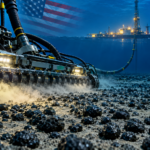
The primary target of the upcoming lease sale is the polymetallic nodule, an ore body that rests on the sediment of the abyssal plain. Unlike traditional mining, which requires drilling and blasting, deep-sea mining involves “collectors”: large robotic crawlers: that vacuum the nodules from the seafloor.
These nodules are formed over millions of years through the slow precipitation of metals from seawater around a core, such as a shell or a shark tooth. The American Samoa OCS is situated in a geologically favorable region where these nodules are exceptionally abundant at depths ranging from 1,400 to 6,000 meters.
Key minerals expected from the 33-million-acre zone include:
- Manganese: Essential for steel production and lithium-ion battery cathodes.
- Cobalt: A critical component for battery stability and energy density.
- Nickel: Necessary for high-performance EV batteries and stainless steel.
- Copper: The “metal of electrification,” required for all renewable energy wiring.
This auction follows recent domestic moves to streamline the permitting of critical mineral projects on land, such as those discussed in the 2026 mining permits reform, highlighting a dual-track approach to resource extraction.
Regulatory Path and Environmental Assessment
Because the United States has not ratified the United Nations Convention on the Law of the Sea (UNCLOS), it regulates deep-sea mining within its Exclusive Economic Zone (EEZ) under the Deep Seabed Hard Mineral Resources Act. The National Oceanic and Atmospheric Administration (NOAA) and BOEM have coordinated the Draft Environmental Assessment (EA) released earlier this month.
The EA concluded that “with specified lease stipulations,” the proposed action is not expected to result in “substantial adverse impacts” to offshore habitats. The federal government intends to include requirements for “plume mitigation technology” and “real-time monitoring” as part of the lease agreements.
Industry analysts suggest that the regulatory framework being established here will serve as a template for future auctions in the Pacific. The federal government’s stance is that deep-sea mining can be performed with a lower carbon footprint than traditional terrestrial mining, which often involves significant land use and community displacement.

Local Opposition and the Territorial Moratorium
Despite the federal push, the government of American Samoa remains steadfast in its opposition. In 2024, the territorial government issued Executive Order 0006-2024, declaring a moratorium on any seabed mining exploration or extraction within territorial waters.
Governor Pulaali’i Nikolao Pula has repeatedly urged Washington to respect the territory’s self-determination and the unique cultural value of its ocean resources. “The ocean is not just a resource; it is the foundation of our culture and our economy,” Pula stated in a recent address.
The economic stakes are high for American Samoa. The territory’s economy is heavily dependent on tuna fisheries, which account for approximately 99.5% of its exports. Local leaders and fishing associations fear that mining operations could disrupt migratory patterns of fish or contaminate the water column with sediment plumes, potentially devastating the fishing industry.
Representative Amata Coleman Radewagen, the territory’s sole U.S. congressional representative, has echoed these concerns, stating that there is “strong opposition to any exploration or extraction of minerals from the ocean floor” from the local community.
Environmental Risks: The Plume Problem
Environmental organizations, including Earthjustice and the Center for Biological Diversity, have vowed to challenge the auction in court. The primary scientific concern revolves around “sediment plumes”: vast clouds of silt kicked up by the robotic collectors as they traverse the seafloor.
Scientists argue that these plumes could travel for hundreds of miles, smothering organisms on the seabed and interfering with the feeding and communication of marine mammals. “Deep-sea ecosystems are among the most stable and least understood on Earth,” a spokesperson for Oceana noted. “Introducing industrial machinery on this scale will lead to unpreventable and irreversible biodiversity loss.”
There are also concerns regarding noise and light pollution in the deep ocean, an environment that is naturally dark and quiet. The long-term effects of these disruptions on the marine food web remain largely unknown, leading to calls from over 40 countries for a global moratorium on deep-sea mining until more data is available.
Market Snapshot: Critical Minerals and 2026 Projections
As the federal government pushes for deep-sea extraction, the broader critical minerals market continues to experience volatility. While some commodities have seen price declines due to shifts in the supply chain pivot, the long-term demand for battery-grade metals remains high.
| Commodity | 2026 Market Status | 2027 Outlook | Primary Driver |
|---|---|---|---|
| Cobalt | Supply Deficit | Bullish | EV battery production surge |
| Nickel | Surplus (Indonesia) | Neutral | New supply from LFP battery shift |
| Manganese | Tight Supply | Bullish | Infrastructure and battery demand |
| Copper | Structural Deficit | Bullish | Grid modernization and EV wiring |
| Rare Earths | Emerging Supply | Volatile | Brazilian HREE developments |
Timeline and Legal Hurdles
The next 60 days will be critical for the future of the American Samoa auction. Under federal law, Governor Pula has a window to respond to the proposed lease sale. It is widely expected that the territorial government will use this period to formally register its objection and prepare for potential litigation.
Should the auction proceed on November 19, 2026, the winners of the leases will still face a rigorous secondary permitting process. Any actual extraction would likely not begin for several years, as companies must first conduct extensive site-specific environmental impact statements (EIS) and prove the feasibility of their technology in deep-water conditions.

For now, the 33-million-acre auction stands as a historic, if controversial, attempt to redefine American mineral security. As the global transition to renewable energy continues to accelerate, the depths of the Pacific Ocean are becoming the next major site of industrial and geopolitical competition.