By Charles Pitts

The World Trade Organization (WTO) has issued a stark warning regarding the rapid acceleration of critical mineral demand, stating that the global race for energy transition metals risks fueling new waves of conflict and instability in resource-rich nations. In its latest 2026 policy briefing, the WTO emphasized that without robust local processing capacity and a renewed commitment to the rule of law, the “green gold rush” could exacerbate regional tensions and deepen the divide between commodity-dependent exporters and high-tech importers.
As of July 2026, the demand for minerals such as lithium, cobalt, nickel, and rare earth elements has reached unprecedented levels. This surge is driven by the global transition to renewable energy and the massive expansion of high-performance computing required for artificial intelligence. However, the WTO notes that this demand is colliding with a landscape of extreme supply concentration and rising resource nationalism, creating a volatile environment for global trade.
The Escalation of Resource Nationalism
The shift toward resource nationalism has become a defining feature of the 2026 mining landscape. Governments in major producing regions, particularly in Southeast Asia and Sub-Saharan Africa, are increasingly utilizing export restrictions, licensing requirements, and mandatory local beneficiation laws to capture a larger share of the value chain.
According to WTO data, the number of export restrictions on critical energy-transition minerals has grown by nearly 30% over the last two years. The Democratic Republic of the Congo (DRC), which accounts for over 70% of global cobalt production, and Indonesia, which now produces more than 65% of the world’s nickel, have both implemented stringent policies designed to force downstream investment.


“We are seeing a structural shift in how nations view their mineral wealth,” the WTO report states. “It is no longer just about extraction; it is about industrialization. However, when these policies are implemented without transparency or in violation of existing trade agreements, they create friction that can lead to formal disputes or, in fragile regions, civil unrest.”
This trend is not limited to emerging markets. The United States has also pivoted toward more protectionist stances through initiatives like the Military Critical Minerals Mandate, which prioritizes domestic sourcing and strategic partnerships over open market procurement.
Supply Concentration and Geopolitical Friction
The WTO’s concerns are rooted in the geographical concentration of these essential materials. Unlike oil, which is produced by dozens of nations, the refining and processing of critical minerals are dominated by a handful of players. China remains the primary global hub for refining rare earths and lithium, while Indonesia has rapidly consolidated its grip on the nickel supply chain.
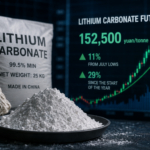
This concentration creates a “choke point” economy. The IEA’s mid-2026 outlook suggests that lithium demand alone will rise by over 350% by 2040, yet 80% of new refining capacity currently planned is located in just three countries. This imbalance has prompted “resource-hungry” nations: including the EU, Japan, and the U.S.: to bypass the WTO’s multilateral framework in favor of bilateral “Critical Minerals Agreements.”

The WTO warns that these bilateral deals risk fragmenting the global trade system into competing blocs. “When trade is governed by exclusive partnerships rather than universal rules, smaller or less strategically aligned resource-rich nations are left behind,” says a WTO senior trade analyst. “This creates an environment where ‘might makes right,’ leading to economic coercion and potential localized conflicts over mining concessions.”
The impact of these tensions is already visible in the copper market. Supply deficits in 2026 have been exacerbated by logistical disruptions and regional storms in Chile, placing further pressure on global manufacturing hubs that rely on stable copper flows for electrification.
Moving Up the Value Chain: The Processing Challenge
A core pillar of the WTO’s 2026 warning is the “Dutch Disease”: a phenomenon where a surge in commodity exports leads to the decline of other economic sectors. To avoid this, resource-rich nations are desperate to develop their own processing and manufacturing industries.
However, the barriers to entry remain high. The WTO identifies “tariff escalation”: where developed nations place low tariffs on raw ores but high tariffs on processed metals: as a major obstacle for developing economies trying to diversify. Without the ability to export high-value semi-finished goods, nations like the DRC and Zambia remain trapped in a cycle of raw material extraction that provides little long-term economic stability for local populations.

Successful examples of moving up the value chain are rare but notable. Australia’s Mount Holland lithium project has seen recent expansions aimed at integrating spodumene production with chemical refining, showing that developed mining jurisdictions with high capital access can bridge the gap. For developing nations, however, the path forward requires significant foreign direct investment (FDI) and a stable regulatory environment: two things that are often the first casualties of regional conflict.
ESG Mining and the Rule of Law
The intersection of ESG mining standards and trade regulation is perhaps the most complex area of the WTO’s 2026 report. While environmental and social governance (ESG) is essential for sustainable development, the WTO warns that these standards are sometimes used as “disguised protectionism” by wealthy nations to exclude competitors from the market.
“If a country lacks the institutional capacity to enforce strict ESG mandates, they may find their minerals barred from international markets,” the WTO briefing notes. “This can lead to a desperate situation where illegal mining and smuggling increase to bypass formal trade routes, further fueling local conflict and human rights abuses.”
The WTO emphasizes that the solution is not to lower standards, but to increase international support for the “rule of law” in resource-rich nations. This includes technical assistance for mining regulators and more transparent frameworks for revenue management to ensure that mineral wealth benefits the many rather than the few.

2026–2027 Outlook: Fragmentation or Cooperation?
The remainder of 2026 will likely see a showdown between the WTO’s multilateral ideals and the reality of strategic mineral competition. Several “mega-disputes” regarding export bans on nickel and bauxite are currently working their way through the WTO’s dispute settlement body. The outcomes of these cases will set the precedent for how resource nationalism is handled on the global stage.
Operators and investors are advised to keep a close watch on the proliferation of “green trade corridors.” While these corridors aim to secure supply chains, they may also signal the definitive end of the “globalized” minerals market in favor of a “regionalized” or “bloc-based” system.
For the mining industry, the WTO’s warning serves as a reminder that the “E” and “S” in ESG are not just compliance checkboxes but are fundamental to geopolitical stability. Without a coordinated global approach to critical minerals trade, the race to net-zero could inadvertently spark the very conflicts it seeks to avoid through energy security.