By Charles Pitts

Copper projects are taking longer to move from discovery to production, just as grid investment, electric vehicles, renewable power and data centers increase demand for the metal. The International Energy Agency (IEA) has warned that the current mine project pipeline could leave a potential 30% copper supply shortfall by 2035 under its Stated Policies Scenario.
Permitting is not the only reason projects miss schedules. Ore grades, financing, infrastructure and construction also matter. But permitting risk increasingly determines whether a project can advance from feasibility to construction : and whether an approved project can retain its legal and social license to operate.
S&P Global data indicate that copper mines now take approximately 17.9 years from discovery to production on average. In the United States, the figure is close to 29 years. When reviews, appeals or permit changes add several years, the effect is felt not only by developers but also by smelters, manufacturers and governments seeking secure critical-mineral supply.
This risk tracker examines seven permitting issues that operators, investors and policymakers should monitor.
More Read

Copper permitting risk tracker
| Risk | How it delays supply | Reference point or warning signal |
|---|---|---|
| Environmental review complexity | Additional studies, revised mine plans or agency information requests extend approval | U.S. federal EIS processes can take several years; Resolution Copper’s formal NEPA process ran for about a decade |
| Indigenous and community rights | Consultation disputes, litigation or unresolved benefit agreements can suspend approvals | Community opposition contributed to the shutdown of Cobre Panamá |
| Water, biodiversity and tailings | Projects may require redesign, new mitigation or stricter operating conditions | Water scarcity and tailings liabilities are central issues in Chile, Peru and the western United States |
| Permit sequencing | A project may hold one major approval while waiting for multiple sectoral permits | Canada’s federal mining permitting plans can extend across several years |
| Political and legal reversals | Governments, courts or legislatures can revoke, suspend or rewrite project authorizations | Panama’s Supreme Court declared the Cobre Panamá concession unconstitutional in 2023 |
| Geopolitical and trade exposure | Sanctions, export restrictions or changes in strategic-mineral policy alter project economics | Copper supply is concentrated in Chile, Peru, the Democratic Republic of Congo and China-linked processing chains |
| Infrastructure and ancillary permits | Roads, power, ports, pipelines and processing facilities may follow separate approval tracks | A mine can be environmentally approved but unable to build or operate its full logistics system |
The timelines in this table are benchmarks and documented examples, not universal averages. Actual duration depends on project scale, jurisdiction, review pathway and litigation.

1. Environmental review becomes an iterative process
The first risk is not necessarily rejection. It is an expanding review process.
Large copper mines can affect groundwater, surface water, biodiversity, air quality, transport corridors and tailings storage. As agencies identify gaps, developers may be asked to provide additional baseline data, revise waste-management plans or assess alternatives to the original mine design.
More Read

In the United States, the Resolution Copper project illustrates how a major review can stretch over multiple stages. The U.S. Forest Service published its Notice of Intent for the environmental impact statement in March 2016. The final federal environmental review and permitting status was marked complete on March 16, 2026, according to the federal Permitting Dashboard.
The project’s experience also shows why “permit complete” does not always mean “construction risk eliminated.” A land exchange and related court proceedings remained important to the project’s ability to advance.
The commercial consequence is schedule uncertainty. A developer may have completed a feasibility study using one water balance or tailings design, only to incur additional engineering and capital costs after regulators request changes.
2. Indigenous consultation and community consent can reset the schedule
Consultation is often treated as a discrete permitting step. In practice, it can affect project design, access agreements, construction sequencing and long-term operating conditions.
A project may meet formal consultation requirements but still face legal challenges if affected communities argue that their rights were not properly considered. Disputes can emerge over water use, cultural sites, land access, employment, revenue sharing or cumulative impacts from several developments in the same region.
Canada’s Impact Assessment Act provides a useful illustration of the calendar involved. For a designated project, the federal process includes a 180-day planning phase, an impact statement phase of up to 1,095 days, and formal assessment and decision phases with legislated time limits. Those clocks can also be paused in certain circumstances.
The federal government has stated that major projects should receive federal approvals within approximately two years, but that target does not eliminate the proponent’s preparation time, provincial reviews, Indigenous consultation or post-decision permits.
For operators, the practical test is whether consultation has influenced the project before the application is filed. Late engagement can force redesign after engineering work is complete.

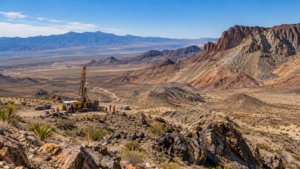
Community and environmental field work can influence the design and timing of a copper project.
3. Water, biodiversity and tailings can trigger redesign
Copper mines in arid regions face a particularly difficult permitting equation: the deposits may be economically attractive, but the water required for processing competes with agriculture, communities and ecosystems.
In Chile, major environmental impact assessments have commonly taken approximately 24 to 36 months, according to industry and policy analyses cited in reporting by Reuters and other mining sources. Simpler projects using the Declaration of Environmental Impact pathway can move faster, but that route is not suitable for every large mine.
The technical questions are increasingly specific:
- Does the water balance account for drought conditions?
- How much water can be recycled?
- Are aquifers hydraulically connected to protected ecosystems?
- What happens to seepage after closure?
- Is the tailings facility designed for credible worst-case events?
- Can biodiversity impacts be avoided rather than merely offset?
These questions can create a second approval cycle if the original application does not provide sufficient evidence.
The issue also reaches beyond permitting. Lenders, insurers and customers increasingly request site-level information on water, closure liabilities and tailings governance. Skillings’ analysis of mining ESG compliance and permitting risk examines how incomplete environmental data can affect financing and operating costs.
4. A project can be approved in principle but blocked by permit sequencing
Mining approvals rarely come as a single document. A copper project may require separate authorizations for:
- Mine development and reclamation.
- Water extraction and discharge.
- Tailings and waste-rock facilities.
- Power generation or transmission.
- Roads, railways and ports.
- Fisheries, wetlands or navigable waters.
- Air emissions and processing facilities.
- Explosives, worker safety and hazardous materials.
This creates a sequencing risk. Construction may begin on one component while another remains under review, leaving the developer unable to commission the complete operation.
The Canadian permitting system shows how this can happen. Federal project dashboards may display a two-year assessment target while separate permitting plans identify much longer coordination windows for the full set of federal authorizations. The Impact Assessment Agency of Canada has also cited the Marathon Palladium Mine, where federal permits were completed in 15 months, as an example of a faster process.
The difference between 15 months and five years is not simply administrative efficiency. It can determine whether procurement contracts remain valid, whether debt commitments expire and whether construction crews must be remobilized.
5. Political and legal reversals can invalidate earlier assumptions
A permit is not always permanent protection from political risk.
In Panama, the Supreme Court ruled in November 2023 that the law authorizing First Quantum Minerals’ Cobre Panamá concession was unconstitutional. The mine was subsequently shut, removing an estimated 1% to 2% of global copper supply from the market.
The case demonstrates how environmental concerns, constitutional law, public opposition and fiscal terms can converge. Even if a mine has operated for years, a change in legal interpretation or political conditions can affect its operating status.
Peru’s Tía María project provides another example of regulatory uncertainty. Southern Copper said in 2024 that the project had the necessary authorizations and could begin construction. Separate reporting indicated that a permit had been revoked and subjected to further review before being reauthorized.
For project teams, the relevant indicator is not only whether permits have been issued. It is whether the legal basis is durable across changes in government, court challenges and shifts in public policy.
6. Geopolitical policy can change the value of a permit
Copper is increasingly treated as a strategic material because it is essential to power infrastructure and energy-transition technologies. That makes permitting decisions more exposed to national-security policy.
Governments may accelerate projects considered important to domestic supply chains. They may also impose new conditions on foreign ownership, exports, processing, data, infrastructure or offtake arrangements.
The IEA has identified supply concentration, export restrictions, declining investment and long project lead times as risks to critical-mineral security. A mine in one jurisdiction may therefore be commercially linked to smelters, refiners, ports or customers in another country.
This matters for permitting because infrastructure or processing plans can change after an application is submitted. A project designed to export concentrate may later need domestic processing. A proposed foreign investor may face new screening requirements. An export route may become less attractive after trade restrictions or sanctions.
A permit secured under one geopolitical assumption may not support the same financing case several years later.
7. Infrastructure permits can become the hidden critical path
A mine cannot produce copper without power, water, transport and processing capacity. Those facilities can require separate environmental and construction approvals, often involving different agencies and jurisdictions.
A remote project may need a new transmission line, access road, concentrate pipeline, desalination plant, port expansion or rail connection. If one element is delayed, the mine may have to defer construction or operate below planned capacity.
This is particularly relevant for copper projects in the Andes, Central Africa and northern Canada, where terrain, distance and weather increase infrastructure complexity. The mine itself may be permitted while the transmission corridor or water-supply system remains contested.
Developers should therefore maintain a permit map that covers the full mine-to-market chain, not only the pit and concentrator.
What decision-makers should track
A practical permitting dashboard should include at least five indicators:
- Milestone slippage: actual approval dates compared with the original schedule.
- Information requests: number, subject and age of unresolved regulator requests.
- Consultation status: agreements reached, unresolved grievances and litigation exposure.
- Water and tailings evidence: completeness of baseline data, independent reviews and closure funding.
- Infrastructure dependencies: permits required for power, transport, water and processing.
The IEA’s supply-gap projections show why these indicators matter. Its 2024 outlook identified a potential 2.2 million-tonne copper gap by 2030 under the Announced Pledges Scenario and a 4.5 million-tonne gap under the Net Zero Emissions Scenario. Later IEA analysis continued to identify copper as one of the minerals where the announced project pipeline may not meet future requirements.
Permitting will not close that gap on its own. But projects that cannot move through approval, consultation and construction on credible schedules will not contribute supply when the market needs it.
For additional market context, see Skillings’ copper price analysis and coverage of copper project development and strategic partnerships.
Conclusion
The central permitting risk for copper is not a single delayed license. It is the interaction between environmental review, community rights, water, infrastructure, politics and geopolitics.
Projects with complete baseline data, early consultation and coordinated infrastructure plans are better positioned to keep their schedules intact. Projects that treat permitting as a final administrative hurdle may face redesign, litigation, financing pressure or a multi-year loss of production.
As copper demand rises, the market will place increasing value on projects that can demonstrate not only geological potential, but also a durable and executable path from approval to first concentrate.