Autonomous haulage is moving from isolated trials toward repeatable fleet-scale deployment.

Komatsu’s commissioning of its 1,000th ultra-class autonomous haul truck marks a significant shift in mining technology. Autonomous haulage is no longer limited to pilot programs at a small number of iron ore operations. It is becoming a repeatable operating model for large surface mines producing copper, gold, iron ore and other bulk commodities.
The milestone truck, a Komatsu 930E-5AT with a 290-metric-ton payload, was deployed at Barrick’s Nevada Gold Mines operation in the United States. Komatsu said its FrontRunner Autonomous Haulage System has moved more than 11.5 billion metric tons of material since commercial deployment began in 2008.
The scale matters because a large installed fleet creates more than equipment volume. It generates operating data, trained personnel, supplier capability and implementation experience. For mine planners, those factors reduce the uncertainty associated with moving from a technology demonstration to a production-critical system.
Why the 1,000-truck milestone matters
The 1,000-truck threshold provides a useful marker for the maturity of autonomous mining technology. Komatsu reported that FrontRunner trucks are operating across North America, South America, Australia and Europe, in different commodities and mine conditions.
Its reported operating metrics include:

- More than 1,000 ultra-class autonomous haul trucks commissioned
- More than 11.5 billion metric tons moved autonomously
- No system-related injuries reported across the commercial FrontRunner fleet
- Approximately 40% longer tire and brake life, on average, within the system’s operating envelope
- Approximately 13% lower overall maintenance, according to Komatsu product data
These are company-reported figures and should not be treated as universal outcomes. Road condition, payload, haul distance, climate, fleet age, communications infrastructure and maintenance quality all influence the results.
Caterpillar has also reported more than 8.6 billion tonnes hauled by trucks using its MineStar Command for hauling system, without reported injuries resulting from trucks operating autonomously. The company’s MineStar Command for hauling overview provides additional detail on the system’s traffic management and fleet-control functions.
More Read
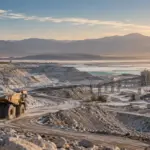

Control rooms shift haulage work from individual truck cabins to fleet supervision and exception management.
Safety gains come from exposure reduction
The strongest case for autonomous haulage remains safety. Removing drivers from truck cabs reduces exposure to fatigue, poor visibility, dust, vibration, high-wall hazards and interactions with other heavy equipment.
Autonomous systems also enforce operating rules consistently. Trucks can follow programmed speed limits, separation distances, routes and stopping procedures without the variation associated with fatigue or individual driving styles.
Reported site-level results include:
- A 75% reduction in collision incidents at BHP’s Jimblebar operation compared with the company’s non-autonomous mines, according to reporting by Australian Mining Safety Journal
- A 40% reduction in safety incidents reported in a review of autonomous operations at Rio Tinto’s Pilbara assets
- A 35% decrease in safety incidents reported at Suncor’s Millennium oil sands mine after autonomous haulage deployment
- Lower incident rates in comparative research involving autonomous and manually operated fleets
The safety improvement is not simply a result of replacing a person with software. It depends on the design of the entire operating environment. Traffic intersections, loading zones, maintenance areas and interactions with light vehicles remain potential points of failure.
The International Association for Automation and Robotics in Construction safety research identifies communications, fail-safe braking, sensor performance and traffic management as central elements of an autonomous haulage safety architecture.
That changes the nature of risk. Conventional operations are heavily exposed to driver error and fatigue. Autonomous operations introduce different risks, including communications failure, sensor obstruction, software faults, cybersecurity threats and unsafe human-machine interactions.
Deployment is a mine-system decision
Autonomous trucks do not generate their full value in isolation. The economic outcome depends on whether the rest of the mine can absorb greater truck availability and more consistent haul cycles.
A mine may achieve higher truck utilization but see little increase in saleable production if the crusher, shovel fleet, concentrator or rail system is already the bottleneck. In that case, autonomy may reduce the number of trucks required, improve maintenance flexibility or stabilize feed to the processing plant rather than increase headline output.
The main operating benefits generally come from:
- Fewer shift-change delays
- Lower fatigue-related variability
- Reduced unnecessary acceleration and braking
- More consistent haul cycles
- Better dispatch visibility
- Lower exposure to mixed-traffic interactions
- Greater continuity during extended operating periods
Research and case studies often place productivity gains in the 15% to 25% range, although results vary widely by mine. A simulation study cited in research on autonomous haulage reported a potential 21.3% productivity improvement, alongside lower queuing time and fuel consumption.
These figures should be interpreted as operating benchmarks, not guaranteed production increases.

Road design, loading geometry and traffic separation determine whether autonomy can operate consistently.
Workforce changes remain central to safety
Autonomous mining technology reduces the number of people required inside haul-truck cabs, but it does not eliminate the need for skilled workers. Instead, it shifts work toward supervision, systems integration and technical maintenance.
New or expanded roles can include:
- Remote fleet operators
- Dispatch and traffic-management specialists
- Electrical and battery technicians
- Network and cybersecurity personnel
- Sensor and software technicians
- Reliability engineers
- Safety-assurance specialists
This transition creates both an opportunity and a risk. Mines can move workers away from high-exposure operating areas, but poorly managed workforce changes may undermine safety and community support.
Operators should establish in advance who has authority to stop the fleet, approve a restart, respond to a communications failure and manage emergency access to an autonomous operating zone. Training must cover not only normal operation but also degraded modes and manual intervention.
Infrastructure determines the payback
The capital requirement for autonomy extends beyond the truck or retrofit kit. A deployment may also require:
- Private LTE, 5G or high-reliability wireless networks
- High-precision mapping and positioning
- Command centers
- Road redesign and traffic separation
- Geofencing and access-control systems
- Charging or battery-swapping infrastructure
- Cybersecurity and data-management systems
- Workforce training and transition programs
Brownfield retrofits can lower the initial equipment cost, particularly when an operator wants to extend the life of an existing fleet. Older trucks may, however, have incompatible electronic architectures, braking systems or maintenance histories.
Greenfield mines have more design flexibility. Roads, loading areas, charging facilities and control centers can be designed around autonomous equipment from the outset. The trade-off is that the capital is committed before the project has generated a long operating record.
Autonomous mining technology: scenario framework
The following framework is an analytical tool for operators assessing deployment conditions. It is not a production forecast or an investment recommendation.
| Scenario | Operating assumptions | Likely outcome |
|---|---|---|
| Bull case | Utilization improves by 20% or more; communications remain reliable; road standards are high; workforce transition is effective | Autonomy supports strong availability gains and may achieve payback in approximately 18–24 months at high-wage, long-life mines |
| Base case | Utilization improves by 10%–20%; maintenance savings are achieved; mixed fleets remain in operation | Retrofit programs deliver value over approximately 24–36 months, with benefits concentrated in safety, consistency and lower downtime |
| Bear case | Network interruptions, poor road conditions, battery degradation, regulatory delays or weak commodity prices limit operating gains | Payback extends beyond four years, and autonomy remains limited to selected haul circuits or greenfield expansions |
The most important variable is not the truck’s headline specification. It is the percentage of planned operating hours that the complete system can deliver safely and consistently.
What comes next
The 1,000-truck milestone confirms that autonomous haulage has reached commercial scale. The next phase will involve closer integration between trucks, drills, loaders, crushers, processing plants, charging systems and digital mine plans.
Cabless battery-electric trucks could accelerate that shift by combining autonomous control with new vehicle architectures and energy systems. China’s deployment of autonomous electric haulage at large open-pit operations illustrates how battery swapping, private communications networks and fleet dispatch are becoming part of one operating model.
For operators, the technology decision is therefore broader than selecting an autonomous truck. It requires an assessment of mine layout, labor structure, network resilience, emergency response, maintenance capability and downstream bottlenecks.
Autonomous haulage will not eliminate every mining risk. It can, however, reduce worker exposure to hazardous mobile equipment, improve operating consistency and increase the productive use of existing assets when infrastructure and change management are developed alongside the fleet.
Sources and further reading
- Komatsu commissions its 1,000th ultra-class autonomous haul truck
- Komatsu FrontRunner Autonomous Haulage System
- Caterpillar MineStar Command for hauling
- Safety concept and architecture for autonomous haulage systems
- Skillings mining technology coverage
- Skillings autonomous mining technology analysis