By Charles Pitts

Autonomous mining technology 2026 marks a watershed moment for the global resource sector. After nearly two decades of incremental deployments, remote-controlled trials, and geofenced single-pit pilots, industrial autonomy has crossed a definitive threshold into mainstream, large-scale commercial operations. The convergence of massive equipment milestones: exemplified by Komatsu surpassing 1,000 autonomous ultra-class haul trucks worldwide: alongside radical hardware redesigns like cabless battery-electric vehicles and advanced LiDAR/SLAM perception stacks, is fundamentally reshaping the operational economics of extraction.
For mining executives, asset managers, and policymakers navigating tightening capital constraints, decarbonization mandates, and the surging global demand for critical minerals, autonomy is no longer an experimental efficiency play. It is the operating baseline. This deep-dive analysis examines the milestone achievements defining the sector, the technical architectures driving surface and underground autonomy, and how recent venture capital inflows are accelerating unmanned extraction on domestic soil.
Komatsu’s 1,000-Truck Milestone and the Maturation of Surface Autonomy
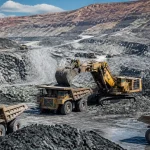
The commercialization of autonomous haulage systems (AHS) reached a historic benchmark when Komatsu announced that its FrontRunner system surpassed 1,000 ultra-class autonomous haul trucks in active operation globally. The milestone truck: a Komatsu 930E-5AT electric-drive hauler with a 290-metric-ton payload capacity: was commissioned at Barrick’s Nevada Gold Mines complex in the United States.
+-----------------------------------------------------------------------------------+
|               KOMATSU FRONTRUNNER MILESTONE AT A GLANCE                           |
+---------------------------+-------------------------------------------------------+
| Total Active Fleet        | 1,000+ ultra-class haul trucks globally               |
| Milestone Unit            | Komatsu 930E-5AT (290-metric-ton electric drive)      |
| Flagship Deployment Site  | Barrick’s Nevada Gold Mines, USA                      |
| Cumulative Material Moved | Over 11.5 billion metric tons of ore and overburden   |
| Safety Record             | Zero system-related injuries across ~20 years         |
+---------------------------+-------------------------------------------------------+
Since its initial commercial rollout in 2008 at Codelco’s Gabriela Mistral mine in Chile, FrontRunner has systematically dismantled historical operator safety hazards while stabilizing haul cycles. According to cumulative operational telemetry released by Komatsu and participating mining majors, the global fleet has moved more than 11.5 billion metric tons of material with zero system-related safety incidents.
More Read

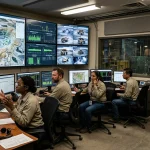
The operational significance extends far beyond raw tonnage. By removing human operators from ultra-class trucks operating in extreme weather, high-dust, and 24/7 continuous shift environments, mines have achieved unprecedented tire-life extensions, optimized fuel burn, and reduced mechanical drivetrain wear through computerized acceleration and braking profiles. Furthermore, supervisory control architectures allow centralized operators stationed thousands of miles away to oversee multi-pit haulage networks, maximizing equipment utilization rates and mitigating remote recruitment shortages.


Cabless Electric Haulage: SANY SKT145Ei and the Shift in Surface Design
While ultra-class diesel-electric trucks remain the backbone of massive open-pit operations, the rapid integration of cabless battery-electric vehicles is redefining smaller-to-mid-scale surface haulage. Chief among these developments is the commercial deployment of the SANY SKT145Ei, an intelligent, cabless battery-electric mining truck engineered specifically for high-efficiency, zero-emission autonomous circuits.
More Read

Eliminating the human operator’s cabin fundamentally alters the vehicle’s structural engineering. Without the weight, space, and climate-control requirements of a traditional cab, designers have optimized the center of gravity, maximized payload distribution relative to battery pack placement, and eliminated aerodynamic drag penalties associated with standard truck profiles.
The SKT145Ei integrates a multi-sensor perception suite combining solid-state LiDAR, millimeter-wave radar, and high-definition optical cameras with redundant drive-by-wire actuation. Operating within geofenced open-pit extraction zones and processing transfer points, these units communicate via private 5G mesh networks with site-wide fleet management systems. By pairing battery-electric propulsion with native autonomy, operators eliminate tailpipe emissions while bypassing the ventilation and cooling infrastructure burdens inherent to underground applications, creating a highly compelling cost structure for greenfield copper, lithium, and gold operations.

Underground Autonomy: Epiroc 3D-Perception and Sandvik AutoMine Aura
While surface operations benefit from satellite GPS and expansive line-of-sight networks, underground mining presents severe navigation challenges due to signal attenuation, complex multi-level ramp geometries, and shifting tunnel environments. To overcome these barriers, leading underground equipment manufacturers have rolled out advanced perception and automation architectures.
Epiroc has expanded its automation capabilities with advanced 3D-perception multi-level ramp automation. Designed for underground loaders (Scooptram) and haul trucks operating across complex subterranean networks, Epiroc’s system utilizes real-time 3D mapping and LiDAR-based spatial awareness to localize vehicles without relying on surface infrastructure. The technology enables continuous, high-speed tramming along winding declines, automatically adjusting vehicle trajectories to accommodate uneven floor conditions and narrowing wall clearances.
Concurrently, Sandvik has advanced its flagship AutoMine platform with AutoMine Aura, integrating sophisticated LiDAR and Simultaneous Localization and Mapping (SLAM) algorithms. AutoMine Aura allows loaders and drill rigs to map unmapped underground headings dynamically as they move, updating the digital twin of the mine in real time. This capability drastically reduces the time required to survey and clear new stopes for autonomous production, enabling seamless traffic management where multiple automated and manned machines share narrow underground arteries.
Venture Capital Inflow: Mariana Minerals Raises $310M Series B
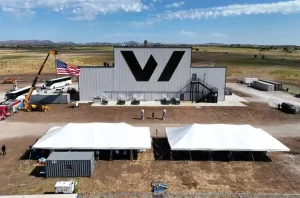
The commercial validation of autonomous mining technology has catalyzed major institutional capital deployment. Highlighting this trend, Mariana Minerals announced the successful closing of a $310 million Series B financing round dedicated entirely to deploying fully autonomous, zero-emission extraction infrastructure at its critical minerals projects on United States soil.
The Series B round: backed by a consortium of tier-one resource funds, private equity, and strategic energy transition investors: will finance the acquisition of an integrated fleet of autonomous electric haulers, robotic underground drills, and centralized AI dispatch centers for the company’s domestic lithium and rare earth assets.
Financial analysts note that Mariana Minerals’ capital raise signals a structural shift in how junior and mid-tier mining developers approach project financing. Historically, capital expenditure models burdened early-stage developers with massive initial labor recruitment costs, camp construction, and high baseline operating expenditure risks. By designing mines as “autonomy-first” operations from the feasibility study stage onward, developers are successfully convincing institutional lenders that lower long-term operating risk, optimized ore recovery curves, and enhanced ESG compliance warrant premium valuations.

Technology Comparison: Leading Autonomous Mining Platforms
To provide clarity for engineering teams and financial analysts evaluating automation vendors, the following comparison breaks down the core technical specifications, primary deployment environments, and key sensor suites of leading market platforms.
| Vendor & Platform | Primary Environment | Core Payload / Machine Class | Navigation & Perception Technology | Key Operational Advantage |
|---|---|---|---|---|
| Komatsu FrontRunner | Surface Open-Pit | Ultra-Class Haul Trucks (200t–300t+ capacity) | High-precision GPS, Radar, Laser ODS, Digital Mine Map | Proven multi-site reliability with over 11.5 billion tons moved |
| SANY SKT145Ei | Surface / Mid-Scale | Battery-Electric Cabless Haulers (~140t–150t) | Solid-state LiDAR, Millimeter-wave radar, 5G mesh | Zero tailpipe emissions combined with native cabless payload optimization |
| Epiroc 3D-Perception | Underground | Loaders (Scooptram) & Subterranean Haul Trucks | 3D LiDAR spatial awareness, onboard optical cameras | High-speed multi-level ramp navigation without surface GPS dependency |
| Sandvik AutoMine Aura | Underground | Loaders, Trucks, and Production Drill Rigs | LiDAR, SLAM (Simultaneous Localization and Mapping) | Dynamic real-time tunnel mapping and automated stope clearance |
Operational and Financial Implications for 2026 and Beyond
The convergence of Komatsu’s 1,000-truck milestone, the commercialization of cabless electric haulers like the SANY SKT145Ei, sophisticated underground SLAM perception, and massive venture inflows into companies like Mariana Minerals underscores a permanent industry evolution.
For mining operators, the integration of advanced autonomous systems is no longer constrained by software maturity. Instead, the primary strategic challenges have shifted to change management, workforce upskilling, and integrating disparate OEM fleets into unified digital control ecosystems. Mines that fail to incorporate autonomy-ready infrastructure into their long-term mine plans face severe structural cost disadvantages in an increasingly competitive commodity market.
As regulatory pressures mount and the global energy transition accelerates the demand for copper, lithium, and critical minerals, autonomous mining technology has moved from the periphery to the absolute center of global resource strategy.

Join the Conversation
What is your organization’s timeline for transitioning to autonomous haulage fleets? Are you seeing greater efficiency gains in surface ultra-class conversions or underground SLAM-based perception systems? Share your insights below or join the discussion on LinkedIn and X using #AutonomousMining2026 and #MiningTechnology.