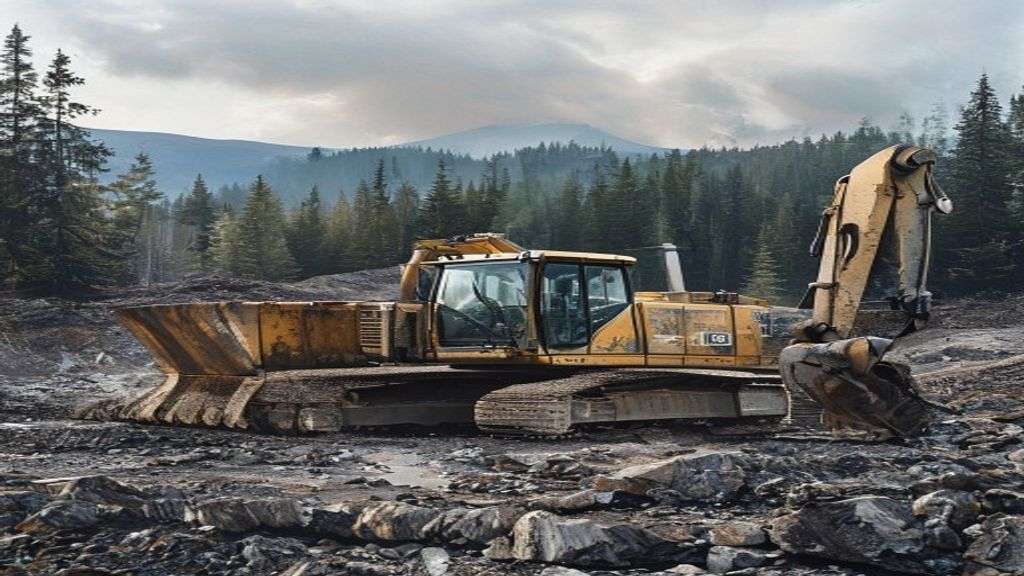
A heavy-duty hydraulic excavator at a high-altitude mining site in British Columbia.
The British Columbia Court of Appeal has upheld a temporary injunction halting construction at the Record Ridge magnesium mine, dealing a procedural blow to West High Yield Resources Ltd. (WHY) as the project faces mounting legal challenges from Indigenous groups and local environmental advocates.

The ruling, finalized late last week, maintains a lower court’s order to pause all ground-disturbing activities at the site located five kilometers north of the Canada-United States border near Rossland, B.C. The injunction is set to remain in place until a full judicial review hearing, now scheduled for May 5, 2026. This review will scrutinize the provincial government’s decision to exempt the project from a comprehensive environmental assessment (EA).
At the heart of the dispute is the Sinixt Confederacy and the Save Record Ridge Action Committee (SRRAC), both of whom argue that the proposed open-pit mine poses significant environmental risks that have not been adequately vetted. The project, which targets one of the world’s highest-grade magnesium deposits, has become a focal point for the evolving legal landscape of Indigenous consultation and provincial regulatory thresholds.
The Threshold Dispute: 63,500 vs. 75,000 Tonnes
The primary catalyst for the legal challenge is a 2025 determination by the B.C. Environmental Assessment Office (EAO). Under provincial law, a mineral mine typically triggers a mandatory environmental assessment if its production capacity exceeds 75,000 tonnes of ore per year.
West High Yield originally proposed a much larger operation: estimated at 200,000 tonnes per year: but subsequently revised the plan down to 63,500 tonnes. This adjustment allowed the project to proceed under a “Notice of Work” permit rather than the more rigorous EA process.
More Read

Opponents argue this “under-the-limit” strategy bypasses critical scrutiny of the project’s unique geological risks. Specifically, the SRRAC and the Sinixt have raised alarms over the presence of naturally occurring asbestos in the serpentinite rock at Record Ridge. They contend that the dust generated from blasting and transport could pose health risks to the Rossland community and contaminate the nearby Columbia River watershed.

| Project Parameter | Specification |
|---|---|
| Location | Record Ridge, near Rossland, B.C. |
| Primary Commodity | Magnesium |
| Total Ore Estimate | 43 million tonnes |
| Ore Grade | 24.6% Magnesium |
| Revised Production | 63,500 tonnes per year |
| EA Threshold | 75,000 tonnes per year |
| Project Life | 20+ years (estimated) |
For operators and investors, the case highlights the increasing difficulty of navigating mining investments and valuation metrics when regulatory exemptions are contested by local stakeholders.
Sinixt Confederacy: A Transboundary Legal Force
The Sinixt Confederacy’s involvement is a critical development in B.C. mining law. The Sinixt, part of the Colville Confederated Tribes based in Washington State, were declared “extinct” by the Canadian government in 1956. However, a landmark 2021 Supreme Court of Canada ruling (R. v. Desautel) restored their status as an “Aboriginal people of Canada,” granting them constitutional rights to their traditional territories north of the border.
More Read

The Sinixt argue that the B.C. government failed in its duty to consult them on the Record Ridge project. Their traditional territory encompasses the project site, and the nation maintains that the mine threatens culturally significant waterways and ecosystems.
In mid-April 2026, West High Yield attempted to have the Sinixt excluded from the judicial review, arguing the nation lacked standing in this specific provincial matter. Associate Judge Stephen Schwartz rejected the application, reinforcing the Sinixt’s right to participate in the legal process. The court further ordered the company to pay legal costs to both the Sinixt and the SRRAC.

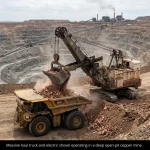
Mining professionals reviewing operational site plans at a North American project.
Corporate and Economic Stakes
West High Yield Resources maintains that its regulatory approvals were properly issued and that the project is vital for the global energy transition. Magnesium is classified as a critical mineral in both Canada and the United States, essential for light-weighting aluminum alloys used in electric vehicles and aerospace applications.
The company has expressed disappointment with the injunction, stating that it has adhered to all provincial requirements and designed the project to minimize its footprint. Company executives have pointed to the project’s potential to create high-paying jobs in the Kootenay region and provide a secure, North American source of magnesium in a market currently dominated by Chinese supply.
The delay, however, adds significant cost and uncertainty. For junior mining firms, prolonged legal battles often strain capital reserves. As explored in Skillings’ analysis of the journey from exploration to reclamation, the pre-production phase is increasingly defined by social license and legal resilience rather than just geological potential.
Environmental and Social Concerns
The Save Record Ridge Action Committee, representing local residents, has focused its opposition on “site-specific” risks that they claim the provincial permit process ignored. Rossland, a town known for its outdoor recreation and tourism, sits in close proximity to the proposed mine.
Key concerns include:
- Asbestos Exposure: The high concentration of chrysotile and tremolite asbestos in the ore body.
- Water Quality: Potential runoff into the Little Sheep Creek and the Columbia River.
- Acoustic and Visual Impact: The proximity of an industrial-scale quarry to a residential mountain community.
The SRRAC has successfully used the “cumulative impact” argument, suggesting that while the mine’s tonnage may be low, its specific location and mineral composition require a degree of oversight that only a full Environmental Assessment can provide.

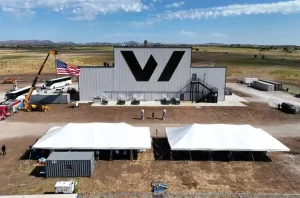
Modern mineral processing units integrated with natural surroundings.
Strategic Implications for the Mining Industry
The B.C. Court of Appeal’s decision to uphold the injunction serves as a warning to the broader industry regarding “threshold engineering.” While staying below production limits is a common strategy to accelerate project timelines, it is no longer a guarantee against protracted legal scrutiny, especially in jurisdictions with strong Indigenous rights frameworks.
The case also underscores the necessity of modern open-pit mining technologies that focus on dust suppression and water management to mitigate community concerns. At Record Ridge, the technical challenge of managing asbestos-bearing rock may require a higher level of operational transparency than the current “Notice of Work” permit necessitates.
Outlook for the May Judicial Review
As the industry looks toward the May 5 hearing, the outcome will likely set a precedent for how B.C. handles projects that hover just below EA thresholds. If the court rules in favor of the SRRAC and the Sinixt, West High Yield could be forced to undergo a multi-year environmental assessment, potentially delaying the project by three to five years.
Conversely, if the court finds that the provincial government acted within its discretion, West High Yield may resume construction, though it will do so under intense public and Indigenous oversight.
The Record Ridge case is a reminder that in the 2026 mining landscape, the “criticality” of a mineral like magnesium does not exempt it from the rigorous “social and legal license” required to operate in British Columbia.

Advanced infrastructure within a modern mining facility.
Market Snapshot: Magnesium & Critical Minerals (April 2026)
| Metric | Status | Trend |
|---|---|---|
| Magnesium Price (Spot) | $3,450/t | ↗ Up 4% MoM |
| B.C. Mining Permits Issued | 12 (Q1) | ↘ Down 15% YoY |
| Critical Mineral Investment | $1.2B (CAD) | ↗ Up 10% YoY |
| Legal Hold Count (Active B.C. Mines) | 4 | ↗ Up 100% YoY |