VICTORIA, British Columbia : British Columbia Premier David Eby has announced a high-stakes legislative maneuver to temporarily suspend key sections of the province’s landmark Declaration on the Rights of Indigenous Peoples Act (DRIPA). The decision, announced late last week, comes as a direct response to a legal crisis that has effectively paralyzed the province’s mineral claims system and cast a shadow of uncertainty over billions of dollars in resource investment.

The move follows a consequential December 2025 British Columbia Court of Appeal ruling which determined that the province’s long-standing online mineral registration system is inconsistent with the constitutional requirement to consult Indigenous nations. By pausing specific provisions of DRIPA for up to three years, the Eby administration aims to provide a “legal bridge” while the province appeals the matter to the Supreme Court of Canada.
Premier Eby has categorized the suspension as a “confidence motion,” meaning the provincial government could fall if the legislation is not passed. This sets the stage for a volatile period in BC politics, as the government navigates a narrow majority and fierce opposition from both environmental groups and First Nations leadership.
The Legal Catalyst: A System in Conflict – April 12th, 2026
The current crisis centers on British Columbia’s “free-entry” mining system. For over a century, prospectors in the province have been able to register mineral claims online through a central registry without prior consultation with Indigenous communities whose traditional territories are affected.
In late 2025, the BC Court of Appeal upheld a lower court’s finding that this automated process fails to meet the Crown’s duty to consult. The court’s decision suggested that because DRIPA commits the province to aligning its laws with the United Nations Declaration on the Rights of Indigenous Peoples (UNDRIP), nearly all provincial statutes: not just those governing mining: could be vulnerable to similar legal challenges if they were not explicitly co-developed with Indigenous nations.
More Read

“The ruling created an untenable degree of legal uncertainty,” Premier Eby stated during a press conference in Victoria. “It suggests that every law on our books is potentially invalid until it is re-litigated through the lens of DRIPA. We cannot allow the provincial economy to grind to a halt while we spend years in the courtroom. We need a pause to find a path forward that respects both reconciliation and the rule of law.”

The suspension specifically targets sections of DRIPA that allow the courts to use the Act as a tool to strike down existing provincial regulations. Eby characterized this as the “least invasive option” to prevent a total collapse of the mineral claims registry, which is the lifeblood of the province’s exploration sector.
Industry Urgency: The AME and the Summer Backlog
The Association for Mineral Exploration (AME) has been vocal about the need for immediate government intervention. Since the December ruling, the processing of new mineral titles has slowed to a crawl, creating a significant backlog as the 2026 summer exploration season approaches.
More Read

For many junior mining companies and prospectors, the summer months represent the only window of opportunity to conduct field work in BC’s rugged terrain. Without clear title to their claims, many companies have reported difficulties in securing the venture capital necessary to fund their programs.
“We are at a critical juncture for the industry,” an AME representative noted. “The uncertainty isn’t just about new claims; it’s about the security of existing investments. If the system is deemed invalid, the entire foundation of the mining sector in British Columbia is at risk. We need this backlog cleared before the snow melts.”

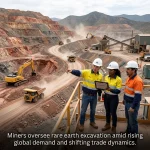
Caption: Heavy equipment operating at an exploration site in northern British Columbia. The suspension of certain DRIPA provisions aims to secure the legal standing of such operations.
The industry’s concern is mirrored by broader market trends. According to Skillings Mining Intelligence, the global M&A surge and the demand for critical minerals have made jurisdictions with stable regulatory frameworks more attractive. Any perceived instability in BC could drive exploration dollars to competing regions like Ontario or Western Australia.
A “Unilateral Betrayal”: First Nations Reaction
The provincial government’s decision has been met with swift and severe condemnation from Indigenous leaders. The First Nations Leadership Council (FNLC) released a scathing statement over the weekend, describing the suspension as a “unilateral betrayal” of the reconciliation process.
“This is a retreat from the principles of DRIPA,” said a spokesperson for the FNLC. “The Premier is choosing to prioritize the mining industry over the constitutional rights of Indigenous peoples. By pausing the law when it becomes inconvenient, the province is signaling that reconciliation is a fair-weather commitment.”
Indigenous leaders argue that the government is using the “politics of fear” to justify a rollback of human rights. They contend that the court ruling was a necessary correction to a system that has historically excluded First Nations from the benefits and decision-making processes of resource extraction on their lands.
Critics also point out that the suspension could inadvertently create more litigation, rather than less. By removing the legislative framework of DRIPA for three years, First Nations may be forced to rely on even more aggressive legal challenges under Section 35 of the Constitution Act, 1982, which protects aboriginal and treaty rights.
Political High-Stakes and the Confidence Motion
By treating the suspension as a confidence motion, Premier Eby has effectively dared the opposition parties to trigger an election. With only approximately 20 sitting days remaining in the current legislative session, the government is under immense pressure to force the bill through.
The BC Conservative Party has historically advocated for more industry-friendly regulations, while the BC Green Party has remained a staunch defender of DRIPA’s original intent. This leaves the governing New Democratic Party (NDP) in a delicate position, attempting to balance its commitment to Indigenous rights with the economic realities of a province heavily dependent on resource revenues.
Observers suggest that Eby’s move is a calculated risk aimed at the centrist voter. By framing the issue as a choice between economic stability and legal chaos, the Premier is attempting to shield the NDP from accusations of being “anti-mining” ahead of the next provincial cycle.
Impact on British Columbia’s Mining Future
The three-year suspension is intended to last until the Supreme Court of Canada provides a definitive ruling on the relationship between DRIPA and the province’s regulatory authority. However, three years is a lifetime in the world of mineral exploration.
Projects currently in the pipeline, such as Hudbay’s Copper Mountain 2040 expansion, depend on a predictable permitting environment. While the suspension aims to protect existing claims, the cloud of a future Supreme Court ruling may still deter long-term capital commitments.
“The industry doesn’t just need a pause; it needs a permanent solution,” said an analyst familiar with BC mining policy. “Even with the suspension, every claim registered today comes with a mental asterisk. Investors are asking: what happens in 2029 if the Supreme Court rules against the province?”

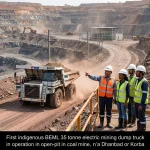
Caption: Mining engineers reviewing site plans in an open-pit mine. The regulatory shift in BC is being closely watched by operators across North America.
Furthermore, the suspension does not address the underlying issue of how to integrate consultation into an automated, online system. The province has signaled that it will use the three-year window to co-develop a new mineral titles system with First Nations, but the “unilateral” nature of the suspension has poisoned the well for many potential partners in that process.
Broader Implications for Canadian Mining Law
The “BC Regulatory Shock” is being monitored closely by other Canadian provinces that have considered or enacted their own UNDRIP-alignment legislation. The situation in British Columbia serves as a cautionary tale of the complexities involved in reconciling colonial-era resource laws with modern human rights frameworks.
If the BC suspension is successful in stabilizing the industry without triggering a massive wave of civil unrest or successful constitutional challenges, it could provide a template for other jurisdictions facing similar legal bottlenecks. Conversely, if it leads to prolonged protests or further investment flight, it may mark the beginning of a long period of decline for BC’s resource sector.
The province’s move also intersects with the push for “green” mining and the extraction of rare earth elements. As discussed in recent analysis on rare earth elements and national security, the race to secure critical mineral supplies is intensifying. British Columbia, with its vast copper and molybdenum deposits, is a key player in this global transition. Any delay in exploration could have ripple effects across the North American supply chain.
Summary: What to Watch in the Coming Months
As the legislative session progresses, several key indicators will determine the success or failure of Premier Eby’s gambit:
- The Legislative Vote: Whether the NDP can maintain caucus discipline and pass the suspension without triggering a government collapse.
- The AME Backlog: How quickly the Ministry of Energy, Mines and Low Carbon Innovation can resume the processing of mineral titles.
- Indigenous Legal Challenges: Whether First Nations groups file for immediate injunctions against the suspension itself.
- Capital Flow: Whether junior exploration firms can successfully raise funds for the 2026 summer season despite the temporary nature of the fix.
The situation remains fluid. While the Premier’s “regulatory shock” was intended to provide certainty, it has, in the short term, amplified the debate over the future of resource governance in Canada. For operators and investors, the message is clear: British Columbia is entering a period of significant transition, where the rules of engagement for mining are being rewritten in real-time.
For more updates on provincial regulations and their impact on the mining sector, stay tuned to Skillings Mining Intelligence. Recent reports on mine electrification and biomining breakthroughs highlight how the industry continues to innovate even in the face of regulatory headwinds.