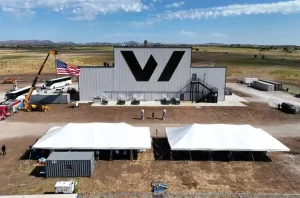
Taseko Mines Limited confirmed first copper cathode production at its Florence Copper operation in Arizona on Thursday, marking the commissioning of the company's second producing asset and bringing new domestic copper supply online amid persistent market deficits.

The Vancouver-based miner is targeting production of 30 to 35 million pounds of copper cathode from Florence in 2026, with total corporate output expected to reach 110 to 115 million pounds across both operations. The Arizona facility is designed for full-scale capacity of 85 million pounds annually once ramp-up is complete.
"Achieving first production at Florence Copper demonstrates the value of this asset and positions Taseko as a significant North American copper producer," CEO Stuart McDonald said in a statement accompanying the company's fourth-quarter earnings release. The timing delivers on operational milestones while validating the company's transition from single-asset producer to diversified operator.

Production Ramp-Up Timeline and Methodology
Florence Copper reached first production following a carefully sequenced commissioning process that began with substantial completion of the solvent extraction and electrowinning plant in September 2025. Wellfield operations commenced in mid-October, with initial solution injection starting in early November.
More Read

The methodical ramp-up reflects the technical requirements of in-situ copper recovery technology, which differs fundamentally from conventional mining operations. ISCR requires systematic optimization of wellfield performance and solution flow rates before achieving design capacity: a process that trades speed for operational reliability.

Early wellfield results support the 2026 production guidance. Solution chemistry and recovery rates are tracking within expected parameters during the initial production phase, according to company disclosures.
The Florence facility represents the first new commercial-scale ISCR copper operation in the United States, employing technology that recovers copper from oxide deposits through controlled groundwater circulation rather than conventional extraction methods.
More Read

Environmental Profile and Employment Impact
The operational footprint distinguishes Florence from traditional Arizona copper mines. The ISCR method produces 75% fewer carbon emissions, consumes 65% less energy, and uses 78% less water per pound of copper compared to open-pit operations in the state.
The project currently employs over 810 workers in Arizona, contributing to regional economic development while addressing domestic copper supply constraints. The workforce includes operational staff, technical personnel, and contractors supporting ramp-up activities.
These metrics matter beyond corporate sustainability reporting. Arizona remains a critical jurisdiction for U.S. copper production, and permitting timelines for new conventional mines continue to extend. Florence's environmental advantages and shorter development timeline offer a template for future domestic supply additions: assuming ISCR technology proves commercially viable at scale.

Financial Position and Capital Structure
Taseko secured $173 million in equity financing in October 2025 to support Florence's development and operational optimization during the production ramp-up period. The capital raise addressed working capital requirements and provided runway for wellfield expansion activities necessary to reach full production capacity.
The company's fourth-quarter earnings report, released concurrently with the production announcement, showed mixed results that pressured share prices in early trading. Quarterly revenue came in below analyst expectations due to lower-than-anticipated copper prices during the period and production timing at Gibraltar.
Shares declined 5.3% in Toronto trading following the earnings release, reflecting investor sensitivity to near-term cash flow metrics despite the Florence production milestone. The market response underscores ongoing scrutiny of Taseko's balance sheet as it finances dual-operation overhead while ramping new production.
Gibraltar Mine Performance
The company's flagship Gibraltar copper-molybdenum mine in British Columbia delivered steady production during the fourth quarter, processing approximately 62,000 tonnes per day through the mill. Annual production from Gibraltar totaled roughly 125 million pounds of copper in 2025, maintaining output levels consistent with recent years.
Gibraltar's reliability provides cash flow stability as Taseko invests capital and management attention into Florence's commissioning. The British Columbia operation has produced for over four decades, offering operational predictability that offsets execution risk at the Arizona startup.
Molybdenum by-product credits from Gibraltar continue to provide margin support, though prices for the minor metal remained under pressure through late 2025. The company's consolidated cost position benefits from molybdenum revenue, reducing per-pound cash costs for copper production.
Market Context and Supply Dynamics
Florence's production comes online as global copper markets face structural supply constraints heading into 2026. Refined copper deficits are projected to widen considerably this year, driven by accelerating electrification demand and limited new mine supply. Multiple analysts forecast deficits exceeding 800,000 tonnes in 2026, creating supportive pricing fundamentals.
U.S. domestic production remains particularly constrained. Permitting delays, capital intensity, and jurisdictional challenges have limited new project development, leaving American copper consumption heavily dependent on imports. Florence's domestic production offers supply chain benefits beyond pure economics: strategic value that may influence future policy support for similar projects.

The timing aligns with elevated copper prices that reached new highs in early 2026. Market pricing above $5 per pound significantly improves project economics compared to feasibility study assumptions from Florence's development phase. Higher realized prices during ramp-up should accelerate payback and strengthen Taseko's financial flexibility.
Operational Risks and Execution Challenges
Production ramp-ups at new mining operations rarely proceed without complications. Florence faces technical risks specific to ISCR technology, including wellfield performance variability, solution management complexity, and recovery rate optimization.
The company must prove it can consistently achieve design recovery rates across expanding wellfield areas. Early wellfield performance provides encouraging data, but scaling to full production requires replicating initial results across additional well patterns while managing solution chemistry and flow dynamics.
Regulatory compliance adds complexity. Florence operates under permits requiring continuous groundwater monitoring and environmental protection measures. Any excursions from permitted parameters could trigger production curtailments or additional capital requirements for remediation infrastructure.
Capital efficiency during ramp-up will determine how quickly Florence contributes meaningful cash flow. The October 2025 financing provides runway, but extended ramp-up timelines or lower-than-expected recovery rates would pressure liquidity and potentially require additional capital raises.
Strategic Implications for Taseko
First production at Florence fundamentally reshapes Taseko's corporate profile. The company transitions from single-asset operator dependent on Gibraltar's aging infrastructure to diversified producer with operations in two jurisdictions employing different mining methods.
This diversification matters for multiple stakeholders. Equity investors gain exposure to operational and jurisdictional risk spreading. Debt holders benefit from dual cash flow streams supporting capital structure. Offtake partners access additional supply optionality.
The successful commissioning also validates management's execution capability on complex development projects. Taseko brought Florence from construction through commissioning despite financing challenges, permitting complexities, and technical uncertainties inherent in first-of-kind ISCR deployment at commercial scale.
McDonald's emphasis on demonstrating asset value suggests the company may explore strategic alternatives once Florence proves commercial viability. A performing Arizona copper operation with domestic supply advantages and favorable environmental metrics could attract acquisition interest from larger producers seeking U.S. exposure.
2026 Production Outlook
Combined production guidance of 110 to 115 million pounds positions Taseko as a mid-tier North American copper producer. The company joins a limited group of miners operating multiple copper assets in favorable jurisdictions with reasonable geopolitical risk profiles.
Gibraltar's contribution remains the larger component near-term, but Florence's growth trajectory could shift the balance by 2027 if ramp-up proceeds as planned. Full-scale Florence production of 85 million pounds would exceed Gibraltar's current output, fundamentally reweighting the company's asset portfolio.
The 2026 production profile sets a baseline for evaluating execution through the year. Investors will track quarterly production reports closely, looking for evidence that Florence is meeting internal ramp-up targets and that recovery rates match design parameters.
Florence Copper's first production represents more than a corporate milestone. It marks the commissioning of new U.S. copper supply using alternative extraction technology at a moment when markets face supply constraints and policy attention focuses on domestic production capacity. The operation's performance through 2026 will determine whether ISCR technology merits broader application: and whether Taseko successfully executes its transition to multi-asset producer.