By Charles Pitts

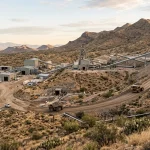
The consolidation of the world’s highest-grade uranium mine is nearing completion as the industry’s two dominant Western players move to eliminate minority “leakage” from their flagship asset. Cameco Corporation and Orano Canada Inc. announced in June 2026 that they will acquire TEPCO Resources Inc.’s remaining 5% participating interest in the Cigar Lake Joint Venture for approximately $115 million.
The transaction, expected to close in the third quarter of 2026, marks the end of an era for Tokyo Electric Power Company’s (TEPCO) direct involvement in the Saskatchewan basin’s most prolific asset. For Cameco and Orano, the move is a surgical strike designed to maximize their exposure to licensed, Tier-1 pounds as the uranium market outlook 2026 shifts from a period of inventory drawdown to one of structural scarcity.
The Deal Mechanics: Cleaning Up the Structure
Under the terms of the agreement, Cameco and Orano are exercising their rights to acquire TEPCO’s stake in proportion to their existing ownership.
- Cameco’s share: The company will pay roughly C$115.75 million to increase its interest by 2.871 percentage points, bringing its total ownership to 57.418%.
- Orano’s share: The French-owned giant will increase its stake by 2.129 percentage points to 42.582%.
Upon closing, the joint venture will be 100% owned by the two operators. While a 5% stake might appear marginal on paper, the financial accretion for Cameco is notable. Analysts at Stifel Canada characterized the purchase as a “discounted clean-up transaction,” noting that the deal was struck at roughly 0.45x price-to-NPV. For Cameco, this adds approximately 0.5 million pounds per year of attributable production and 5 million pounds of proven and probable reserves at an implied in-situ price of roughly US$17/lb: a significant discount compared to current market valuations.
More Read



Why Licensed Pounds Command a Premium
In the current regulatory environment, the value of a uranium mining company is increasingly defined not just by the ore in the ground, but by the permits required to extract it. Cigar Lake is not merely a high-grade deposit; it is a fully licensed, operational, and proven facility in a stable jurisdiction.
The uranium market outlook 2026 is increasingly defined by “permitting paralysis” in other regions. While greenfield projects in Africa and Central Asia face logistical and geopolitical headwinds, Cigar Lake continues to deliver. The mine operates using a specialized non-entry jet boring system to manage its exceptionally high-grade ore, which averages approximately 17% U3O8. This grade is roughly 100 times the global average, allowing for massive energy output from a relatively small volume of extracted material.
More Read

By buying out TEPCO, Cameco and Orano are securing “certainty.” Every additional pound acquired through this deal is a pound that does not require new environmental impact assessments, indigenous consultation frameworks, or years of shaft sinking. In a market where utilities are desperate for long-term security of supply, these licensed pounds are the ultimate strategic currency.
Extending the Runway: The Road to 2036
A critical driver for this consolidation is the Cigar Lake Extension (CLExt) project. Originally slated to wind down earlier, recent technical updates have successfully converted 73.4 million pounds of indicated resources into probable reserves. This conversion effectively extends the mine’s productive life to 2036.
The transition to CLExt involves significant capital expenditure, including:
- Freeze Pad Construction: Essential for stabilizing the volatile, water-bearing sandstone that overlays the ore body.
- Underground Infrastructure Expansion: Expanding the jet boring reach to access new zones.
- Mill Optimization: Aligning the McClean Lake mill, operated by Orano, to maintain a steady production rate of 18 million pounds per year (100% basis).
Consolidating ownership simplifies the decision-making process for these multi-year capital commitments. With only two partners remaining, governance becomes leaner, and strategic alignment on production volumes: often a point of contention in three-party JVs: is significantly strengthened.

Uranium Market Outlook 2026: The Deficit Widens
The macro backdrop for this deal is one of unprecedented demand growth. The SMR uranium demand 2026 narrative has moved from theory to procurement, as big-tech firms sign direct power purchase agreements with nuclear operators to fuel AI data centers.
As of mid-2026, the global uranium market remains in a primary production deficit. While 2025 mine production hovered around 173 million pounds, primary demand is estimated at over 204 million pounds. This gap is currently bridged by secondary supplies and inventory drawdowns, but the “buffer” is thinning.
Furthermore, the bifurcation of the market: East versus West: has forced Western utilities to pivot away from Russian enrichment and Kazakh supply chains. This “re-shoring” of the nuclear fuel cycle places a massive premium on Saskatchewan-based assets. As we noted in our recent analysis of uranium market targets, the US$150/lb price target is increasingly viewed as a necessary floor to incentivize the next generation of deep-tier mines.
Uranium Price Forecast 2026: Drivers and Risks
The current price environment is characterized by high-term prices and volatile spot trading. Long-term contract prices reached US$90/lb in early 2026, the highest level since 2008, signaling that utilities have accepted a “higher-for-longer” reality.
2026 Price Scenario Framework
| Scenario | Estimated Spot Band | Rationale |
|---|---|---|
| Base Case | US$85 – $105/lb | Sustained deficit, steady utility contracting, and moderate financial fund (SPUT) buying. |
| Bull Case | US$110 – $140/lb | Further supply shocks (Kazakhstan production delays, chokepoints in the Strait of Hormuz) or a surge in AI-driven reactor commitments. |
| Bear Case | US$65 – $80/lb | De-escalation of geopolitical risks in Eastern Europe, faster-than-expected restarts of idled mines, and financial outflows from uranium ETFs. |
The uranium price forecast 2026 remains sensitive to supply-side disappointments. Major producers like Kazatomprom have struggled with sulfuric acid shortages and logistical delays, making the reliable output from Cigar Lake even more vital to global supply stability.

Operational Resilience and Geopolitical Shifts
The TEPCO exit is symbolic of a broader shift in the mining sector. Passive utility investors are being replaced by strategic, vertically integrated operators who view the mine not just as an investment, but as a critical link in the global energy transition.
For Orano, increasing its stake ensures long-term feed security for its McClean Lake mill. For Cameco, it reinforces its status as the world’s premier pure-play uranium producer. Both companies are essentially betting that the “premium” they are paying today will look like a bargain by the time the CLExt project reaches full throttle in the late 2020s.
As the industry prepares for a decade of nuclear expansion, the consolidation at Cigar Lake serves as a template. In a world of increasing geopolitical instability and strategic priority shifts, the winners will be those who own the most high-grade, licensed pounds in the safest corners of the globe.