Copper prices just smashed through the $13,228 per metric ton mark on the London Metal Exchange (LME). If you’ve been waiting for the “inevitable” cooling of the red metal, you might want to settle in. This isn’t a cooling. It’s a breakout.

As of March 3, 2026, the industrial world is waking up to a reality where copper isn’t just a commodity: it’s the ultimate strategic asset. The surge, a significant jump from earlier year-to-date averages, didn’t happen in a vacuum. It was ignited by a massive shift in the geopolitical landscape, specifically a U.S. Supreme Court ruling that just changed the rules of the trade war.
For the mining industry, $13,228 is more than a number. It’s a green light for massive capital expenditure and a signal that the global supply chain is preparing for a period of intense, friction-reduced demand.
The Supreme Court’s Billion-Dollar Pivot
The primary driver for this morning’s price action is coming from the legal benches in Washington, D.C., rather than the pits of South America. The U.S. Supreme Court has ruled against reciprocal duties, effectively dismantling a significant portion of the “tit-for-tat” tariff structure that has defined U.S.-China trade for years.
The fallout was immediate. There is now serious momentum behind a potential 15% reduction in U.S. levies on Chinese imports.
More Read

Why does this matter for copper? Because China remains the undisputed engine of global copper consumption. When trade barriers fall, manufacturing optimism rises. When manufacturing optimism rises, orders for copper wire, tubing, and electronic components skyrocket.

The market is pricing in a future where the friction of global trade is significantly lower. In a world characterized by the effects of globalization on the mining industry, this move toward de-escalation is like pouring high-octane fuel on an already burning fire.

More Read

$13,228: Breaking Down the Numbers
Let’s look at the math. $13,228 per metric ton translates to roughly $6.00 per pound.
For the better part of late 2025, the market hovered in the $5.90 range. Analysts at Citigroup and J.P. Morgan have been sounding the alarm on a refined copper deficit of approximately 330,000 tons for 2026. They weren’t wrong. If anything, they were conservative.
The strategic calculus here isn’t subtle:
- Supply is tight: Major mines are aging, and new permits are stuck in regulatory purgatory.
- Demand is relentless: The “Green Transition” isn’t a slogan; it’s a massive, hardware-heavy overhaul of global infrastructure.
- Liquidity is returning: With the U.S. Supreme Court ruling, institutional investors are rotating back into metals, betting on a manufacturing rebound.
We’re seeing a rotation where copper is being treated with the same urgency as lithium or cobalt during the peak of the battery craze. Only this time, the infrastructure is already there to consume it.
The M&A Feeding Frenzy: Hudbay’s $1 Billion Bet
When copper prices stay this high, mining companies don’t just sit on their cash: they go shopping.
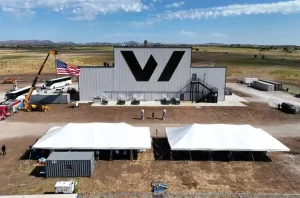
In a move that perfectly illustrates the current market sentiment, Hudbay Minerals has announced the $1 billion acquisition of Arizona Sonoran. This isn’t just another corporate merger. It’s a strategic land grab in one of the world’s most stable jurisdictions.
Hudbay is looking at the copper forecast for 2026 and realizing that it is significantly cheaper to buy existing resources than to gamble on greenfield exploration. Arizona Sonoran’s Cactus Project represents the kind of “low-hanging fruit” that major producers are desperate to add to their portfolios.
At $13,228/ton, projects that were previously considered “marginal” or “medium-grade” are suddenly massive cash cows. The $1 billion price tag for Arizona Sonoran might have seemed steep a year ago. Today? It looks like a bargain.

The China Factor: More Than Just Tariffs
While the U.S. tariff reduction is the headline, the underlying story is China’s relentless demand for minerals to fuel their own technological shift.
Despite years of “de-risking” talk in the West, the reality is that China still buys Australian iron ore and global copper at volumes that the rest of the world can’t match. The 15% reduction in levies allows for a smoother flow of finished goods back into the U.S. market, which in turn incentivizes Chinese factories to increase their raw material stockpiles.
We are entering a phase where the “just-in-time” supply chain for copper is being replaced by “just-in-case” hoarding. If you are a manufacturer of electric cars, you aren’t looking at today’s price. You’re looking at the fact that there simply isn’t enough copper in the pipeline to meet 2030 targets.
Skillings’ Perspective: 114 Years of Cycles
At Skillings Mining Review, we’ve been tracking these movements since 1912. We’ve seen the booms of the World Wars, the stagflation of the 70s, and the China-led supercycle of the early 2000s.
History tells us that when copper moves like this, it’s a leading indicator. It’s the “canary in the coal mine” for the broader industrial economy. The current surge isn’t just about speculation; it’s about the fundamental realization that the world’s electrical grid and transportation systems require a physical volume of copper that the current mining output cannot satisfy.
We’ve covered everything from deep-sea mining technology to the future of U.S. Steel, and the recurring theme is always the same: you can’t disrupt geology. It takes a decade to bring a new copper mine online. You can’t code your way out of a physical shortage.

Why Construction and Electronics are Worried
While miners and shareholders are celebrating $13,000+ copper, the downstream sectors are starting to sweat.
In the construction industry, copper is the nervous system of every building. High prices mean higher costs for residential housing and commercial infrastructure. In consumer electronics, the margins are already razor-thin. A 10% sustained increase in copper costs can wipe out the profitability of a new smartphone or laptop line.
But here’s the kicker: these industries don’t have a choice. You can’t build a data center for the “AI revolution” without massive amounts of copper busbars and cooling systems. You can’t build a solar farm without miles of cabling.
They are all competing for the same limited supply. They are all pulling on the same rope. And right now, the rope is fraying.
The Road to $15,000?
Is $13,228 the peak? Probably not.
If the U.S.-China trade optimism results in a formalized treaty, and if the 15% tariff reduction is fully implemented, we could see Citigroup’s “bull case” of $15,000/ton become the new reality by the end of Q3 2026.
The market is currently ignoring the risks: and there are plenty. We have ongoing power crises in South Africa affecting smelting and mining operations, and geopolitical instability in the Middle East that could spike energy costs for miners.
But for now, the momentum is purely upward. The combination of legal clarity in the U.S. and industrial hunger in China has created a “perfect storm” for copper prices.
The Final Word
The mining industry has always been a game of cycles, but 2026 is feeling less like a cycle and more like a structural shift.
Hudbay’s acquisition of Arizona Sonoran is just the first domino. Expect to see more M&A activity as mid-tier producers are swallowed by majors looking to “buy” their way into a high-price environment.
For the operators on the ground and the investors in the boardroom, the message is clear: the floor has moved. Copper at $13,228 isn’t an anomaly. It’s the new cost of doing business in a world that is desperately trying to electrify everything, everywhere, all at once.
The strategic calculus isn’t subtle. There’s not enough to go around. And in the world of commodities, that means the price only goes one way.
Welcome to the new era of the red metal. It’s going to be a wild ride.