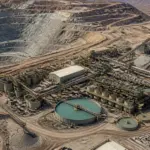
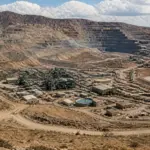
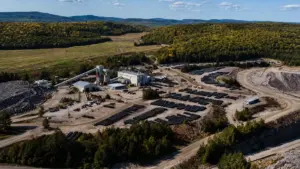
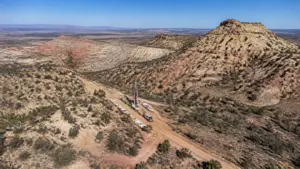
Mt Lyell is expected to return to production in early 2029 after more than a decade on care and maintenance.

By Penny Langford
Sibanye-Stillwater has approved the restart of Tasmania’s historic Mt Lyell copper-gold mine, setting a target of early 2029 for first production and opening a potential new source of Australian copper supply after more than a decade offline.
The company said its board approved the project in the third quarter of 2026 following completion of an AACE Class 2 feasibility study and an internal assurance review. Project execution is expected to begin in the first half of 2027.
At steady state, Mt Lyell is expected to produce approximately 26,000 tonnes of copper a year, along with about 16,000 ounces of gold and 116,000 ounces of silver. Sibanye-Stillwater estimates an initial mine life of 23 years and expects the operation to employ more than 300 employees and contractors.
The restart would return a major industrial employer to Queenstown and Tasmania’s West Coast, where Mt Lyell operated for more than a century before entering care and maintenance in 2014.

A board decision, not the end of the approval process
The board decision represents a positive investment decision by Sibanye-Stillwater, but it does not mean every regulatory or operating step has been completed.
The company said technical, permitting and operational-readiness work will continue through the execution phase. The restart will also require upgrades to mine infrastructure, processing facilities, power, water management, ventilation and pumping systems.
Sibanye-Stillwater’s Mt Lyell project overview places total project capital at approximately US$340 million, or about A$490 million. The company expects a maximum cash draw of approximately US$370 million, equivalent to roughly A$530 million.
The Tasmanian government has committed A$9.5 million for initial works and said a further A$25 million package would be provided once the mine reopens, according to ABC News.
The distinction between investment approval and regulatory clearance will remain important as the project moves toward construction. Mt Lyell has a long environmental legacy, including acid drainage and elevated metal concentrations in parts of the King and Queen river systems linked to historic mining practices.
Sibanye-Stillwater said it will remain responsible for environmental, rehabilitation and closure obligations associated with the restart and future operations. The company is evaluating mine-water treatment and reuse, progressive rehabilitation and the engineered placement of potentially acid-forming material in existing mining voids.
Mt Lyell restart: key project figures
| Metric | Project basis |
|---|---|
| Target for first production | Early 2029 |
| Planned execution start | First half of 2027 |
| Steady-state copper production | Approximately 26,000 tonnes per year |
| Steady-state gold production | Approximately 16,000 ounces per year |
| Steady-state silver production | Approximately 116,000 ounces per year |
| Initial mine life | Approximately 23 years |
| Total project capital | Approximately A$490 million |
| Expected workforce | More than 300 employees and contractors |
| Mineral Resource | 79.4 million tonnes |
| Contained copper in Mineral Resource | 1,609 million pounds |
| Contained gold in Mineral Resource | 0.5 million ounces |
Source: Sibanye-Stillwater project information and company reporting. Production figures are expected steady-state levels, not initial ramp-up output.
A long-delayed return to production
Mt Lyell entered care and maintenance in 2014 after a difficult period that included the deaths of three workers within six weeks and damage to underground infrastructure caused by a rockfall, ABC News reported.
The closure removed one of the West Coast’s central economic drivers. Queenstown and surrounding communities had developed around the mine’s employment, procurement and service activity, making the restart significant well beyond the project’s expected metal output.
Sibanye-Stillwater acquired the operation through its ownership of Copper Mines of Tasmania. The company exercised its option to acquire Mt Lyell in 2023 and has since advanced technical and feasibility work to determine whether the brownfield operation could be restarted.
The company said the project benefits from existing underground development, mine access, tailings infrastructure, logistics and processing-related assets. Those features are intended to reduce the execution complexity and upfront capital required compared with a new greenfield copper development.
The feasibility basis also draws on several underground and open-pit deposits rather than a single production area. Sibanye-Stillwater said that could provide additional operating flexibility during the mine’s life.
What the project could add to Australian copper supply
Mt Lyell’s expected annual copper production would be modest compared with Australia’s largest operations, but it would add a new domestic source at a time when governments and manufacturers are seeking more secure supplies of energy-transition metals.
Copper is used throughout power networks, renewable energy infrastructure, electric vehicles, industrial equipment and data-centre construction. Skillings’ analysis of copper prices, supply constraints and market scenarios has examined how long project lead times and permitting challenges are limiting the speed at which new mine supply can respond to demand.
The 26,000-tonne annual target would not by itself change global market balances. Its significance is more closely linked to the project’s location, infrastructure base and potential contribution to Australia’s broader critical-minerals strategy.
Australia is a major mining jurisdiction, but its copper production faces ageing assets, declining grades at some established operations and a pipeline of projects that require significant capital and lengthy permitting processes. A brownfield restart can shorten parts of that development pathway, although it does not eliminate construction, commissioning, environmental or workforce risks.
The project’s planned access to renewable hydropower is another factor Sibanye-Stillwater has highlighted. The company expects hydropower access to reduce the carbon intensity of production, although the final operating footprint and emissions profile will depend on the mine plan, processing configuration and energy requirements.
Jobs and regional economic effects
The company expects Mt Lyell to employ more than 300 employees and contractors once steady-state operations are reached.
Tasmanian officials described the restart as a major opportunity for Queenstown and the broader West Coast. Resources Minister Felix Ellis said the project could support local employment and provide work for contractors and service providers, according to ABC reporting.
The expected economic effects could extend beyond direct mine employment. Local accommodation providers, transport companies, engineering contractors, equipment suppliers, hospitality businesses and retailers may benefit as project activity increases.
The timing of that benefit will depend on how quickly construction work begins and how much procurement is placed locally. Sibanye-Stillwater said local employment, training, procurement, housing and community integration would form part of its implementation and stakeholder-engagement plans.
The workforce will also need to include people with experience in modern underground mining, automation, processing and environmental management. Because the operation has been offline since 2014, the restart will require a combination of returning workers, newly trained employees and specialist contractors.
Safety and automation remain central
The history of Mt Lyell means worker safety will be closely watched as the project advances.
Sibanye-Stillwater said the restarted operation would use increased automation, including tele-remote equipment intended to remove workers from higher-risk areas near underground drawpoints.
Mt Lyell general manager Clint Mayes told ABC News that mud rushes would remain a key safety concern and that automation would be used to reduce direct worker exposure. The stated priority, he said, was safety rather than economic optimisation.

Remote-operated underground equipment is expected to help reduce worker exposure in higher-risk areas.
Automation alone will not resolve all underground risks. Ground control, ventilation, water management, emergency response, maintenance and operator training will remain essential to the mine’s safety performance.
The restart therefore provides a test of how older mining infrastructure can be integrated with newer digital and remote-operating systems. The outcome will be relevant to other brownfield projects seeking to extend the life of established assets while improving safety and operating control.
Processing refurbishment is a major execution task
Sibanye-Stillwater has identified the processing plant as one of the principal areas requiring investment. ABC News reported that the A$490 million capital program would include a new processing plant, refurbishment of the existing shaft and improvements to ventilation, power, water and pumping systems.
Those upgrades will need to be coordinated with underground mine development and the wider site’s environmental controls. Delays in one area could affect commissioning and the early-2029 production target.
The company has described Mt Lyell as a brownfield project with established infrastructure, but brownfield assets can also introduce construction and integration challenges. Equipment condition, legacy designs, access constraints and the need to maintain environmental controls during construction can all affect schedule and cost.
For operators and policymakers, the next milestones will include detailed engineering, procurement, site preparation, underground development, plant construction, workforce recruitment and commissioning.

Processing, power and water infrastructure will require upgrades before production can begin.
The milestones ahead
Sibanye-Stillwater expects to spend approximately A$11 million during 2026, or US$7.5 million, as the project moves into execution. Larger capital spending is expected to follow as construction and refurbishment work begins.
The company’s current schedule can be summarised as follows:
| Stage | Expected timing | Main focus |
|---|---|---|
| Board investment approval | Third quarter of 2026 | Move project into execution |
| Early execution activities | First half of 2027 | Engineering, procurement and site works |
| Major construction and refurbishment | 2027–2028 | Processing, shaft, ventilation, power, water and pumping upgrades |
| Commissioning and ramp-up | Before and during early 2029 | Test infrastructure and begin production |
| Steady-state operations | After ramp-up | Target approximately 26,000 tonnes of copper annually |
The schedule remains a target rather than a guarantee. Construction performance, equipment delivery, underground conditions, workforce availability, permitting and environmental management will determine whether first production is achieved in early 2029.

The restart is expected to support Queenstown and the wider West Coast economy.
Why the restart matters
Mt Lyell will not transform Australia’s copper market on its own. Its planned output is small relative to national and global production, and the project remains several years from first metal.
Its importance lies in the combination of factors: a long-established mining district, existing infrastructure, a defined Mineral Resource, access to renewable hydropower and the potential to restore more than 300 jobs in a community historically shaped by mining.
The project also illustrates the practical challenge facing the copper industry. Demand for the metal is growing across electrification and energy infrastructure, but supply additions can take years to move from feasibility studies to production.
Sibanye-Stillwater’s approval gives Mt Lyell a clearer path forward. The next test will be whether the company can convert that approval into construction progress, safe commissioning and reliable copper production by early 2029.
This article is for information and industry analysis only. It does not constitute financial advice or a recommendation to buy or sell any security.