By Charles Pitts

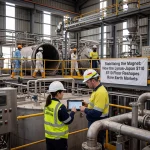
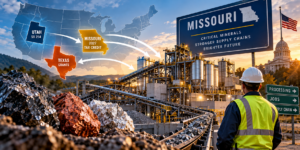
Critical minerals funding has officially moved from a policy talking point to a cornerstone of U.S. industrial strategy. On Friday, the Department of Energy (DOE) finalized a $500 million allocation aimed specifically at the midstream processing of lithium, copper, and nickel. The initiative marks a decisive step in the federal government’s multi-year effort to decouple the American energy transition from a supply chain currently dominated by the People’s Republic of China.
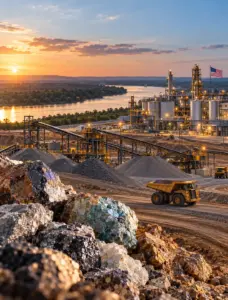
This funding is not an isolated event but rather a critical component of a broader, multi-billion-dollar “backbone” being built across the American mining landscape. From direct equity stakes to low-interest loans, Washington is attempting to de-risk the massive capital expenditures required to bring processing facilities online. For operators and investors, the message is clear: the U.S. is no longer content to merely extract ore; it intends to refine it.
The Midstream Gap: Why Processing Matters
For decades, the United States has exported raw materials while importing refined metals. This “midstream gap” has left domestic manufacturers: from EV battery producers to defense contractors: vulnerable to geopolitical shifts and export controls. The DOE’s $500 million bet is specifically designed to address this vulnerability by funding facilities that can convert raw ores into high-purity chemicals and metals.
While the U.S. has seen a surge in mining exploration, the bottleneck has always been the refinery. Without domestic processing, a lithium mine in Nevada or a copper project in Arizona remains dependent on offshore facilities, often located in jurisdictions with lower environmental standards or competing strategic interests.
More Read



The focus on lithium, copper, and nickel is no coincidence. These three commodities are the “trinity” of the energy transition. Copper is the fundamental conductor for everything from power grids to charging stations, while lithium and nickel are the essential ingredients for the high-density batteries required by the automotive sector.
Recent analysis suggests that to meet 2030 climate targets, the global industry needs to scale copper production by nearly 40%. Washington’s recent strategic pact with Santiago underscores the international dimension of this challenge, as the U.S. looks to secure raw materials from allies to feed these new domestic processing hubs.
More Read

Breaking the Monopoly: The China Factor
The geopolitical subtext of the $500 million announcement is impossible to ignore. China currently controls roughly 60% of the world’s lithium processing and nearly 90% of rare earth refining. This concentration of power has allowed Beijing to weaponize supply chains, most recently through export restrictions on gallium and germanium.
Washington’s response has been a massive infusion of capital. In addition to the DOE’s $500 million, the Export-Import Bank recently approved a $10 billion loan to finance the U.S. Strategic Critical Minerals Reserve. Simultaneously, the Department of Commerce has funneled $2 billion into the domestic rare earth sector, including direct equity stakes in key producers.
“This is about economic sovereignty,” notes one industry analyst. “If you don’t control the processing, you don’t control your own energy future. The $500 million is a down payment on a system that allows the U.S. to be self-sufficient in the event of a global trade rupture.”
This push for independence isn’t limited to the North American continent. The U.S. is aggressively backing projects in friendly jurisdictions, such as Norway’s Fen Project, which recently became Europe’s largest rare earth deposit. By creating a network of allied processing hubs, Washington aims to create a “China-free” supply chain for critical technology.
De-risking for Investors and Operators
For the mining industry, the most significant impact of the DOE funding is “de-risking.” Junior mining companies often struggle to secure traditional financing for processing plants due to the high upfront costs and long lead times. Government grants and low-interest loans act as a “first-loss” capital layer that makes projects more attractive to private equity and institutional investors.
We are seeing this play out in real-time with major players like Lundin Mining. Their recent stake increase in the Vicuña District reflects a growing confidence that the midstream infrastructure will be there to support massive upstream production.

Comparison of Recent Federal Critical Mineral Allocations (2025-2026)
| Agency | Funding Amount | Primary Focus |
|---|---|---|
| Dept. of Energy (DOE) | $500 Million | Midstream processing & recycling (Lithium, Nickel, Copper) |
| Dept. of Commerce | $2 Billion | Rare earth sector equity stakes & direct production |
| Export-Import Bank | $10 Billion | Strategic Critical Minerals Reserve financing |
| Pentagon (DoD) | $5 Billion | De-risking junior mining & domestic extraction |
| USA Rare Earth | $1.6 Billion | Domestic magnet and rare earth production |
The Role of Recycling and Sustainable Operations
A notable portion of the $500 million is earmarked for “circular” mineral economies: specifically recycling. Processing lithium and nickel from spent batteries is significantly less energy-intensive than traditional mining. It also provides a secondary source of supply that is entirely domestic.
However, the “backbone” Washington is building isn’t just about money; it’s about technology. Modern processing plants are increasingly modular and automated, reducing the environmental footprint and the need for massive on-site workforces in remote areas. This technological shift is essential for navigating the complex permitting environment in the U.S., where environmental concerns often stall projects for years.
The focus on domestic processing also aligns with the “Global North” trend of reshoring industrial capacity. By locating these plants near end-users: like the “Battery Belt” in the American South: logistics costs are slashed, and the carbon footprint of the final product is significantly reduced.
Challenges Ahead: Permitting and Labor
Despite the influx of capital, hurdles remain. The $500 million will buy equipment and build facilities, but it cannot fix a permitting process that many in the industry describe as “broken.” The average time to bring a new mine or processing facility online in the U.S. still exceeds seven years, compared to just two or three in jurisdictions like Australia or Canada.
Furthermore, there is a looming labor crisis. As the U.S. ramps up its processing capabilities, the demand for chemical engineers, metallurgists, and specialized technicians is skyrocketing. Without a concurrent investment in workforce development, these high-tech processing plants may struggle to find the operators they need to run at capacity.
2026 Outlook: The Road to Commercialization
As we move through 2026, the success of the DOE’s $500 million bet will be measured by the number of projects that move from “planned” to “under construction.” Investors should watch for announcements regarding the specific recipients of these funds, as these companies will likely become the anchors of the new domestic supply chain.
The geopolitical pressure to succeed is immense. With China’s grip on the market remaining firm, the U.S. has a narrow window to prove that its “backbone” can stand on its own. For operators, the current climate represents a unique opportunity to secure federal backing for projects that were previously deemed too risky.
Social Media Snippet:
“Washington just upped the ante with a $500M injection into domestic critical minerals. Is this the catalyst needed to break China’s processing monopoly? Read our deep dive on the DOE’s latest move to secure lithium, copper, and nickel supply chains. #MiningNews #CriticalMinerals #EnergySecurity #Skillings”
Key Takeaways for Stakeholders
- For Operators: Federal funding is increasingly focused on midstream processing. Diversifying into refining or recycling may unlock new capital streams.
- For Investors: Government “de-risking” is making junior miners with processing components more viable. Monitor the DOE’s award announcements for high-growth opportunities.
- For Policymakers: Capital is flowing, but permitting reform remains the “missing link” to ensuring these investments result in operational capacity before 2030.
The mining landscape is shifting. The transition from a resource-exporting nation to a refining powerhouse is underway, fueled by a half-billion-dollar bet from Washington. Whether this is enough to tilt the global scales remains to be seen, but the backbone is being built, one processing plant at a time.