KOLWEZI, Democratic Republic of Congo : The Democratic Republic of Congo’s national tax authority, the Direction Générale des Impôts (DGI), has forcibly sealed the administrative and operational facilities of Kamoto Copper Company (KCC), a flagship project controlled by Glencore. The enforcement action, which began on July 9, marks a significant escalation in a year-long $3 billion tax dispute between the Swiss mining giant and the Congolese government.

By Charles Pitts
The move has triggered an immediate halt to production at one of the world’s most significant copper and cobalt operations. According to on-site reports, KCC management was ordered to cease all extraction and processing activities, leading to the emergency evacuation of essential personnel from the site near Kolwezi. The facility, which produces approximately 190,000 tonnes of copper cathode annually, now sits idle as legal teams from both sides attempt to negotiate a resolution to the massive fiscal claim.
A Year of Escalating Tensions
The dispute centers on allegations of unpaid taxes, penalties, and interest spanning several fiscal years. While the DGI has not released a line-by-line breakdown of the $3 billion figure, industry analysts suggest the claim stems from a combination of contested export declarations, insurance irregularities, and customs duties.
Glencore has historically maintained that its subsidiaries operate in full compliance with the DRC’s mining code and international accounting standards. However, the Congolese government has recently sharpened its scrutiny of multinational mining firms, seeking to maximize state revenue amid a global surge in demand for critical minerals.
More Read

This is not the first time KCC has faced pressure from Congolese regulators. Over the past 24 months, the company has navigated a series of smaller audits and adjustments. The current $3 billion bill, however, represents a “systemic threat” to the project’s operational viability, according to internal sources familiar with the situation. The dispute has been simmering for over a year, with multiple rounds of private arbitration failing to yield a settlement.


Operational Paralysis and Personnel Evacuation
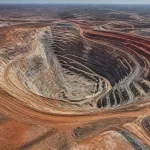
Unlike previous regulatory interventions that typically targeted administrative offices while allowing mines to continue running, the July 9 action effectively shuttered the entire KCC footprint. The sealing of the leach tanks, electrowinning plants, and the main Musonoi pit entrance forced the company to initiate its emergency shutdown protocols.
More Read

“The safety of our workforce remains the priority,” a Glencore spokesperson said in a brief statement early Friday. “Given the physical sealing of our facilities by state agents, we have transitioned the site to a care-and-maintenance state and facilitated the safe departure of non-essential personnel.”
The shutdown of KCC’s 190,000-tonne-per-year cathode production comes at a precarious time for the global copper market. With copper being a cornerstone of the energy transition and AI-driven electrical infrastructure, any supply disruption of this magnitude is expected to reverberate through global commodity exchanges. For comparison, the recent performance of nearby operators like Ivanhoe Mines at Kamoa-Kakula has been a primary driver of the DRC’s rising status as a top-tier copper producer, making the KCC halt even more impactful.
Market Implications: A Looming Copper Deficit
Industry experts warned that a prolonged closure of KCC could exacerbate an already tight global market. Copper inventories in LME-registered warehouses are currently near historic lows, and the industry is already grappling with the copper deficit of 2026, driven by unprecedented demand for data center expansion and the green energy nexus.
The DRC now accounts for nearly 10% of global copper supply and over 70% of the world’s cobalt. Any localized disruption in the Kolwezi region, the heart of the Congolese Copperbelt, creates immediate volatility. Traders in London and Shanghai are closely monitoring the situation, with base metal prices showing an initial 2.4% uptick in early trading following the news of the KCC sealing.

| Key Data Point | Kamoto Copper Company (KCC) |
|---|---|
| Controlling Stake | Glencore (75%) |
| Location | Kolwezi, Lualaba Province, DRC |
| Annual Copper Output | ~190,000 tonnes (Cathode) |
| Annual Cobalt Output | ~25,000 tonnes |
| Total Disputed Amount | >$3.0 Billion |
| Status as of July 10 | Sealed/Production Halted |
Regulatory Risk in the DRC
The KCC dispute highlights the persistent regulatory and fiscal risks associated with operating in the DRC. While the country offers world-class grades: evident in projects like Ivanhoe’s Kipushi zinc mine: the legal environment remains volatile.
The DGI’s aggressive stance against Glencore is seen by some as a broader signal to the mining community. The Congolese government has been vocal about its desire to renegotiate “lopsided” mining contracts and ensure that the wealth generated by the energy transition minerals directly benefits the national treasury.
Glencore has a complex history with the DRC government. In 2022, the company reached a $180 million settlement with the DRC to cover allegations of past corruption. This latest tax dispute, however, is a civil matter focused on current fiscal interpretations rather than historical criminal conduct. Nevertheless, the scale of the $3 billion demand suggests that the DGI is unwilling to accept a quick or low-cost settlement.
The Logistics of a Shutdown
Shutting down a complex hydrometallurgical facility like KCC is not as simple as flipping a switch. The process requires carefully managing the chemical balances in the leach circuits and ensuring that the electrical systems powering the electrowinning cells are decommissioned safely.
“When you seal a facility of this scale, you risk long-term damage to the processing infrastructure if the shutdown isn’t managed by experts,” noted a mining consultant based in Johannesburg. “The fact that personnel were evacuated suggests that the DGI enforcement was sudden and potentially disruptive to these delicate technical processes.”
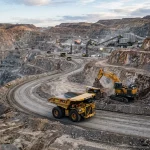
Photographs from the perimeter of the site show rows of stationary ultra-class haul trucks and idle conveyor belts. For a facility that typically operates 24/7, the silence in Kolwezi is a stark reminder of the power wielded by the DRC’s tax authorities.

Looking Ahead: Negotiation or Nationalization?
As of 12:00 AM ET on July 10, the situation remains a stalemate. Glencore’s high-level executives are reportedly in Kinshasa for emergency meetings with the Ministry of Mines and the Presidency. The company’s primary objective will be to secure a temporary lifting of the seal to resume operations while the tax dispute is adjudicated in court or through international arbitration.
For the DRC government, the risks of a long-term shutdown are also high. KCC is a major employer in the Lualaba Province and a significant contributor to the national GDP. A prolonged halt in production would eventually hit the state’s own royalty and dividend receipts, creating a “mutually assured destruction” scenario for both the company and the treasury.
Investors are cautioned that the resolution of such disputes in the DRC can be protracted. While the immediate focus is on the $3 billion tax bill, the broader implication is the shifting balance of power between resource-rich nations and the multinational corporations that extract those resources.