The United States has spent the last decade complaining about China’s rare earth monopoly while doing very little to actually break it. We’ve had the “studies,” we’ve had the “white papers,” and we’ve had plenty of hand-wringing in D.C. But you can’t build a cruise missile or an EV motor out of a PDF. You need the dirt. More importantly, you need total control over that dirt.

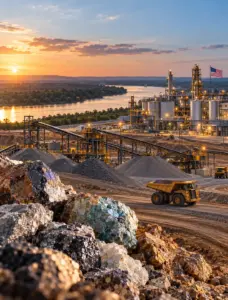
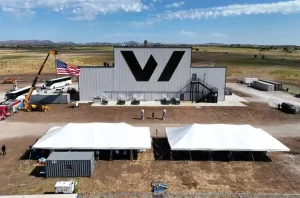
USA Rare Earth just ended the conversation. By securing 100% of the Round Top deposit in Hudspeth County, Texas, through a definitive $73 million deal to buy out its remaining partners, the company has effectively declared its independence. This isn’t just another mining acquisition. It’s a consolidation of the most strategic mineral asset on American soil.
At 1. SMR OPS 100K ($Daily Content), we’ve seen dozens of junior miners promise the moon. Most of them end up as cautionary tales in our archives. But this is different. This is about vertical integration in a world that is rapidly deglobalizing.
The $73 Million Consolidation: Why 100% Matters
For years, the Round Top project was a joint venture. While USA Rare Earth held the lion’s share, Texas Mineral Resources Corp (TMRC) retained a significant minority stake. In the world of high-stakes mining finance, minority stakes are friction. They mean complicated board meetings, split decision-making on CapEx, and potential legal hurdles when the big money: like the Department of Commerce: comes knocking.
By moving to 100% ownership, USA Rare Earth has cleared the deck. They now have “one neck to wring” and total autonomy over the development timeline. In an industry where speed-to-market is the only metric that matters, that’s everything.
More Read

The timing isn’t accidental. This deal follows a massive $1.6 billion government funding package, including a $1.3 billion senior secured loan under the CHIPS program. The feds aren’t interested in funding messy joint ventures. They want a single, accountable entity capable of delivering a domestic supply chain. USA Rare Earth just gave them exactly that.


Beyond Neodymium: The Gallium and Beryllium Factor
Most people hear “rare earths” and think of magnets. They think of Neodymium and Praseodymium (NdPr). Sure, those are vital. But China already knows we’re coming for the magnet market. The real strategic leverage at Round Top lies in the “other” stuff: Gallium and Beryllium.
More Read

Last year, China hammered the West by slapping export controls on gallium. It was a shot across the bow. Gallium is the backbone of high-frequency semiconductors and radar systems. Without it, the “shiny AI revolution” everyone is talking about comes to a grinding halt.
Round Top isn’t just a rare earth mine; it’s a polymetallic powerhouse. It contains one of the largest gallium deposits in the world. By securing 100% of this deposit, the U.S. now has a direct answer to Beijing’s export restrictions.
Then there’s beryllium. If you want to build a fighter jet or a nuclear reactor, you need beryllium. It’s lightweight, it’s stiff, and it handles heat like nothing else. Currently, the U.S. relies on a very thin supply chain for this. Round Top changes the math.
The Mine-to-Magnet Solution: Challenging the Dragon
Mining the ore is only 20% of the battle. The real reason China has a stranglehold on the world isn’t because they have all the rocks; it’s because they have all the factories that turn those rocks into magnets.
USA Rare Earth is the only American company executing a true “mine-to-magnet” strategy. They aren’t just digging a hole in Texas; they are building a magnet manufacturing facility in Stillwater, Oklahoma. They even bought UK-based Less Common Metals to secure the processing intellectual property.
This is the “Full Stack” approach to mining.
- Step 1: Extract the heavy rare earths at Round Top.
- Step 2: Process the oxides.
- Step 3: Convert to metals and alloys.
- Step 4: Manufacture permanent magnets for EVs and defense.
If you skip any of those steps, you’re still sending your concentrates to China for processing. And if you’re doing that, you haven’t actually solved the problem. You’ve just outsourced the dirty work while remaining a vassal state to their refining capacity.

The Skillings Legacy: 114 Years of Perspective
At Skillings, we’ve been tracking the mining industry since 1912. We’ve seen the rise of the Iron Range, the boom of the copper kings, and the shift toward battery metals. David N. Skillings Jr. understood that mining isn’t just about geology; it’s about national security.
Looking at Round Top through the Skillings lens, this is a “generational asset.” It’s the kind of project that defines an era. In the 1940s, it was steel. In the 1990s, it was offshore oil. In 2026, it’s the heavy rare earth elements that power the digital and military age.
We’ve covered everything from Rio Tinto’s lithium plays in Quebec to the shifting silver production in Mexico. But the Round Top consolidation feels different. It’s the first time in a long time that an American company has moved with this kind of aggressive, singular purpose to secure a critical mineral base.
The 2026 Reality: Timelines and Risks
Let’s be real for a second. You can’t build a mine this complex overnight. USA Rare Earth has moved up its timeline for commercial production to late 2028. That’s fast for the mining world, but it’s still two years away.
The risks are real.
- Permitting: Even with federal backing, the bureaucratic machine in the U.S. is slow.
- Technical Execution: Processing heavy rare earths is chemically intensive. Scaling that from a pilot plant to full-scale production is where many juniors fail.
- Market Volatility: As we noted in our 2026 copper price forecast, commodity markets are brutal. If China decides to flood the market with cheap rare earths to kill off American competition, USA Rare Earth will need every bit of that $1.3 billion loan to survive the winter.
However, the “Full Control” aspect of this deal mitigates the biggest risk: internal gridlock. By owning 100% of the asset, USA Rare Earth can move at the speed of a tech company, not a committee.
The Strategic Calculus
The strategic importance of Dysprosium and Terbium: the “heavy” rare earths found at Round Top: cannot be overstated. These are the additives that allow magnets to operate at high temperatures. Without them, your Tesla motor melts and your missile guidance system fails.
China currently controls nearly 100% of the heavy rare earth refining capacity. Round Top is the only project in the Western Hemisphere with the scale and the grade to break that.

Why Investors Should Pay Attention
The $73 million price tag for the remaining interest in Round Top is, frankly, a steal. If this deposit were located anywhere else, or if the geopolitical climate were less tense, that number would have an extra zero on it.
We are seeing a massive shift in how mining projects are valued. It’s no longer just about the Net Present Value (NPV) of the ore in the ground. It’s about the “Strategic Value” to the host nation. USA Rare Earth has positioned itself as the “National Champion” of the U.S. critical minerals sector.
As we discuss in our analysis of Mining ESG reporting in 2026, domestic production is the ultimate ESG play. It ensures labor standards, environmental oversight, and short supply chains. Round Top checks every one of those boxes.
Final Thoughts: The Road to 2028
The road from $73 million to a functioning mine-to-magnet supply chain is paved with engineering challenges and geopolitical landmines. But the move to 100% control is the signal the market was waiting for. It says USA Rare Earth is no longer a “project”; they are a company with a singular mission.
The ghost of David Skillings would likely approve. He knew that the strength of the American economy was built on its ability to pull wealth from its own soil and transform it into the machines of progress. Round Top is the 21st-century version of that story.
Stay tuned. As the 2028 production date nears, the pressure on this project will only grow. But for now, Texas has the ball, and they aren’t sharing it with anyone.
For more deep dives into the assets shaping the next decade of industry, check out our full sitemap of mining analysis. This isn’t just news; it’s the new reality of global resource competition. Welcome to the era of full control.