By Charles Pitts

HUIZE COUNTY, Yunnan : A fatal shaft collapse at an illegal mining operation in southwest China has claimed the lives of five workers, local authorities confirmed Sunday. The incident, occurring in the early hours of May 31, 2026, marks the latest in a series of high-casualty disasters that have plunged China’s mining sector into a profound safety crisis.
The collapse took place at approximately 4:30 a.m. local time in Baiwu village, located within Huize County, Yunnan Province. Initial reports from the National Mine Safety Administration (NMSA) indicate that six individuals were trapped when the unsupported shaft gave way during an unauthorized extraction attempt.
Rescue teams arriving on the scene were able to extricate all six individuals; however, five succumbed to their injuries shortly after being transported to a local medical facility. The sole survivor remains in stable condition, according to hospital officials. This latest tragedy comes as the Chinese government faces mounting international and domestic pressure to address systemic failures in industrial oversight.
The Yunnan Incident: A Recurring Pattern of Illegal Extraction
The Yunnan collapse is being treated by provincial authorities as a criminal matter, highlighting the persistent challenge of “small-scale, high-risk” illegal mining that continues to plague remote, mineral-rich regions. Huize County is known for its complex geological formations and significant deposits of lead, zinc, and lignite, making it a frequent target for unlicensed operators.
More Read

Preliminary findings suggest the site lacked basic structural reinforcements and emergency egress routes: standard requirements for any licensed operation in 2026. “Illegal mining remains a ‘whack-a-mole’ problem for regional regulators,” noted one industry analyst focused on East Asian commodities. “When prices for critical minerals are high, the incentive to bypass safety protocols and official licensing becomes a life-and-death gamble for marginalized workers.”


Contextualizing the Crisis: The Shadow of the Shanxi Disaster
While the loss of five lives in Yunnan is significant, it is the timing of the accident that has amplified the sense of a national emergency. The Huize County collapse occurred just nine days after the catastrophic gas explosion in Shanxi Province on May 22, 2026, which killed at least 82 people and injured over 120.
More Read

The Shanxi disaster is now recorded as China’s deadliest mining accident since 2009. More concerning than the casualty count, however, are the specific violations uncovered during the subsequent investigation. Officials found that the mine operator had installed “fake doors” and used “unmarked tunnels” to hide unauthorized production zones from safety inspectors.
Furthermore, the site was found to be missing mandatory tracking devices for miners: a blatant violation of the 2026 national safety standards. These “black sites” within legitimate mines represent a systemic evasion of the law that has forced Beijing to reconsider its entire oversight framework.
Data Snapshot: China Mining Safety Incidents (May 2026)
| Date | Location | Incident Type | Casualties | Key Findings |
|---|---|---|---|---|
| May 22, 2026 | Shanxi Province | Gas Explosion | 82 Dead, 128 Injured | Fake doors, unmarked tunnels, missing trackers. |
| May 25, 2026 | Inner Mongolia | Structural Failure | 2 Dead, 4 Injured | Improper benching in open-pit coal operation. |
| May 28, 2026 | Shaanxi Province | Flooding | 3 Missing | Unauthorized expansion into old workings. |
| May 31, 2026 | Yunnan Province | Shaft Collapse | 5 Dead, 1 Injured | Illegal mining site; zero safety infrastructure. |
Government Crackdown and the Pivot to Technology
In response to the escalating death toll, Premier Li Qiang convened an emergency national safety meeting this weekend, warning that “frequent accidents in key sectors have caused unacceptable losses of life and property.” The central government has since ordered a three-month nationwide “scorched earth” inspection of all mining operations, with a specific focus on coal-producing regions and critical mineral hubs.
The directive explicitly targets the falsification of safety data and the use of illegal modifications to increase output. For the global mining industry, this crackdown signals potential supply disruptions as non-compliant mines are shuttered and legitimate operations face rigorous new audits.
A central pillar of the government’s recovery plan is the accelerated adoption of mine safety technology 2026. This includes a mandate for “smart mining” systems that integrate AI-driven environmental monitoring and autonomous haulage. By removing personnel from the most dangerous high-risk zones, the NMSA hopes to decouple production levels from casualty rates.
“We are seeing a forced evolution,” says a spokesperson for the Global Mining Review. “The transition to autonomous haul trucks and remote-controlled drilling is no longer just about cost-cutting; it’s becoming the only way to meet the state’s new zero-tolerance safety mandates.”

Mine Safety Technology 2026: The New Industry Standard
The integration of the AI-energy nexus is proving critical in the effort to monitor underground environments in real-time. In 2026, new sensors capable of detecting minute changes in seismic activity or gas concentrations are being linked directly to centralized regional “hubs” managed by the state, bypassing local operators who might be tempted to ignore warnings.
Key technological shifts currently being implemented include:
- Digital Twin Monitoring: Creating 3D replicas of mine structures to simulate stress and identify potential collapse zones before they fail.
- Biometric Miner Tracking: Wearable technology that monitors pulse, oxygen levels, and exact location, ensuring no miner is left “unmarked” in the event of an incident.
- Automated Ventilation Control: AI systems that adjust airflow dynamically based on real-time methane and CO2 readings.
However, the implementation of these technologies faces a significant hurdle: the workforce crisis. Training a legacy workforce to operate high-tech safety systems in remote regions like Yunnan remains a logistical nightmare. The gap between state-of-the-art “Tier 1” mines and the “shadow mines” where the latest deaths occurred is wider than ever.
Regional Outlook and Economic Implications
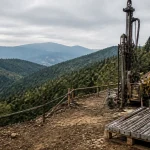
The mountainous terrain of Yunnan (pictured below) presents unique challenges for both miners and rescuers. The region’s geography often masks illegal operations from satellite surveillance, allowing small-scale shafts to operate in relative secrecy until a disaster occurs.

Investors in the China-centric mineral markets are closely watching the NMSA’s next moves. Historically, safety crackdowns in China have led to immediate spikes in commodity prices as supply is throttled. With the Shanxi and Yunnan incidents highlighting such severe negligence, the current “Safety Crisis” is expected to be longer-lasting and more transformative than previous cycles.
“The era of ‘production at any cost’ is facing a terminal reckoning in China,” says Penny Langford, lead analyst at Skillings. “The 82 deaths in Shanxi were a breaking point. The five deaths in Yunnan today confirm that the rot extends from the largest state-owned enterprises down to the smallest illegal pits. Expect 2026 to be the year of the Great Audit.”
Conclusion
As the investigation in Huize County continues, the priority for the Chinese mining sector remains clear: restore credibility through transparency and technology. For operators, the choice is increasingly binary: invest in the safety protocols of the future or face permanent closure under the weight of an unprecedented regulatory crackdown.
The rescue equipment remains at the ready in Yunnan, a grim reminder of the physical risks that still define the backbone of the global energy transition. Until the “shadow tunnels” and “fake doors” are replaced by transparent, AI-monitored systems, the human cost of China’s mining industry will likely continue to make headlines.