By Penny Langford

The 2026 methane-compliance landscape is expanding beyond a small group of energy-sector rules. More than 40 jurisdictions are now using, or moving toward, climate-disclosure frameworks based on the International Sustainability Standards Board (ISSB), while new methane-specific requirements are taking effect for coal mines, fossil-fuel importers and energy-linked industrial groups.
The distinction matters. The “40 jurisdictions” milestone does not represent one global methane law. It reflects the spread of ISSB-aligned reporting regimes in which methane becomes part of mandatory Scope 1 greenhouse-gas disclosure. Alongside that broad reporting trend, the European Union is introducing direct measurement and reporting requirements for active, closed and abandoned coal mines.
For mining companies, methane is moving from an environmental indicator to an auditable operational, regulatory and market-access issue.
The 40-jurisdiction milestone is broader than methane
The IFRS Foundation reported in 2025 that 36 jurisdictions had adopted, used or were finalizing steps to introduce ISSB Sustainability Disclosure Standards. By early 2026, that figure had risen to more than 40 jurisdictions.

The jurisdictions span major mining and investment markets across the Americas, Europe, Africa and Asia-Pacific. The IFRS Foundation’s jurisdictional snapshots track how national regulators are incorporating or aligning with the standards.

ISSB-based climate reporting generally requires companies to disclose Scope 1 and Scope 2 greenhouse-gas emissions. Methane is included within Scope 1 when it is emitted directly by a company’s operations, including mine ventilation systems, drainage stations, associated fuel infrastructure and certain processing activities.
That creates three layers of exposure for mining companies:
- Direct methane regulation, such as the EU Methane Regulation for coal mines.
- Corporate climate disclosure, where methane is reported as part of Scope 1 emissions.
- Commercial and financing pressure, as lenders, customers and importers compare emissions intensity and the quality of measurement systems.
The result is a compliance environment in which a company may face no methane-specific rule in its home country but still need reliable methane data for securities reporting, customer contracts or access to regulated markets.
EU coal-mine deadlines make 2026 a measurement year
The most immediate mining-specific obligations arise under Regulation (EU) 2024/1787, which entered into force in August 2024.
The regulation covers methane emissions in the energy sector and includes active, closed and abandoned coal mines. The European Commission describes the framework as a measurement, reporting and verification system designed to move operators away from estimates and toward source-level data.
For closed and abandoned underground coal mines, the key milestone is May 5, 2026. From that date, methane emissions must be measured at qualifying sites where mining ceased after Aug. 3, 1954.
The first annual report containing estimates of source-level methane emissions is due by Aug. 5, 2026. Subsequent reports are generally due by May 31 each year.
Active underground mines and drainage stations were already subject to earlier reporting requirements. The new 2026 deadline therefore brings legacy assets into the compliance system, including mines that may have closed decades ago but continue to emit methane through shafts, vents or subsurface pathways.
Methane reporting milestones
| Compliance area | Milestone | Operational significance |
|---|---|---|
| ISSB-aligned disclosure | More than 40 jurisdictions using or moving toward ISSB Standards | Methane increasingly enters mandatory Scope 1 reporting |
| Active coal mines | Annual source-level reporting already in force | Operators need continuous or source-based measurement systems |
| Closed and abandoned underground coal mines | Measurement begins May 5, 2026 | Legacy assets must be mapped and equipped for monitoring |
| Closed and abandoned underground coal mines | First annual report due Aug. 5, 2026 | Historical mine records and current measurements must be reconciled |
| EU fossil-fuel imports | Equivalent MRV requirement from Jan. 1, 2027 | Exporters may need to demonstrate comparable measurement systems |
| EU methane-intensity reporting | Begins Aug. 5, 2028 | Emissions performance can affect supply-chain comparisons |
| EU methane-intensity limit | Applies to covered contracts from Aug. 5, 2030 | High-intensity production could face increasing market pressure |
The European Commission also says its Methane Transparency Database is scheduled for launch in September 2026. That would increase the visibility of methane data across producers, importers and regulators.

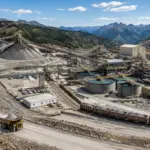
Closed mines remain part of the methane compliance perimeter when emissions continue after operations end.
Why legacy mines create a difficult compliance problem
Active mines typically have ventilation plans, operating records, engineering teams and established monitoring infrastructure. Closed mines often have incomplete documentation, changed ownership, flooded workings or infrastructure that was never designed for modern methane measurement.
Operators and governments may therefore need to establish:
- The location and condition of shafts, vents and drainage systems;
- Whether methane is migrating from abandoned workings;
- The source and volume of measured emissions;
- The relationship between current readings and historical production;
- The party responsible for monitoring, reporting and mitigation.
For mining groups with long operating histories, this can become a records-management challenge as much as an engineering exercise. A company may need to reconcile mine plans, closure files, environmental permits and current sensor readings before it can produce a defensible emissions report.
The technical standard is also changing. The EU framework emphasizes measurement and independent verification, while industry initiatives such as OGMP 2.0 are pushing companies toward source-level and site-level quantification.

Source-level instruments are becoming central to defensible methane accounting.
Reporting quality will affect market access
The European framework creates a direct connection between mine-level data and international trade.
From Jan. 1, 2027, importers of covered crude oil, natural gas and coal must demonstrate that supplies come from jurisdictions with monitoring, reporting and verification requirements equivalent to those applied in the EU, or from operations meeting specified industry standards.
Methane-intensity reporting follows in 2028. A further methane-intensity requirement is scheduled for 2030 for covered contracts.
For coal producers selling into Europe, the practical implication is that emissions information may become part of contract negotiations. Exporters that cannot provide credible measurements could face additional diligence, less favorable commercial treatment or difficulty demonstrating eligibility to buyers.
This trend is consistent with broader climate reporting. The IFRS Foundation is not creating a methane-specific rule, but ISSB-aligned disclosure makes emissions data more visible to investors and lenders. California’s corporate climate disclosure framework also illustrates how large companies may face Scope 1 and Scope 2 reporting requirements based on revenue and business presence.
For diversified miners, the exposure may extend beyond coal. Methane can arise from fuel use, natural-gas systems, waste handling and energy assets associated with mining operations. Companies should therefore assess methane across the group rather than limit the review to coal-producing subsidiaries.
What mining companies should do now
1. Build a jurisdiction and asset map
Companies should identify every operating, closed and abandoned mine connected to the group, then overlay the locations with:
- Methane-specific regulations;
- ISSB-aligned disclosure requirements;
- Export destinations;
- Customer reporting requirements;
- Financing and assurance obligations.
The asset map should identify which sites require direct measurement, which rely on estimation and which lack sufficient historical data.
2. Establish a measurement hierarchy
A credible methane program should define when the company uses direct measurement, engineering calculations, emission factors or satellite and aerial data.
The methodology should be consistent across reporting periods and should document uncertainty. Where estimates are used, the company should explain why direct measurement is unavailable and what investment is planned to improve data quality.
3. Connect sensors to governance
Methane monitoring should not sit separately from operational control. Sensor readings need defined thresholds, escalation procedures, maintenance schedules and management accountability.
A compliance file should show:
- Instrument calibration and maintenance;
- Data gaps and system outages;
- Quality-control checks;
- Measurement methodology;
- Review and approval records;
- Corrective actions and closure evidence.
Automation and remote monitoring can improve coverage, but technology does not replace governance. A dashboard without documented decisions may not satisfy regulators, auditors or lenders.
4. Reconcile ESG and regulatory reports
The methane figure reported to an environmental regulator should be traceable to the number used in the company’s annual sustainability report, financial disclosures and customer submissions.
Differences may be justified by boundary, timing or methodology. They should not be unexplained.
Skillings’ previous coverage of tightening mining ESG and tailings rules highlights the same broader shift: regulators increasingly expect evidence that controls are designed, implemented and monitored over time.
Mining ESG compliance: base, bull and bear scenarios
| Scenario | Regulatory direction | Likely mining impact | Key risk |
|---|---|---|---|
| Base case | More than 40 jurisdictions continue implementing ISSB-aligned disclosure, while EU methane rules proceed on schedule | Companies invest in measurement systems, assurance and legacy-mine data reconstruction | Conflicting methodologies and incomplete historical records |
| Bull case | Regulators align reporting templates and recognize high-quality measurement frameworks across borders | Better comparability, clearer contracts and lower duplication of assurance work | Upfront capital spending for sensors, monitoring and data systems |
| Bear case | Rules expand faster than technical guidance, with enforcement and market requirements diverging | Delayed reporting, contract friction, asset restrictions and higher compliance costs | Legacy mines and lower-capacity jurisdictions struggle to produce verifiable data |
The base case is the most practical planning assumption. Mining companies should prepare for continued expansion in reporting requirements even where methane-specific enforcement remains limited.
The strategic question is data credibility
Methane reporting is becoming a test of operational control. The companies best positioned for the new framework will not necessarily be those with the largest ESG teams. They will be those that can connect mine plans, sensors, engineering judgments, regulatory filings and executive oversight into one auditable record.
That is particularly important for critical-minerals producers seeking permits, financing and long-term customer contracts. As critical-minerals supply chains become more geopolitical and more closely scrutinized, environmental data will increasingly influence whether a project is considered reliable.
The 40-jurisdiction milestone is therefore best understood as a planning signal. It shows that climate-disclosure requirements are spreading quickly, while the EU’s coal-mine deadlines demonstrate how those broad rules can become specific operational obligations.
For mining executives, the immediate priorities are clear: map exposure, measure emissions, preserve the evidence trail and ensure that methane data can withstand regulatory, investor and customer scrutiny.
LinkedIn snippet
Methane reporting is entering a new phase for mining. More than 40 jurisdictions are using or moving toward ISSB-aligned climate disclosure, while the EU’s 2026 rules bring closed and abandoned underground coal mines into mandatory measurement and reporting. Our analysis examines the deadlines, data requirements and commercial implications for operators. [Link to article]
X snippet
Methane compliance is moving from broad ESG disclosure to mine-level measurement. EU rules require monitoring at qualifying closed and abandoned underground coal mines from May 5, 2026, with the first annual reports due Aug. 5. More than 40 jurisdictions are also moving toward ISSB-aligned reporting. [Link to article]