By Charles Pitts

PERTH, Australia : BHP (ASX: BHP), the world’s largest miner, reported record-breaking annual iron ore production for the 2026 fiscal year, buoyed by a significant operational surge in Western Australia. However, the achievement was tempered by a decline in copper output, a substantial cut to next year’s copper guidance, and a looming historic labor strike at Port Hedland that threatens to disrupt global supply chains.
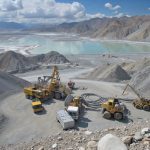
The Melbourne-based mining giant announced on Thursday that its Western Australia Iron Ore (WAIO) operations achieved a record 256.9 million tonnes (Mt) for the full year, contributing to total group production of 265 Mt. The result represents a 1% increase over the previous fiscal year, reflecting the company’s focus on debottlenecking its rail and port infrastructure to maximize throughput.
The operational success in the Pilbara was offset by a challenging quarter for BHP’s copper division. Copper production declined approximately 5% to 491.9 kilotonnes (kt) in the final quarter. More concerning for investors was the company’s forward guidance for fiscal year 2027, which saw copper production targets slashed to between 1,650 and 1,800 kt, down from the 1,952.8 kt produced in the 2026 period. Management attributed this downgrade primarily to grade decline at the flagship Escondida mine in Chile.
Iron ore resilience and the Pilbara engine
BHP’s iron ore performance continues to serve as the bedrock of its balance sheet. The record WAIO output of 256.9 Mt was achieved despite increasing logistical complexities and the integration of new autonomous technologies across its fleet.
More Read

Average realized prices for iron ore remained resilient, finishing the period at $84.56 per wet metric tonne (wmt), a 3% increase year-on-year. This price stability, combined with record volumes, has provided BHP with the capital necessary to greenlight new brownfield expansions.

“Our WAIO operations have once again demonstrated their world-class status,” said Brandon Craig, BHP’s newly appointed Chief Executive Officer. “The delivery of record volumes is a testament to our team’s focus on productivity and the successful ramp-up of South Flank to its full 80 million tonnes per annum capacity.”
To sustain this momentum, BHP’s board has approved $900 million in funding for the Ministers North iron ore project in the Pilbara. This project is a critical component of the company’s long-term strategy to maintain production levels as older pits reach the end of their mine life. First output from Ministers North is currently scheduled for fiscal year 2029.
More Read


Copper grade decline and price windfalls
While the iron ore division celebrated records, the copper division faced structural headwinds. The 5% dip in quarterly production to 491.9 kt highlights the ongoing struggle with declining ore grades at Escondida, the world’s largest copper mine.
Despite the volume decline, BHP enjoyed a massive windfall from global market conditions. The realized copper price for the period jumped a staggering 47% year-on-year to $6.53 per pound. This price surge has been driven by intensifying demand from the energy transition and the expansion of AI-driven data centers, as detailed in recent copper price forecasts for 2026.
The sharp reduction in FY27 guidance (1,650–1,800 kt) indicates that BHP expects the grade challenges at Escondida to persist. Analysts suggest that while the price environment remains favorable, the company will need to accelerate its exploration and M&A efforts to offset the diminishing output from its legacy Chilean assets.

Port Hedland strike risk: A historic labor action
The celebratory mood regarding record production may be short-lived as BHP prepares for a major labor confrontation. The company’s Pilbara workforce is preparing for a historic strike at Port Hedland, the world’s largest bulk export terminal.
Negotiations between BHP management and union representatives are scheduled to resume next week, but tensions remain high. The workforce is seeking significant adjustments to pay and housing allowances, citing the company’s record profits and the rising cost of living in remote mining hubs.
A prolonged strike at Port Hedland would have immediate ramifications for the global iron ore market. As the primary exit point for BHP’s Pilbara ore, any stoppage at the port could freeze millions of tonnes of supply, potentially driving global prices higher in the short term while damaging BHP’s quarterly revenue.
“We are committed to reaching a fair agreement that recognizes the contribution of our people while ensuring the ongoing competitiveness of our operations,” Brandon Craig stated in a filing to the Australian Securities Exchange. “However, we have contingency plans in place to mitigate the impact of any industrial action on our customers.”
Growth and capital allocation: Ministers North
The approval of $900 million for the Ministers North project signals BHP’s intent to reinvest its iron ore windfalls back into the Pilbara. This investment will cover the construction of new crushers, conveyors, and rail spurs required to integrate the deposit into the existing WAIO network.
Ministers North is expected to be a high-grade, low-cost operation that will help BHP maintain its industry-leading unit costs, which have remained under pressure from inflationary headwinds and regulatory changes. The project also follows a broader industry trend of accelerating approvals as countries like Canada also move toward mining permit reforms to secure mineral supply chains.

Market Snapshot: BHP Q4 FY26 Results
| Metric | FY26 Result | Change (YoY) |
|---|---|---|
| Total Iron Ore Production | 265 Mt | +1% |
| WAIO Production (100% basis) | 256.9 Mt | +1% |
| Total Copper Production | 491.9 kt (Q4) | -5% |
| FY27 Copper Guidance | 1,650 – 1,800 kt | -8% to -15% |
| Realized Iron Ore Price | $84.56 /wmt | +3% |
| Realized Copper Price | $6.53 /lb | +47% |
| New Capital Investment | $900M (Ministers North) | Approved |
Executive Transition: The Brandon Craig Era
The Q4 results mark the first major operational report under the leadership of Brandon Craig. Craig, who previously headed the company’s Western Australia Iron Ore division, stepped into the CEO role with a mandate to navigate the dual challenges of the energy transition and increasingly volatile labor relations.
Craig’s deep familiarity with the Pilbara operations was evident in the quarterly performance, but the upcoming Port Hedland negotiations will be his first major test as the head of the global organization. Investors will be watching closely to see if his operational expertise translates into successful labor diplomacy.

Outlook for Fiscal Year 2027
As BHP enters the new fiscal year, the narrative is split between iron ore dominance and copper uncertainty. The company’s ability to hit its record iron ore targets has solidified its position as the world’s most efficient producer of steel-making raw materials. However, the downward revision of copper guidance highlights the reality of aging assets in the Chilean copper belt.
The primary risk factor for the first half of FY27 remains the industrial action at Port Hedland. If a strike is avoided, BHP is well-positioned to capitalize on high commodity prices. If negotiations fail, the record production of 2026 may be followed by a volatile and disrupted 2027.
For further analysis on global mining trends and commodity forecasts, visit Skillings.net.