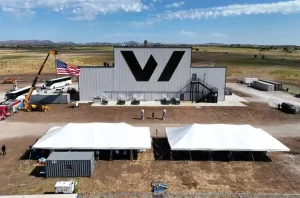
PHOENIX, AZ : Myriad Uranium Corp. (CSE: M) has announced a significant expansion of its North American portfolio through the acquisition of 23 breccia pipe-hosted uranium and rare earth element (REE) exploration targets in the historic Arizona Strip district. The acquisition, finalized through an agreement with Wedgemount Resources Corp. (CSE: WDGY), positions Myriad at the center of one of the highest-grade uranium regions in the United States at a time when domestic supply security is becoming a central pillar of federal energy policy.

The land package encompasses approximately 5,600 acres across 15 Arizona state mineral leases and eight split-estate claims. This footprint is expected to expand to over 6,080 acres following the pending award of two additional state mineral leases. Central to the acquisition is the Wate Pipe, a historically defined deposit with a resource estimate of 1.12 million pounds of $eU_3O_8$ at an average grade of 0.79%.
Under the terms of the agreement, Myriad has granted Wedgemount a three-year option to earn a 75% interest in the project. This strategic partnership allows Myriad to leverage Wedgemount’s newly formed critical minerals division to drive exploration while retaining a 25% back-in right, which could eventually result in a 50/50 joint venture.
The Arizona Strip: A Legacy of High-Grade Production
The Arizona Strip and the broader Colorado Plateau have a storied history in the American mining sector. Prior to the mid-1980s, the district produced over 23 million pounds of $U_3O_8$. The region is unique for its “breccia pipe” formations: vertical, pipe-like structures of broken rock that often host exceptionally high-grade mineralization.
Breccia pipes are favored by operators and environmental regulators alike due to their small surface footprint. Unlike massive open-pit operations, breccia pipe mines typically require minimal surface disturbance, often less than 20 acres for the entire production site. This characteristic is particularly relevant in the 2026 regulatory environment, as mining permits reform 2026 discussions continue to prioritize projects that balance industrial output with ecological preservation.
More Read

The 23 targets acquired by Myriad were identified through historical exploration and modern geological modeling. While uranium remains the primary focus, several targets show significant potential for rare earth elements (REEs), adding a layer of strategic value as the U.S. seeks to decouple its critical minerals supply chain from foreign adversaries.

The Wate Pipe: High-Grade Foundation
The flagship asset of the newly acquired targets is the Wate Pipe. Previously held by Energy Fuels, the project was the subject of a 2015 historical resource estimate conducted by SRK Consulting. The report identified 71,000 tons of mineralization at depths ranging from 1,300 to 1,600 feet.

More Read

At 0.79% $eU_3O_8$, the Wate Pipe represents a grade significantly higher than most global uranium mines, which often average below 0.1%. For investors and operators, high-grade deposits provide a buffer against price volatility by lowering the break-even cost of production. The presence of REEs within these structures suggests that the “Breccia Pipe Project” could serve as a multi-commodity asset, aligning with the critical minerals 2026 priorities observed in other mining jurisdictions globally.
Deal Mechanics and Partnership Strategy
The option agreement between Myriad and Wedgemount is structured to accelerate development while managing capital expenditure. To earn its 75% stake, Wedgemount must fulfill the following requirements over a 36-month period:
- An initial cash payment of US$75,000 to Myriad.
- The issuance of common shares such that Myriad ultimately holds 9.9% of Wedgemount’s outstanding equity.
- The expenditure of C$4,000,000 in qualifying exploration and development costs.
For Myriad, the deal provides immediate monetization and a path to 50% ownership through its back-in right without the full burden of early-stage exploration risk. For Wedgemount, the acquisition marks its entry into the uranium sector, a move that follows a broader trend of energy companies diversifying into nuclear fuel as a hedge against the intermittent nature of renewables.

Uranium Price Forecast 2026: Market Fundamentals
The timing of the Arizona Strip acquisition coincides with a period of sustained strength in the nuclear fuel market. The uranium price forecast 2026 remains bullish among most industry analysts, with many projecting a price floor near the US$90/lb mark. As of June 2026, spot prices are hovering around US$86/lb, a nearly 22% increase year-over-year.
Several factors are driving this elevated pricing environment:
- Structural Deficit: Global production remains roughly 30 million pounds below primary demand. While new mines are coming online, they are largely replacing depleted assets rather than creating a surplus.
- Financial Intermediaries: Investment vehicles like the Sprott Physical Uranium Trust continue to sequester material, tightening the available spot market.
- Utility Contracting: Nuclear utilities have shifted back to long-term contracting to ensure fuel security, moving away from a decade-long reliance on the spot market.
According to recent analysis on the uranium market outlook 2026, the $150 target is increasingly viewed as a long-term possibility rather than an outlier. This macro backdrop makes high-grade domestic assets like the Wate Pipe highly attractive for M&A activity and project financing.
Regulatory Landscape: Mining Permits Reform 2026
Operationally, the success of the Breccia Pipe Project will depend on the evolving regulatory landscape in the United States. The federal government is currently conducting a Section 232 national security review, which assesses the strategic vulnerabilities of relying on foreign uranium: particularly from Kazakhstan and Russia.
The ongoing mining permits reform 2026 initiative aims to streamline the approval process for domestic mines. Historically, permitting a new mine in the U.S. could take upwards of a decade. Current policy shifts are exploring “fast-track” status for projects that provide critical minerals essential for the energy transition and national defense.

“The U.S. is pushing hard now on their regulations to get more mines into production,” noted one sector analyst during a recent briefing. This push includes potential price support mechanisms and the establishment of a strategic uranium reserve, both of which would provide a significant tailwind for the Myriad-Wedgemount partnership.
Infrastructure and Operational Scale
The Arizona Strip is well-positioned for rapid development. The region benefits from established road networks and proximity to the White Mesa Mill in Blanding, Utah: the only fully licensed and operating conventional uranium mill in the United States. This existing processing infrastructure significantly reduces the capital intensity of bringing a new breccia pipe mine into production, as ore can be trucked directly to the mill.

Modern exploration techniques, including advanced geophysical surveys and real-time data monitoring from centralized control rooms, allow companies to target mineralization with surgical precision. This technological integration is crucial for maximizing the efficiency of the smr uranium demand cycle, where consistent fuel supply is required for the next generation of modular reactors.
Conclusion
The acquisition of 23 breccia pipe targets marks a pivotal moment for Myriad Uranium and the Arizona Strip. By securing high-grade assets in a historically productive district, Myriad is positioning itself to benefit from a structural shift in the global energy market. As the uranium price forecast 2026 points toward sustained demand and mining permits reform 2026 offers a clearer path to production, the Breccia Pipe Project stands as a prime example of the domestic mining revival currently underway in the United States.
For investors, the combination of high grades, low surface footprints, and a strategic partnership with Wedgemount creates a compelling narrative of risk-managed growth in a critical sector.