By Charles Pitts

ABUJA, Nigeria : Nigeria has officially unveiled a series of high-stakes mineral discoveries that could fundamentally alter the landscape of the global energy transition. Federal officials confirmed this week the identification of a “world-class” polymetallic critical minerals district in Kaduna State, alongside a massive lithium find near the capital city of Abuja estimated at 3.3 million tonnes.
The announcement, delivered by Minister of Solid Minerals Development Dele Alake, marks a pivotal moment in Nigeria’s long-standing ambition to diversify its economy away from crude oil. As global demand for battery metals continues to outpace supply, Nigeria is positioning itself not merely as a source of raw ore, but as a regional hub for processing and beneficiation.
A Multi-Mineral Powerhouse in Kaduna
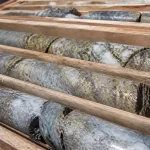
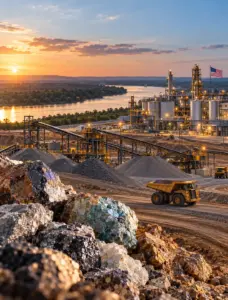
The discovery in Kaduna State is being described by the Nigerian Geological Survey Agency (NGSA) as a polymetallic mineral province. Unlike traditional single-commodity mines, this district hosts a concentrated variety of high-grade deposits, including platinum group metals (PGMs), gold, nickel, copper, and rare earth elements (REEs).
The project, spearheaded by Steron Mining in collaboration with the NGSA, represents one of the most comprehensive geological surveys in the region’s history. According to department data, the Kaduna province is uniquely situated to serve the high-tech and green energy sectors simultaneously. While nickel and copper are essential for electric vehicle (EV) components and power grids, the presence of REEs and PGMs provides the critical ingredients for advanced manufacturing and catalytic technologies.
More Read

“The Kaduna discovery is not just another mine; it is a strategic asset for the continent,” Minister Alake stated during a press briefing in Abuja. “It validates our belief that Nigeria sits on a treasure trove of the minerals that will power the next century.”


The Abuja Reserve: 3.3 Million Tonnes of Potential
While the Kaduna find offers diversity, the discovery near Abuja offers sheer scale. Steron Mining reported an estimated 3.3 million tonnes of lithium reserves at a separate site on the outskirts of the federal capital.
More Read

Company geologists estimate the broader project contains approximately 94.8 million tonnes of total mineral resources, including lithium-bearing ore and associated granitic rock. This find places Nigeria among the top tier of African lithium holders, trailing only behind established producers like Zimbabwe and the Democratic Republic of Congo.
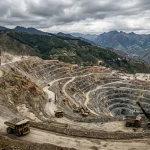
For investors, the proximity of the Abuja reserve to the nation’s administrative center and existing transport corridors reduces the logistical hurdles often associated with remote mining operations. The discovery is already drawing comparisons to other emerging markets where critical minerals are driving a new wave of industrialization, such as Colombia’s recent copper resurgence.
Policy Shift: Beneficiation Over Raw Export
The most significant aspect of Nigeria’s 2026 mining strategy is not the geology, but the regulatory framework surrounding it. Under the “Alake Agenda,” Nigeria has implemented a strict ban on the export of unprocessed raw ores.
The federal government is mandating that all mining companies establish or utilize local processing and beneficiation facilities before receiving export permits. This shift is designed to capture a larger share of the value chain, creating local jobs and fostering technology transfer.
“We are moving away from the old model of ‘dig it and ship it,'” Alake explained. “Nigeria will no longer be a spectator in the value-added segment of the global minerals market. If you mine here, you process here.”
Steron Mining has already aligned with this policy, reporting that it processes its lithium ore locally into concentrates before shipment. This approach aligns with the broader 2026 outlook for critical minerals stocks, where vertical integration and regional security of supply are becoming primary drivers of valuation.
Foreign Capital and the Infrastructure Push
The government’s hardline stance on local processing is backed by substantial foreign investment, primarily from Chinese industrial giants. Construction is currently underway on a $600 million lithium processing plant near the Kaduna-Niger border, funded by a consortium including Jiuling Lithium and Canmax Technologies.
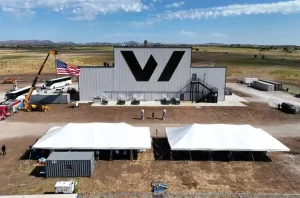
Additionally, a $200 million lithium refinery is nearing completion on the outskirts of Abuja. These facilities are expected to act as anchors for the new mineral districts, providing the necessary infrastructure to turn raw ore into battery-grade chemicals.
However, the rapid expansion is not without challenges. Nigeria’s mining sector continues to grapple with infrastructure gaps, specifically in reliable power supply and rail logistics. To mitigate these risks, the government has announced the creation of a state mining corporation where private investors can hold up to 75% equity, a move intended to de-risk projects through public-private partnerships.

Africa’s Mining Diversification and Geopolitics
Nigeria’s emergence as a lithium powerhouse adds a new dimension to the “scramble for critical minerals” in Africa. For decades, the global market has looked toward the Lithium Triangle in South America or the hard-rock mines of Western Australia. As the Lithium Power Map of 2026 continues to evolve, West Africa is asserting its position as a viable alternative.
The geopolitical implications are significant. By securing Chinese investment for processing plants while maintaining strict domestic oversight, Nigeria is attempting to balance international capital with national sovereignty. This “Nigeria-first” mineral policy reflects a growing trend across the continent, where resource-rich nations are demanding more than just royalties from their mineral wealth.
Comparative Overview: Major African Lithium Projects (2026)
| Project/Location | Primary Mineral | Estimated Reserves (Tonnes) | Status | Key Stakeholders |
|---|---|---|---|---|
| Abuja Project (Nigeria) | Lithium | 3.3 Million | Discovery/Development | Steron Mining, NGSA |
| Kaduna District (Nigeria) | Polymetallic (Li, Ni, Cu) | World-Class District | Exploration/Survey | Steron Mining, Federal Gov |
| Bikita (Zimbabwe) | Lithium | 65 Million (Total Resource) | Producing | Sinomine Resource Group |
| Manono (DRC) | Lithium | 400 Million (Total Resource) | Advanced Stage | AVZ Minerals, Cominiere |
| Goulamina (Mali) | Lithium | 108 Million (Total Resource) | Development | Leo Lithium, Ganfeng |
The Road Ahead
As the second half of 2026 approaches, the focus in Nigeria will shift from discovery to delivery. The commissioning of the Kaduna-Niger processing plant will be the first litmus test for the government’s beneficiation policy.
For the global mining industry, Nigeria’s “New Frontier” represents both a massive opportunity and a complex regulatory environment. Investors who can navigate the local processing requirements and infrastructure hurdles may find themselves at the center of the next great battery metal hub.
“The geology has always been there,” noted one analyst following the Abuja announcement. “What’s different now is the political will to treat these minerals as the foundation of a new industrial era for Nigeria.”
With the identification of the Kaduna polymetallic district and the Abuja lithium reserves, Nigeria has effectively put the world on notice: the next chapter of the energy transition may well be written in the soil of West Africa.