By Charles Pitts | Moose River, Nova Scotia
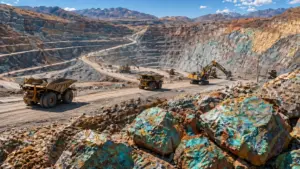
Nova Scotia’s Department of Environment and Climate Change has granted final approval for a multi-million dollar restart of the Touquoy Gold Mine, clearing Atlantic Mining Nova Scotia — a subsidiary of Australia-based St Barbara Ltd (ASX: SBM) — to begin reprocessing approximately 3 million tonnes of stockpiled ore that have sat dormant since extraction ceased nearly three years ago. The 10-to-14-month campaign targets roughly 38,000 ounces of gold, valued at approximately $180 million at current market prices near $4,750 per ounce.
What Did Nova Scotia Regulators Approve at the Touquoy Gold Mine?
The approval marks a significant pivot for the Moose River site, which transitioned to care and maintenance in late 2023 following a protracted dispute over tailings management and environmental permits. By targeting existing surface stockpiles rather than opening new pit extraction, Atlantic Mining has secured a pathway to restart the mill, creating approximately 200 jobs and injecting an estimated $151 million into provincial GDP.
“This is a pragmatic solution that leverages existing infrastructure and materials already on surface,” said a spokesperson for the Nova Scotia Department of Natural Resources and Renewables. “It provides a clear economic bridge for the workforce while the company continues to navigate the long-term reclamation and development plans for its other Atlantic assets.”
How Will the Touquoy Reprocessing Benefit Nova Scotia’s Eastern Shore Communities?
For the rural communities surrounding Nova Scotia’s Eastern Shore, the return of activity to the Touquoy site provides a critical economic reprieve. Since the suspension of mining operations, the region has faced the loss of high-paying industrial roles that once anchored the local economy.
According to internal economic impact assessments, the reprocessing campaign will generate nearly $150 million in total economic activity. Beyond the 200 direct roles at the mine site, the project supports hundreds of indirect positions in transportation, logistics, and maintenance throughout Halifax County. The closed-loop logistics approach — moving 3 million tonnes of stockpiled ore short distances within the existing site to the primary crusher — minimizes public road use and reduces the carbon footprint compared to traditional extraction requiring heavy blasting and long-haul transport.
What Is In-Pit Tailings Deposition and Why Did Regulators Accept It?
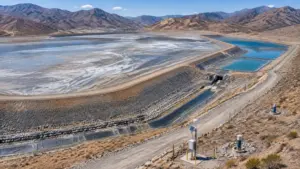
The technical core of the approval rests on in-pit tailings deposition. Rather than expanding external tailings ponds — a move that previously met significant regulatory and community resistance — the new plan deposits processed waste directly into the exhausted Touquoy open pit.
Storing tailings underwater in an existing pit prevents the oxidation of minerals and eliminates the dam-breach risks associated with traditional tailings facilities — the key environmental concern that stalled earlier expansion attempts. “All work is confined to the existing mine footprint,” St Barbara noted in a recent investor update. “The strategy utilizes the mill’s existing capacity to process ore that was previously classified as sub-economic but has become highly lucrative under 2026 gold price dynamics.”
The Nova Scotia Department of Environment and Climate Change currently holds a $79.9 million reclamation bond under the Environment Act to ensure the site returns to a natural state once the mill reaches final decommissioning. Reclamation activities on the broader site will continue during the reprocessing phase, while work specifically focused on the mill area pauses until Atlantic Mining clears the full 3 million tonnes of ore.
How Does the 2026 Gold Market Make Touquoy’s Reprocessing Viable?
The decision to restart comes at a time of unprecedented strength in the gold sector. As global markets respond to shifting geopolitical alignments and elevated uncertainty in frontier jurisdictions, the premium on stable, politically secure production jurisdictions like Canada has reached historic highs. Gold’s 12.1% year-to-date gain in 2026, with prices hovering near $4,750 per ounce, has transformed ore previously classified as sub-economic into a highly profitable resource.
St Barbara’s ability to monetize the Touquoy stockpiles gives the company a strategic win after facing headwinds in the gold M&A wave of the mid-2020s. Revenue from the 38,000-ounce yield strengthens the company’s balance sheet as it advances its Fifteen Mile Stream and Beaver Dam satellite projects elsewhere in Nova Scotia. Gold shipments begin in early 2027, with recovered gold destined for the Royal Canadian Mint in Ottawa. For context on how 2026 commodity price dynamics are reshaping project economics across the precious metals sector, see our analysis of AI and renewable energy demand driving copper and silver price records in 2026.
What Does Touquoy Signal About the Shift to Brownfield Value Recovery in Mining?
The Touquoy approval reflects a broader trend reshaping North American mining: the move toward brownfield value recovery. With frontier exploration costs rising and ESG compliance requirements intensifying, operators increasingly target waste-to-value projects — extracting economic value from existing infrastructure and surface materials rather than bearing the capital, permitting, and community risk of greenfield development.
“We are seeing a shift where the tail of a mine’s life is being extended by technology and higher commodity prices,” said an analyst covering gold and uranium forecasts for 2026–2030. “Reprocessing stockpiles isn’t just about the gold — it’s about optimizing the environmental footprint. If you can take ore that’s already been mined and turn it into capital, you’re essentially cleaning up while you earn.”
For Nova Scotia, the Touquoy reboot functions as a test case for how the province manages the later stages of a mine’s lifecycle. Successful execution could set a precedent for other idled sites in the region as Nova Scotia seeks to balance environmental goals with the need for industrial employment. This brownfield-versus-greenfield capital allocation tension also shapes broader industry decisions — as explored in our coverage of why mining M&A fails to solve the copper supply crisis. Similarly, the ESG compliance pressures driving in-pit tailings adoption parallel the responsible mining strategies Hecla Mining applies across its North American silver operations.
When Does the Touquoy Mill Restart and What Are the Logistics?
Operations at the Touquoy mill start by November 2026. Atlantic Mining has already begun recalling former employees and hiring new technical staff to oversee the ramp-up. Automated monitoring systems will manage the mill’s throughput and environmental compliance throughout the 14-month campaign.
The logistics chain moves 3 million tonnes of stockpiled ore short distances within the site to the primary crusher. This closed-loop approach keeps heavy vehicle movements off public roads, reduces the project’s carbon footprint relative to conventional extraction, and allows the company to process material using infrastructure already permitted and in place. The Skillings Mining Intelligence team will monitor operational metrics and labor market developments as the project advances.
Market Snapshot: Precious Metals — October 2026
| Commodity | Current Price (USD) | 24h Change | 2026 YTD |
|---|---|---|---|
| Gold | $4,750.20 | +0.45% | +12.1% |
| Silver | $58.15 | -0.12% | +8.4% |
| Platinum | $1,240.50 | +1.10% | +5.2% |
| Palladium | $1,680.00 | +0.30% | -2.1% |
About Atlantic Mining Nova Scotia
Atlantic Mining Nova Scotia, a subsidiary of St Barbara Ltd (ASX: SBM), operates the Touquoy Gold Mine in the Moose River Gold Mines district. Established as Nova Scotia’s first modern open-pit gold mine in 2017, the company focuses on responsible mineral development and long-term land reclamation strategies in the Canadian Maritimes. For further details on gold market trends and regional project updates, visit the Skillings News section.
Frequently Asked Questions
What is the Touquoy Gold Mine reprocessing campaign?
Nova Scotia regulators have approved a 10-to-14-month campaign for Atlantic Mining Nova Scotia to reprocess approximately 3 million tonnes of ore stockpiled at the Touquoy Gold Mine in Moose River. The project targets around 38,000 ounces of gold worth roughly $180 million at current market prices near $4,750 per ounce, with mill operations scheduled to begin by November 2026.
Who owns the Touquoy Gold Mine?
The Touquoy Gold Mine is operated by Atlantic Mining Nova Scotia, a subsidiary of Australia-based St Barbara Ltd (ASX: SBM). Established as Nova Scotia’s first modern open-pit gold mine in 2017, the Moose River operation transitioned to care and maintenance in late 2023 following a dispute over tailings management and environmental permits before the current reprocessing approval.
What is in-pit tailings deposition and why is it significant?
In-pit tailings deposition stores processed mine waste directly inside an exhausted open pit rather than in external tailings ponds. Keeping tailings submerged underwater prevents mineral oxidation and eliminates dam-breach risks associated with conventional tailings facilities — the key reason Nova Scotia regulators approved this approach after previously rejecting external tailings pond expansion at the Touquoy site.
How many jobs will the Touquoy reprocessing create?
The reprocessing campaign will create approximately 200 direct jobs at the Touquoy mine site and support hundreds of additional indirect positions in transportation, logistics, and maintenance across Halifax County. The project is expected to inject $151 million into Nova Scotia’s provincial GDP over the 10-to-14-month operating campaign.
When will the Touquoy Gold Mine mill restart?
Operations at the Touquoy mill are scheduled to begin by November 2026. Atlantic Mining Nova Scotia has already started recalling former employees and hiring new technical staff for the mill ramp-up. Gold shipments are expected to begin in early 2027, with recovered gold destined for the Royal Canadian Mint in Ottawa.
What does the Touquoy approval mean for brownfield gold mining in Canada?
The Touquoy approval reflects a broader industry shift toward brownfield value recovery — extracting remaining economic value from existing mine infrastructure and surface stockpiles rather than pursuing new greenfield extraction. With frontier exploration costs and ESG compliance requirements rising, reprocessing campaigns that monetize previously sub-economic ore offer operators a lower-risk, faster path to revenue, particularly as gold prices hold near record levels in 2026.