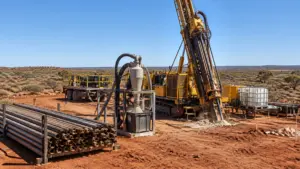
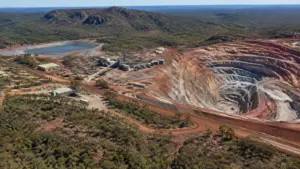
Lithium brine evaporation ponds and processing infrastructure.

By Penny Langford
Lithium carbonate futures fell more than 3% in a single session in September, interrupting a firm stretch that had been supported by warrant destocking, tight spot availability and expectations for stronger battery demand. The move exposed how quickly Chinese inventory data can change the market narrative.
The Guangzhou Futures Exchange’s primary lithium carbonate contract, LC2701, fell 3.32% on Sept. 15, closing at 129,120 yuan per tonne, according to SunSirs. Spot battery-grade lithium carbonate was trading near $20,050 per tonne on an indicative China and Asia basis, although prices varied by benchmark, grade and exchange rate.
The immediate issue was not a collapse in electric-vehicle demand. It was the market’s reassessment of available inventory. A revised methodology brought trader and battery-cell stocks into a broader Chinese inventory estimate, lifting the reported total to about 169,300 tonnes from just over 70,000 tonnes previously. Mysteel separately reported that a comparable inventory series rose from about 76,000 tonnes to 164,000 tonnes after a sample expansion.

That adjustment weakened the earlier “continuous destocking” narrative. It also left the market weighing two competing signals: physical stocks are drawing down, but the absolute inventory base is larger than previously understood.

Why warrant destocking matters
Approximately 50,000 tonnes of lithium carbonate warrants were outstanding on the GFEX system, according to Mysteel.
Warrants represent exchange-registered material that can be delivered against futures contracts. When the spot-futures basis strengthens, downstream buyers have more incentive to accept warrant material rather than purchase new cargoes directly from producers or traders. That process can reduce visible exchange stocks without requiring a sudden surge in end-user demand.
Mysteel said the basis had strengthened and encouraged some downstream participants to take delivery, but not enough to trigger rapid cancellation of the entire warrant position. The publication estimated that low-quality material would need to command a premium of about 2,000 yuan per tonne to accelerate warrant digestion.
The distinction is important for the lithium price forecast 2026. Warrant delivery can support spot liquidity and improve the market’s physical balance, but it does not automatically mean that inventories have disappeared. It can instead transfer stock from exchange warehouses to cathode producers, battery manufacturers or traders.
Mysteel’s sample of 207 companies showed lithium carbonate inventories falling 3.3% week on week, with smelters and traders destocking while downstream buyers modestly rebuilt supplies before the holiday period. The market therefore appears to be drawing down inventory gradually, rather than moving directly into a structural shortage.
Supply is loosening at the margin
September data also showed why rallies may face resistance. Mysteel reported that Australian and African lithium ore shipments, together with Chinese port arrivals, pushed domestic port inventories to about 284,000 tonnes by Sept. 10, an increase of roughly 52,000 tonnes week on week.
The same report placed Australian SC6 spodumene concentrate at about 1,895 yuan per tonne on a CIF basis. Falling feedstock prices can reduce the incentive for high-cost conversion and exploration projects, but they also create room for converters to rebuild margins if carbonate prices remain elevated.

Hard-rock lithium supply entering the conversion chain.
Australian producers remain a major swing factor. Lower prices previously encouraged curtailments, delays and tighter shipment discipline among higher-cost operations. Sustained prices near or above incentive levels, however, can bring idled capacity back into production. The result is a market that can move quickly from perceived scarcity to a better-supplied raw-material pipeline.
African supply presents a different set of constraints. New spodumene projects and expansions can add meaningful tonnes, but roads, rail, power, port access, financing and processing capacity often determine whether a deposit becomes reliable commercial supply. Skillings’ analysis of Africa’s critical-minerals opportunity highlights the gap between geological resources and investable, operating projects.
For lithium, that means African supply may be strategically important without being immediately flexible. A mine can restart or ramp up, but consistent production and export quality require more than a strong price signal.
Chinese lepidolite and brine remain the marginal supply test
China’s lepidolite sector is one of the market’s most responsive sources of incremental supply. A survey cited by SMM estimated domestic carbonate output from lepidolite operations at about 65,000 tonnes per year, with utilization near 65%, according to Metal.com.
Lepidolite production is generally more sensitive to energy, reagent and environmental costs than lower-cost brine or high-grade hard-rock conversion. At higher carbonate prices, more capacity can operate profitably. At lower prices, marginal units can be curtailed quickly.
Chinese brine operations have a similar role, although production depends on chemistry, climate, evaporation conditions, water availability and infrastructure. These sources may not replace major new mines, but they can cap short-term rallies by supplying additional feedstock when prices rise.
This is why a futures rally alone is not enough to establish a durable deficit. The market must also determine whether higher prices are drawing marginal Chinese units back into operation and making Australian or African restarts economic.
Demand is broadening beyond electric vehicles
Electric vehicles remain the largest source of lithium demand, but grid-scale and behind-the-meter storage are becoming more important to the balance.
SunSirs, citing SMM estimates, said Chinese battery-grade lithium carbonate supply could reach 157,900 tonnes in September, while demand was projected at 177,400 tonnes. That implied a monthly gap of approximately 19,600 tonnes, even as inventory data pointed to a larger accumulated stock base.
The same report said Chinese LFP cathode production was expected to exceed 610,000 tonnes in September. Mysteel estimated September LFP production at 604,800 tonnes, up 5.05% month on month. LFP batteries are widely used in standard-range EVs and stationary storage, where cost, cycle life and safety are often more important than maximum energy density.
S&P Global has also identified energy storage as an increasingly important source of lithium-ion battery demand, narrowing the expected surplus in 2026. Forecasts cited by industry analysts vary considerably, but several place energy storage at between roughly 18% and 30% of lithium demand by 2026, depending on the definition of the market and the battery segments included.

Utility-scale battery storage is becoming a larger source of lithium demand.
The implication is that a slowdown in one EV segment may not produce a corresponding collapse in lithium consumption. Storage projects, grid balancing requirements and renewable-power integration can continue to support battery manufacturing utilization.
Lithium price forecast 2026–2027
The following framework is a Skillings analytical range based on the September market data, published supply-demand estimates and the potential response of marginal supply. It is not a consensus forecast or an investment recommendation.
| Scenario | Lithium carbonate 2026 | Lithium carbonate 2027 | Spodumene concentrate 2026 | Spodumene concentrate 2027 |
|---|---|---|---|---|
| Bear: restarts cap rallies | $13,000–$18,000/t | $12,000–$17,000/t | $1,300–$1,800/t | $1,200–$1,700/t |
| Base: high volatility, near balance | $18,000–$24,000/t | $17,000–$25,000/t | $1,800–$2,600/t | $1,700–$2,500/t |
| Bull: delays create a deficit | $24,000–$32,000/t | $30,000–$40,000/t | $2,800–$4,000/t | $3,500–$4,800/t |
The base case assumes that Chinese inventory declines continue, storage demand remains strong and supply additions arrive unevenly. It also assumes that warrant destocking limits the risk of a disorderly squeeze, while restarts and higher shipments prevent a sustained move back to the extreme levels seen during earlier lithium shortages.
The bull case requires more than robust EV demand. It would likely require project delays, slower African and Australian ramps, additional Chinese curtailments or a faster-than-expected expansion of grid storage. Under that scenario, the market could move from a small apparent surplus to a deficit, particularly in 2027 when new demand has had more time to compound.
The bear case is defined by supply response. If Australian shipments remain strong, African projects ramp reliably, Chinese lepidolite utilization rises and inventory revisions continue to reveal material held outside traditional producer channels, carbonate prices could retreat toward the cost curve.
What operators and analysts should monitor
The most useful indicators for the lithium price forecast 2026 are not limited to futures prices. Market participants should track:
- GFEX warrant cancellations and registrations: These show whether exchange stocks are being physically absorbed or merely transferred.
- China’s expanded inventory series: The broader methodology provides a better view of trader and battery-sector stocks, but complicates comparisons with older data.
- Australian and African shipment volumes: Rising arrivals can cap rallies even when downstream demand remains firm.
- Chinese lepidolite utilization: This is a key marginal-cost response to higher carbonate prices.
- LFP and storage production schedules: These may matter more to near-term carbonate demand than headline EV sales alone.
- Spodumene-to-carbonate margins: Weak concentrate prices can support converters, while sustained high prices can encourage mine restarts.
The central conclusion is that lithium has entered a more complicated phase. Physical demand remains resilient, and grid storage is broadening the market’s growth base. But the September futures decline showed that inventory transparency can matter as much as consumption growth.
For 2026, prices are likely to remain above the depressed levels that forced widespread curtailments, but rallies may repeatedly encounter the same obstacle: higher prices create the economic conditions for more supply. The balance between warrant destocking, Chinese marginal production and Australian and African restarts will determine whether lithium carbonate settles into a volatile equilibrium or moves into a renewed deficit in 2027.
Sources: Mysteel; SunSirs; S&P Global lithium market outlook; Benchmark Mineral Intelligence lithium prices.