Key Takeaways
- The Nyrstar bailout Australia plan injects A$135m to keep two century-old smelters alive.
- Aid lacks enforceable conditions for renewable energy, low-carbon certification, and critical-minerals ramp-up.
- Analysts warn the package could entrench uncompetitive cost and carbon profiles in a decarbonizing market.
- Real sovereignty requires transformation, not just survival.
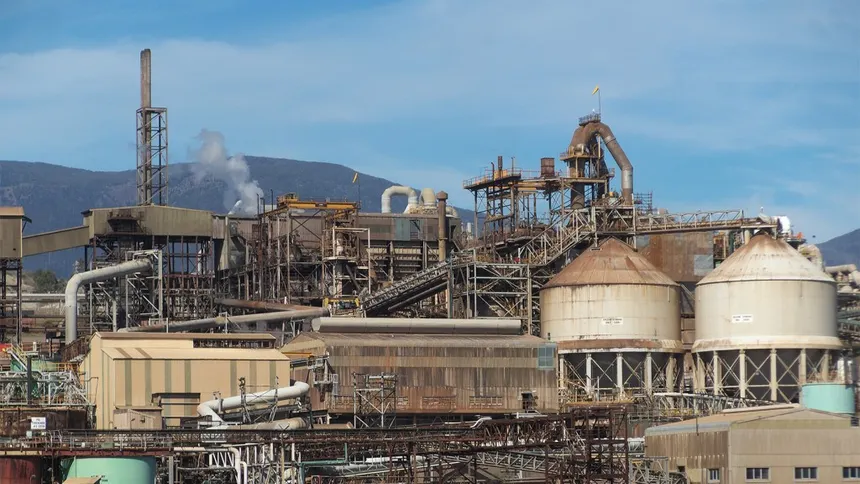
PORT PIRIE, Australia —When Canberra, South Australia, and Tasmania pledged A$135 million this month to keep Nyrstar’s century-old smelters running, the message was clear: save jobs, protect regional economies, and preserve some sovereign refining capacity as China’s dominance deepens.

At first glance, the optics work. Port Pirie in South Australia and Hobart in Tasmania have relied on the plants for more than a century. Without intervention, value-added refining would shift offshore and deepen Australia’s dependence on imports.
But the Nyrstar bailout Australia package, built as a short-term rescue with few binding transformation clauses, risks pouring taxpayer dollars into preserving a cost structure that is already out of step with the decarbonized, policy-driven metals markets of the next decade.
The Case for Rescue
Federal and state leaders cite an urgent convergence of pressures: volatile energy costs, depressed treatment charges, and the risk of losing critical domestic capacity in lead and zinc refining.
Nyrstar — owned by commodities trader Trafigura — says the money will buy time to rebuild core assets and evaluate producing strategic by-products like antimony, bismuth, germanium, and indium. These metals are vital for defense, semiconductors, and clean energy supply chains — and command higher margins.
More Read

That pivot is the most compelling aspect of the announcement. “If this is a bridge to new capabilities, it could be the start of genuine critical-minerals sovereignty,” said one industry consultant. “But the conditions need to be explicit, not aspirational.”

What’s Missing: Conditionality
Three critical measures were absent from the public deal:
1. Renewable power and price certainty.
Smelting economics hinge on energy costs. Long-term renewable power purchase agreements (PPAs) and storage commitments could have shielded the smelters from the same volatility that triggered this crisis. Without them, the plants remain exposed.
2. Low-carbon certification.
Europe’s Carbon Border Adjustment Mechanism (CBAM) and tightening procurement rules already reward low-carbon metals. Conditioning aid on verified emissions targets would position Nyrstar’s smelters to access those premiums.
3. Timelines for critical by-products.
Port Pirie’s potential antimony pilot could serve allied defense contracts. Binding milestones — pilot, demonstration, commercial — tied to funding tranches would ensure the pivot doesn’t stall.
What a ‘Green Bailout’ Could Have Been
Policy advisers suggest a clearer playbook:
- Power-anchoring: decade-long renewable PPAs with storage, plus staged electrification of thermal loads.
- Capex match: public funds unlocked only alongside private investment in efficiency upgrades, off-gas capture, and process control systems.
- By-product clock: binding timelines for antimony, germanium, indium, and bismuth output, with quarterly reporting.
- Premium market access: independent low-carbon certification to unlock green premiums in galvanizing, defense, and energy infrastructure.
Sovereignty vs. Sentiment
It is tempting to equate an operating smelter with sovereignty. In reality, critical-minerals sovereignty is defined by cost competitiveness, carbon intensity, and the ability to deliver what strategic partners demand.
A smelter that fails future emissions tests or lacks high-value output risks becoming a stranded asset. China’s advantage is not just scale, but an integrated ecosystem — from feedstock to finished goods — supported by coordinated policy. Narrow subsidies that simply keep furnaces running will not close that gap.

The Trojan Horse Risk
Analysts warn of a foreseeable scenario: three years from now, the plants are still running, but electricity remains costly and volatile. CBAM-style regimes cut into export margins. Chinese refiners, having scaled cleaner tech and secured cheaper energy, undercut Australia on both price and carbon intensity.
The result: after spending to preserve capacity, Australia finds those tonnes unable to compete in its allies’ ESG-conscious markets.
Community Stakes
In Port Pirie, the smelter is more than industry — it is identity. Local businesses welcomed the funding, but community leaders say survival must mean long-term viability. “It can’t just be another year-to-year scramble,” one council member said.
A transformation-anchored bailout could double as a just-transition policy — creating apprenticeships tied to the new tech stack, seeding local suppliers in electrical and controls engineering, and retraining workers for a low-carbon industrial future.
Strategic Context
The Nyrstar bailout Australia comes as Canberra faces decisions on the fate of other refining assets: Glencore’s Mount Isa and Townsville complex, Bell Bay aluminium, and the role of the National Reconstruction Fund in a coherent industrial strategy.
Analysts argue the Nyrstar deal should set a precedent: transparent rules, measurable transformation, and enforceable timelines.
What Markets Will Watch
- Whether Nyrstar locks in long-term renewable energy contracts.
- Concrete capital upgrades to cut costs and emissions.
- Progress from feasibility studies to offtake deals in critical by-products.
- A shift from ad-hoc bailouts to predictable, rules-based industrial policy.
Bottom Line
The Nyrstar bailout Australia could lay the foundation for a low-carbon metals complex with strategic by-products — or it could subsidize a slow decline. The outcome hinges on whether policymakers use this breathing room to hardwire transformation.
In a decarbonizing, policy-driven market, rescue must rhyme with rebuild. Today, it mostly rhymes with reprieve.