2026 Lithium Power Map : Early Access Open ($59) | Get the latest sector data and secure your copy here: https://skillings.short.gy/LithiumPreSale

By Salini Krishnan
The global mining landscape in April 2026 is no longer defined by simple extraction, but by strategic realignment. As the world moves deeper into the energy transition, the “Resource Realignment” has become the dominant theme for the year. This era is characterized by the aggressive pursuit of supply chain security, the merging of national defense with mineral procurement, and a multi-trillion-dollar investment gap in base metals.
In this week’s edition of the Power List, we identify the ten entities and leaders who are not just participating in the market, but actively reshaping the global map of mineral flows. From massive lithium acquisitions to the struggle for rare earth dominance in the Arctic, these are the movers and shakers of the 2026 resource cycle.
1. Rio Tinto: The Lithium Kingpin
Rio Tinto has cemented its position as the undisputed leader of the lithium midstream after successfully integrating its $8.6 billion acquisition of Arcadium Lithium. This move was more than just a horizontal merger; it was a tactical strike to capture high-grade brine assets and advanced processing technology.
More Read

As Rio Tinto expands lithium production, it is setting a new standard for how diversified majors handle the battery metal volatility of 2026. By bringing Arcadium’s technical expertise in-house, Rio is bypassing the traditional learning curve that has plagued other majors entering the sector.

2. The DRC Ministry of Mines: The Copper Bridge
The Democratic Republic of Congo (DRC) is no longer a passive source of ore; it is a geopolitical pivot point. This week, the DRC’s strategic realignment toward bolstering U.S. copper supply has sent ripples through the London Metal Exchange.
By prioritizing western-aligned supply chains for its latest tier-one copper projects, the DRC is challenging the long-held dominance of Chinese smelting capacity. This shift is critical as the industry faces a staggering $2.1 trillion investment gap required to meet demand by 2050. The DRC’s ability to stabilize its investment climate is perhaps the single most important factor for global copper liquidity in the coming decade.
More Read

3. Jan Moström and LKAB: Europe’s Rare Earth Shield
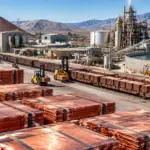
In Sweden, LKAB CEO Jan Moström continues to push the boundaries of European mineral sovereignty. The Per Geijer deposit remains the most significant rare earth discovery in the EU’s history. This week, Moström’s team announced new milestones in the permitting process for the Kiruna expansion, a project that is essential for the Green Transition.
The Per Geijer project is not just a mine; it is a test case for whether the European Union can move fast enough to de-risk its dependence on imported magnets and motors. Moström’s leadership in navigating the intersection of environmental regulation and industrial necessity has made him a central figure in the 2026 Resource Realignment.
4. The “Gap Analysts”: Highlighting the $2.1 Trillion Deficit
We are including a collective of market analysts this week who have brought the copper industry’s $2.1 trillion investment gap to the forefront of policy discussions. These data-driven leaders are sounding the alarm: without a massive influx of capital into primary extraction, the net-zero targets of 2030 and beyond are physically impossible.
Their reporting has forced a pivot in how institutional investors view the sector. No longer is mining seen as a “dirty” legacy industry; it is being re-rated as the foundational infrastructure of the digital and green economy.
5. Michael Wright and Thiess: The Decarbonization Vanguard
Thiess, under the leadership of Michael Wright, is redefining operational excellence through its commitment to fleet decarbonization. By prioritizing actual emission abatement over the purchase of carbon offsets, Thiess is setting a precedent that many junior and mid-tier miners are now scrambling to follow.
In 2026, the “Social License to Operate” is tied directly to a company’s carbon intensity. Wright’s strategy to electrify haulage fleets and integrate renewable microgrids into remote sites is proving that sustainability and profitability are not mutually exclusive in the 2026 resource cycle.

6. The Deep-Sea Mining Technology Pioneers
Deep-sea mining is no longer a futuristic concept; it is an active frontier. Companies focusing on deep-sea mining technology have made significant strides this week in proving the viability of nodule collection at scale.
As terrestrial deposits become harder to find and more expensive to permit, the abyssal plains are looking increasingly attractive. The “titans” in this sub-sector are the engineers and marine biologists working to create closed-loop extraction systems that minimize plumes and protect biodiversity, making the 2026 resource realignment a truly three-dimensional shift.
7. U.S. Steel: The Domestic Nexus
U.S. Steel remains at a future crossroads, representing the struggle for domestic industrial resilience. Whether through acquisition or internal restructuring, the fate of U.S. Steel is a bellwether for the American “Iron Dome”: the internal capacity to produce the materials required for defense and infrastructure.
In the current geopolitical climate, steel is not just a commodity; it is a strategic asset. The executive decisions made at U.S. Steel this month will determine the health of the American industrial base for the next decade.
8. Macmahon Holdings: The Indonesian Expansion
Macmahon has been a standout performer this week after being selected for a significant underground gold mining gig in Indonesia. This move highlights the growing importance of Southeast Asia in the global mineral mix.
The Poboya project in Indonesia is a clear indicator that gold remains a critical hedge during the 2026 resource realignment. Macmahon’s ability to deploy advanced underground technology in challenging jurisdictions has made them a preferred partner for regional governments looking to maximize their mineral wealth.

9. Greenland’s Mineral Explorers: The Resilience Factor
While Greenland’s mining industry struggles to take off due to infrastructure and climate hurdles, the companies still on the ground are the true titans of endurance. These operators are defining the 2026 realignment by exploring the “last frontier” of critical minerals.
The tenacity shown by Greenland-focused juniors is essential. As ice sheets recede, the geological potential of the island is becoming more accessible, but the regulatory and logistical “cold war” there is only just heating up.
10. The 2026 Lithium Power Map Data Architects
Finally, we recognize the data scientists and analysts behind the Global Battery Revolution. In a world of opaque supply chains, those who can map the flow of lithium from a spodumene pit in Australia to a gigafactory in Nevada hold the keys to the kingdom.
The 2026 Lithium Power Map project has highlighted that refining corridors, rather than just raw geology, are the new power centers of the world. The shift from “who has the rock” to “who can process the rock” is the defining characteristic of the current resource cycle.
Analysis: Why This List Matters Now
The “Weekly Power List” is more than a ranking; it is a snapshot of a world in transition. In 2026, the mining industry has moved past the post-pandemic shocks and entered a phase of disciplined, strategic growth. The titans listed above share a common trait: they are all thinking in decades, not quarters.
For investors and operators, the takeaway is clear. The 2026 Resource Realignment favors those with:
- Vertical Integration: Like Rio Tinto’s lithium play.
- Strategic Partnerships: Like the DRC’s shift toward U.S. supply chains.
- Technological Superiority: As seen in deep-sea mining and decarbonized fleets.
As we move into the second half of 2026, the gap between the leaders and the laggards is widening. Those who control the critical mineral supply chains of today will dictate the economic reality of tomorrow.
Stay ahead of the market with the 2026 Lithium Power Map. Pre-order your copy today and gain exclusive access to the data driving the battery revolution: https://skillings.short.gy/LithiumPreSale