2026 Lithium Power Map : Early Access Open ($59) | Get the latest sector data and secure your copy here: https://skillings.short.gy/LithiumPreSale

By Salini Krishnan
In a move that signals a tectonic shift in U.S. domestic mineral policy, the U.S. Senate voted 50-49 on Thursday to overturn a federal mining ban in northern Minnesota. The decision effectively nullifies a 20-year moratorium established in 2023, potentially clearing a path for massive copper-nickel projects in the Duluth Complex, one of the world’s largest undeveloped mineral deposits.
The resolution, which utilized the Congressional Review Act to bypass traditional legislative hurdles, now heads to the White House for President Trump’s signature. For the mining industry, the vote represents a historic victory in the effort to secure a domestic supply of critical minerals essential for defense, energy infrastructure, and the ongoing global battery revolution.
The Legislative Reversal: A Narrow Victory
The Senate’s decision was the culmination of a high-stakes political battle centered on approximately 225,000 acres of the Superior National Forest. This area, located near the Boundary Waters Canoe Area Wilderness, was placed under a 20-year mining withdrawal by Interior Secretary Deb Haaland in early 2023, citing the risk of “irreparable” environmental harm.
More Read

However, advocates for the mining industry, led by Congressman Pete Stauber of Minnesota’s 8th District, argued that the ban was a politically motivated barrier to American mineral independence. By invoking the Congressional Review Act, lawmakers were able to target the moratorium directly. The 50-49 vote fell largely along party lines, reflecting the deep national divide over land use and environmental protection.

This legislative maneuver does more than just lift a temporary ban; it creates a legal precedent that prevents future administrations from simply reimposing the same moratorium through executive action. This stability is critical for companies like Twin Metals Minnesota, a subsidiary of Antofagasta PLC, which has already invested hundreds of millions of dollars into the region.
Unlocking the Duluth Complex
The strategic importance of the Duluth Complex cannot be overstated. Located in the northeastern corner of Minnesota, the complex contains vast quantities of copper, nickel, cobalt, and platinum-group elements. These are the same materials currently driving the strategic realignment of global supply chains as the U.S. seeks to reduce its reliance on foreign adversaries.
More Read

Until this vote, the Duluth Complex was largely off-limits to new underground development. Industry experts estimate that the region holds approximately 95% of the U.S.’s nickel reserves and 34% of its copper reserves. With the Senate’s reversal, the Twin Metals project: designed as a carbon-neutral, 21st-century underground mine: may finally move back into the federal permitting phase.

Market Snapshot: U.S. Import Reliance (2026 Estimates)
| Mineral | Primary Use | Import Reliance (%) | Key Sources |
|---|---|---|---|
| Nickel | EV Batteries, Stainless Steel | 45% | Canada, Norway, Australia |
| Copper | Power Grid, Electronics, EVs | 38% | Chile, Peru, Canada |
| Cobalt | Aerospace, Batteries | 76% | Norway, China, Japan |
| Platinum | Catalytic Converters, Green Hydrogen | 70% | South Africa, Russia |
Economic Hopes for the Iron Range
For the communities of northern Minnesota’s Iron Range, the Senate vote is seen as a lifeline. The region has a century-long history of iron ore extraction, but the transition to “green” metals represents a multi-generational economic opportunity.
Proponents argue that the Twin Metals project alone could create 750 direct mining jobs and 1,500 spinoff jobs in the Ely and Babbitt areas. These are high-paying roles in a region that has often felt the sting of shifting global markets. Furthermore, the development of these minerals aligns with the broader push to modernize the American industrial base, much like the current efforts surrounding U.S. Steel’s future at the crossroads of global trade.
“This isn’t just about one mine; it’s about the future of the American worker,” a spokesperson for the United Steelworkers noted following the vote. “We have the technology to mine these materials safely, and we have the people ready to do the work. Lifting this ban allows us to compete on a global scale.”
The Environmental Standoff
The reversal has been met with fierce opposition from environmental groups and conservationists. The primary concern is the proximity of the proposed mining sites to the Boundary Waters Canoe Area Wilderness, a 1.1-million-acre preserve known for its pristine water and interconnected lakes.
Opponents argue that copper-nickel mining: often referred to as sulfide-ore mining: carries the risk of acid mine drainage. In this process, sulfuric acid is created when sulfide minerals are exposed to air and water, potentially leaching heavy metals into the watershed. Given that the Boundary Waters is a water-rich environment, critics maintain that any contamination could spread rapidly, damaging the local tourism economy and irreversible ecosystems.
“The Senate has chosen short-term industrial gain over the long-term health of our most precious wilderness,” said a representative from the Campaign to Save the Boundary Waters. “A single spill in this watershed would be a catastrophe that no amount of economic benefit could justify.”
Geopolitical Implications and National Security
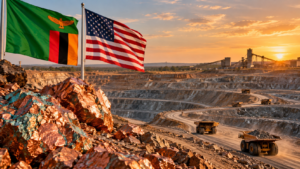
From a federal perspective, the vote is framed as a matter of national security. The U.S. currently finds itself in a precarious position regarding the “energy nexus”: the intersection of mining, energy production, and defense. As global demand for copper and nickel soars, the ability to produce these metals domestically reduces vulnerability to supply chain disruptions caused by geopolitical tension.
https://cdn.marblism.com/wtFzngOH58z.webp
Caption: Mining professionals and policymakers increasingly view domestic operations through the lens of national security and strategic resource independence.
The Senate’s pivot follows a trend of increasing government intervention to de-risk junior mining and mid-tier projects. Similar to how the U.S. has reacted to export controls on gallium and germanium, the move in Minnesota is an attempt to insulate the American economy from external shocks. By reopening the Superior National Forest to exploration, the U.S. is signaling to the global market that it is serious about mineral sovereignty.
What Comes Next: The Permitting gauntlet
While the Senate vote is a massive hurdle cleared, it does not mean that mining will begin tomorrow. The reversal simply returns the land to its prior status, allowing companies to re-apply for mineral leases and enter the rigorous environmental review process.
Twin Metals and other potential operators in the Duluth Complex will still face years of scrutiny under the National Environmental Policy Act (NEPA). They must prove that their operational plans: which often include dry-stack tailings and advanced water treatment facilities: can prevent contamination of the surrounding environment.
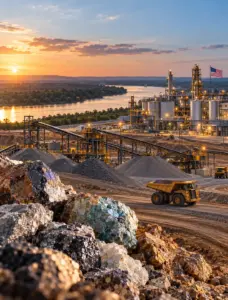
https://cdn.marblism.com/u6VkLX_7Yli.webp
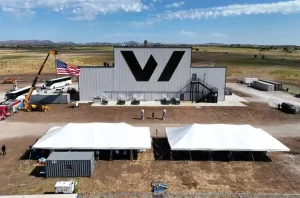
Caption: Modern mineral processing facilities, such as those planned for northern Minnesota, utilize modular designs to minimize environmental footprints.
The next steps involve:
- Reinstatement of Leases: The Bureau of Land Management (BLM) must formally reinstate the mineral leases that were canceled during the moratorium.
- Environmental Impact Statements (EIS): Detailed studies must be conducted to assess the specific impacts of the proposed mining methods.
- State-Level Permitting: The Minnesota Department of Natural Resources (DNR) and the Minnesota Pollution Control Agency will have their own stringent requirements for air and water quality.
Industry Outlook for 2026
The Senate’s action is part of a broader 2026 outlook that favors domestic extraction. With the Per Geijer rare earths project making headlines in Europe and deep-sea mining technology advancing rapidly, the global race for minerals is reaching a fever pitch. Minnesota is now positioned as a primary theater in this race.
Investors have already begun reacting to the news. Shares in companies with exposure to the Duluth Complex saw a marked uptick following the Senate floor vote. Analysts suggest that if the permitting process proceeds without further legislative interference, the first ore from these projects could realistically be expected by the early 2030s.

Conclusion
The US Senate’s decision to overturn the northern Minnesota mining ban marks the end of one chapter and the beginning of another in the saga of the American Iron Range. While the debate over environmental safety remains intense, the federal government’s pivot toward domestic production reflects a clear prioritization of mineral security in an increasingly unstable world. For operators and investors, the “Land of 10,000 Lakes” is once again a land of immense mineral opportunity.