By Charles Pitts

The global rare earths sector is approaching a critical inflection point in 2026. After decades of overwhelming Chinese dominance in the permanent magnet supply chain, a new landscape is emerging: one defined by vertical integration, Western national security mandates, and the commercial scale-up of non-Chinese processing hubs.
For decades, the “mine-to-magnet” journey was almost exclusively a trans-Pacific route: ore extracted elsewhere was shipped to China for separation and fabrication into the high-performance neodymium-iron-boron (NdFeB) magnets essential for electric vehicle (EV) traction motors, wind turbines, and defense systems. However, as of July 2026, the industrial map has fundamentally shifted. Led by US-based titans MP Materials and Energy Fuels, the race to establish a secure, “China-light” supply chain has moved from theoretical feasibility to commercial reality.
The 2026 Inflection Point: From Exploration to Execution
The transition from 2025 to 2026 represents the most significant period of capacity expansion for Western rare earth producers. While the early 2020s were characterized by exploration and pilot-scale successes, 2026 is the year of commissioning.
According to recent market intelligence, the global rare earth elements market is projected to reach approximately US$41 billion by 2034, with the permanent magnet segment alone accounting for nearly US$30 billion. The primary driver is a structural shift in demand toward high-performance magnets that require not only light rare earths like neodymium and praseodymium (NdPr) but also heavy rare earths such as dysprosium (Dy) and terbium (Tb) to maintain efficiency at high temperatures.
More Read

For investors and operators, the 2026 outlook for critical minerals is no longer just about extraction; it is about the “midstream squeeze”: the ability to refine and fabricate materials without relying on the established Chinese monopoly.


MP Materials: The Fully Integrated US Powerhouse
MP Materials (NYSE: MP) has entered the second half of 2026 as the vanguard of the American “mine-to-magnet” strategy. Operating the Mountain Pass mine in California: the only major rare earth extraction site in the United States: the company has successfully navigated the complex transition from a concentrate exporter to a finished product manufacturer.
More Read

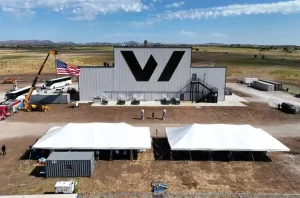
The company’s Independence facility in Texas is the centerpiece of this strategy. Targeted to begin commercial magnet sales in H2 2026, the plant represents the first commercial-scale NdFeB magnet capacity in the Western hemisphere directly tied to a domestic mining operation.
Key 2026 Milestones for MP Materials:
- Commercial Ramp: The Texas facility is scaling toward an initial capacity of 1,000 metric tons per year of NdFeB magnets.
- OEM Integration: A multi-year offtake agreement with General Motors is now active, providing a direct pipeline for domestic magnets into the North American EV market.
- The 10X Expansion: Backed by the Department of Defense (DoD), MP has moved toward the development of a second “10X Facility,” aimed at increasing magnet capacity to 10,000 metric tons per year by 2028.
This vertical integration allows MP Materials to capture significant margin uplift. By moving downstream, the company avoids the volatility of concentrate pricing and instead captures the value-add of precision-engineered magnets. For those analyzing critical minerals stocks leading the supply chain transition, MP’s ability to internalize every step: from the pit to the motor: sets the 2026 benchmark.
Energy Fuels: The Strategic Midstream Enabler
While MP Materials focuses on a fully integrated model, Energy Fuels (NYSE: UUUU) has carved out a unique position as a high-purity midstream processor. Leveraging its White Mesa Mill in Utah: originally a uranium processing facility: Energy Fuels has pivoted to become a critical node for rare earth separation, particularly focusing on the elusive heavy rare earths.
Energy Fuels’ strategy does not rely on a single mine. Instead, it processes monazite sands sourced from global partners, separating them into high-value light and heavy rare earth oxides. In January 2026, a Bankable Feasibility Study (BFS) confirmed the company’s path toward becoming a major non-Chinese supplier of NdPr, dysprosium, and terbium.

Strategic Positioning in 2026:
- Heavy Rare Earth Circuit: Commercial commissioning of its heavy rare earth circuits is targeted for Q4 2026, positioning Energy Fuels to supply the dysprosium and terbium oxides that MP Materials and other magnet makers require for high-performance products.
- NdPr Capacity: The company is scaling toward 6,000 metric tons per year of NdPr oxide, roughly equivalent to 25% of the projected non-Chinese demand.
- Diversification: By repurposing uranium infrastructure, Energy Fuels has bypassed the decade-long permitting cycles required for new greenfield mines, a tactic that has become a model for brownfield mining advantages in 2026.
Market Snapshot: 2026 Projections
The following data points reflect the current market landscape for rare earths as of mid-2026. These figures highlight the tightening supply-demand balance as Western capacity comes online.
| Commodity / Metric | 2026 Est. Price (USD/kg) | Non-Chinese Supply Growth (YoY) | Key 2026 Driver |
|---|---|---|---|
| NdPr Oxide | $92.50 – $115.00 | +18% | US and Australian capacity ramp-up |
| Dysprosium Oxide | $480.00 – $550.00 | +12% | High-temperature magnet demand for EVs |
| NdFeB Magnets | $145.00 – $170.00 | +25% | First-run output from Texas and European hubs |
| China Market Share | 82% (Separation) | -4% | Rapid expansion of US and EU processing |
Data source: Skillings Mining Intelligence Market Analysis
Geopolitics and the ‘China-Light’ Strategy
The race for non-Chinese magnets is not merely a commercial competition; it is a matter of state policy. In 2026, the US Defense Production Act and the EU’s Critical Raw Materials Act have created a “policy-driven business cycle.” Government agencies are no longer just regulators: they are equity partners and offtake guarantors.
The US Department of Defense now holds an estimated 15% stake in MP Materials, a move designed to insulate the defense industrial base from potential export bans or geopolitical leverage. This follows the trend of resource sovereignty where nations are actively building stockpiles and domestic processing corridors to counter market volatility.

Investor Outlook: Execution and Yield Risks
Despite the progress, the “Race for 2026” is not without significant hurdles. For operators like MP Materials and Energy Fuels, the primary risks have shifted from “Will the project be built?” to “Will the yields meet specifications?”
- Qualification Timelines: Automotive OEMs have rigorous standards. Magnets produced in the new Texas or Utah circuits must undergo months of testing to ensure they meet the durability and magnetic flux requirements for EV motors.
- Chemical Complexity: Rare earth separation is notoriously difficult. Maintaining 99.9% purity for dysprosium oxide at a commercial scale is a feat that few have achieved outside of China.
- Feedstock Stability: While MP Materials has its own mine, Energy Fuels must maintain a steady supply of monazite sands from third-party sources. Geopolitical shifts in source countries could disrupt this midstream model.
For a deeper dive into how these companies are managing these technical hurdles, see our report on rare earth processing and the 2026 outlook.
Conclusion: A Multipolar Rare Earth Market
As we move through 2026, the “China-only” era of rare earth magnets is effectively over. While China remains the largest player by volume, the emergence of a viable, integrated Western alternative has changed the risk calculus for manufacturers and governments alike.
MP Materials has demonstrated that vertical integration is possible on North American soil, while Energy Fuels has proven that strategic midstream processing can bridge the gap for heavy rare earths. For the mining industry, 2026 marks the year when rare earths transitioned from a speculative “critical mineral” to a stable, industrial pillar of the Western energy transition.