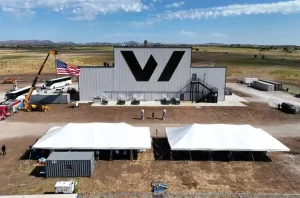
Caption: Increased operational capacity is a key driver for the 2026 rare earth market rebound.

By Charles Pitts
The global landscape for critical minerals reached a decisive turning point this week with the announcement that USA Rare Earth (USAR) has entered into a definitive agreement to acquire the Serra Verde Group for $2.8 billion. This transaction, the largest pure-play rare earth acquisition in history, signals a significant maturation of the sector and a structural shift in how Western markets secure the elements essential for high-tech defense and energy transition applications.
The deal comes at a time when the 7 surprising mining trends for 2026 have shifted from speculative exploration toward large-scale operational consolidation. By integrating Serra Verde’s Pela Ema project in Goiás, Brazil, into its portfolio, USAR is not merely buying a mine; it is securing a strategic beachhead in the race to bypass the traditional supply chain monopolies.
Rare Earth Market Snapshot: April 2026
| Indicator | Value / Forecast | Change (YoY) | Impact |
|---|---|---|---|
| Global Magnet REE Demand | 215k tonnes | +18.5% | Bullish |
| Non-Chinese Production Share | 32% (Projected 2027) | +12% | Resiliency High |
| USA Rare Earth Stock (USAR) | $22.75 | +14.2% (Post-Deal) | Market Confidence |
| Average EBITDA (Serra Verde) | $550M – $650M | New Entry | High Margin |
Why Serra Verde Matters
The centerpiece of the $2.8 billion deal is the Pela Ema project in Goiás, Brazil. It is currently the only large-scale producer outside Asia of all four magnetic rare earth elements: neodymium (Nd), praseodymium (Pr), dysprosium (Dy), and terbium (Tb).
More Read

Pela Ema also stands out because it is an ionic clay deposit. Unlike many North American and Australian deposits, it does not rely on complex, energy-intensive hard-rock mining. That can support simpler and lower-cost processing. As a result, the project has some of the same advantages that helped Chinese producers scale.


Caption: The Serra Verde Pela Ema project in Brazil represents a shift in global rare earth production.
The project is already producing, which is unusual in a sector where permitting can take a decade or more. Phase 1 nameplate capacity stands at 6,400 tonnes of total rare earth oxides a year. By 2027, Serra Verde is projected to account for more than 50% of heavy rare earth production outside China.
More Read

That helps explain the premium USAR agreed to pay. In the current market, producing assets carry more strategic value than early-stage exploration projects because they can ship material now rather than years from now.
Why the Supply Chain Angle Matters
The significance of the deal goes beyond the balance sheet. For years, buyers and policymakers have worried about export restrictions and supply concentration, similar to the risks discussed in our analysis of China’s gallium and germanium export controls.
The USAR-Serra Verde transaction includes a 15-year offtake agreement for 100% of production, backed by a consortium of U.S. government entities and private capital. It also includes price floors for the four magnetic rare earths. That gives the project a level of revenue visibility the sector has often lacked.
This structure fits a broader Western push to secure alternative supply lines, mirroring the urgency seen in the uranium market outlook 2026. By locking in Brazil-sourced material, the U.S. and its allies are building a refining corridor that favors geopolitical stability over pure spot-market pricing.
For operators and investors, that matters because it changes how these assets may be valued. With government-backed demand and price support, some rare earth projects begin to look less like cyclical commodity bets and more like strategic industrial infrastructure.

Caption: Advanced processing infrastructure is required to extract magnetic rare earth elements.
What the Financial Case Looks Like
The $2.8 billion price tag includes $300 million in cash and about 127 million USAR shares. It is an aggressive valuation. However, it is also tied to a clear earnings case. USAR projects that by the end of 2027, the Serra Verde assets could generate annualized EBITDA of $550 million to $650 million.
Three factors support that outlook:
- Demand growth: Permanent magnets are seeing stronger demand from EV drivetrains and offshore wind turbines. Because those end markets are expanding, the demand floor looks firmer than it did during the 2011 rare earth cycle.
- Project maturity: Serra Verde is already in production. That reduces development risk because USAR is not taking on a long permitting and construction process from scratch.
- Vertical integration: USAR brings U.S. processing capacity, while Serra Verde brings upstream supply. Together, they create a mine-to-magnet chain that can capture value at more than one stage.

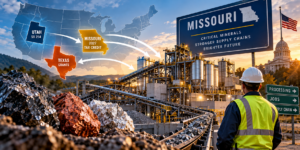
Caption: Global collaboration is driving the development of new critical mineral supply chains.
Why This May Not Be the Last Deal
The Serra Verde acquisition is the largest rare earth transaction of the year. However, it may not be the last. The sector is moving into a new phase of consolidation as Western governments increase capital support for critical minerals and larger players seek operating or near-operating assets.
The market also appears to be losing its middle tier. On one side are larger, vertically integrated groups such as USAR, Lynas, and MP Materials. On the other are smaller explorers focused on niche heavy rare earth opportunities. That shift suggests the industry is moving away from the speculative structure of the past decade and toward a more industrial model.
Brazil is central to that trend because it broadens geographic supply options. The U.S. and Australia remain key hubs, but South America is emerging as an increasingly important rare earth jurisdiction. In Serra Verde’s case, the Pela Ema trend still offers expansion potential, and a Phase 2 buildout could double output by 2030.

Caption: Professional documentary-style imagery of active mining sites highlights the scale of modern operations.
What Could Still Go Wrong
Risks remain despite the scale of the deal. China has previously responded to non-Chinese supply growth with price moves that put pressure on competing producers. However, Serra Verde’s 15-year offtake structure and price floors should provide some protection against that risk.
There are also operating and environmental challenges. Ionic clay processing is generally simpler than hard-rock mining, but it still requires tight environmental controls. That matters because Western OEMs increasingly tie procurement decisions to ESG performance. Serra Verde’s operating model will face closer scrutiny as it ramps toward Phase 1 capacity.
Conclusion
The acquisition of Serra Verde by USA Rare Earth is more than a corporate merger. It signals a shift in the rare earth market toward strategic supply security, refining capacity, and vertical integration.
For operators, investors, and policymakers, the message is becoming clearer. The sector is no longer defined only by resource ownership. It is increasingly defined by who can process material, secure contracts, and deliver supply into allied industrial chains.
By 2027, attention is likely to focus less on who holds the ore body and more on who controls the commercial pathway to market. With projected EBITDA of $550 million to $650 million and support from U.S.-backed offtake structures, Serra Verde is emerging as a key part of the non-Chinese rare earth supply chain. Because of that, the deal may become a reference point for future transactions across the sector.