By Charles Pitts

The U.S. Department of Energy (DOE) has finalized $134 million in funding for two large-scale demonstration projects designed to extract rare earth elements (REEs) from unconventional feedstocks, including red mud and industrial tailings. The investment, managed through the Office of Critical Minerals and Energy Innovation (CMEI), marks a pivotal shift in the rare earths supply chain 2026 roadmap, moving from theoretical extraction to commercial-scale domestic production.
The funding is split between the Colorado School of Mines, which received $67 million for a specialized facility in Louisiana, and Phoenix Tailings, which was awarded $66 million to advance its proprietary metal-recovery technology. Both projects aim to mitigate the environmental liabilities of legacy mining operations while securing the high-purity materials essential for permanent magnets, electric vehicle (EV) motors, and defense systems.
Louisiana’s Red Mud: A New Frontier in REE Recovery
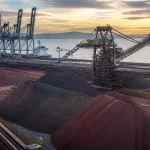
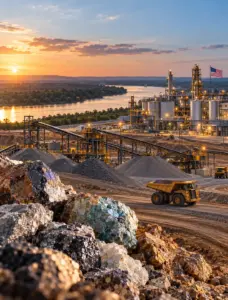
The Colorado School of Mines, in partnership with ElementUS and the Pacific Northwest National Laboratory (PNNL), will lead the development of a processing plant near the Gramercy alumina refinery in Louisiana. The facility is designed to process “red mud”: a caustic bauxite residue produced during the Bayer process for alumina production.
Historically, red mud has been treated as a waste byproduct, often stored in large impoundments that pose long-term environmental risks. However, the Gramercy project intends to prove that this residue contains concentrations of rare earth oxides that can be economically recovered and refined into metals.
More Read

“This is not just about waste management; it is about creating a circular mineral economy,” noted a DOE project brief. By utilizing existing waste streams, the Louisiana project bypasses the years-long permitting cycles required for new greenfield mines. This “waste-to-resource” model is a cornerstone of the mining technology 2026 trend, where operators are increasingly looking at historical tailings as secondary ore bodies.


Phoenix Tailings: Decarbonizing Critical Mineral Extraction
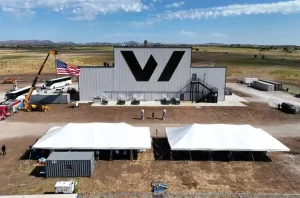
Phoenix Tailings, a Boston-based startup, is applying its $66 million award to a demonstration-scale facility that processes diverse industrial waste streams. Unlike traditional solvent extraction methods, which often rely on heavy chemical inputs and generate significant carbon footprints, Phoenix Tailings utilizes a proprietary electrochemical process to separate and refine REEs.
More Read

The Phoenix project will focus on producing high-purity rare earth alloys from mine tailings and e-waste. By integrating its technology directly into existing industrial sites, the company aims to reduce the logistical hurdles and energy intensity of traditional refining.
The scalability of this approach is a significant factor for investors eyeing critical minerals stocks to buy 2026. Companies capable of producing domestic REEs with a lower ESG footprint are increasingly favored as Western manufacturers seek to comply with stricter carbon-border adjustments and supply chain transparency regulations.
Strategic Impact on the Rare Earths Supply Chain 2026
The current global landscape for rare earths is characterized by a heavy reliance on Chinese processing. While the U.S. has ramped up extraction at sites like MP Materials’ Mountain Pass, the mid-stream processing and separation capacity remains a bottleneck.
The DOE’s $134 million injection addresses this gap by targeting “unconventional” sources. These are not just alternative ores; they are pre-mined materials that have already undergone the initial energy-intensive stages of crushing and grinding.
Key Benefits of Waste-Based Recovery:
- Permitting Speed: Utilizing existing industrial sites often falls under current operating permits, accelerating the timeline to production.
- Cost Efficiency: The “ore” is already at the surface and partially processed, significantly lowering OpEx.
- Environmental Remediation: Extracting valuable metals from tailings can reduce the volume and toxicity of waste piles, lowering long-term closure liabilities for mining companies.
For a deeper dive into how these shifts are impacting global markets, see our analysis on Rare Earths Supply Chain 2026: Diversifying Away from Processing Bottlenecks.

Mining Technology 2026: The Rise of “Zero Waste” Operations
The projects in Louisiana and Massachusetts represent the vanguard of a broader shift in mining technology 2026. As primary grades of critical minerals continue to decline globally, the industry is pivoting toward “total resource recovery.”
Advanced sensors, automated sorting, and modular electrochemical refining are allowing companies to extract value from streams that were previously considered uneconomical. This technological maturation is vital for domestic supply security, particularly for “heavy” rare earths like dysprosium and terbium, which are often found in lower concentrations but are essential for high-temperature magnets.
Investor Perspective: Critical Minerals Stocks to Buy 2026
The move toward waste recovery provides a unique entry point for investors. While traditional mining stocks are subject to geopolitical risks and commodity price volatility, companies involved in the critical minerals service and recovery sector offer a different risk profile.
Investors should monitor:
- Pure-Play Recovery Tech: Firms like Phoenix Tailings and ElementUS that hold the intellectual property for extraction.
- Infrastructure Partners: Companies providing the specialized equipment and modular plants required for REE separation.
- Refinery Operators: Established mid-stream players that are integrating waste recovery into their existing portfolios to boost margins.
For more on the financial health of the sector, read our latest report on Mining Investment & P-NAV Resets: 2026 Outlook.
| Project Lead | Funding Amount | Primary Feedstock | Location |
|---|---|---|---|
| Colorado School of Mines | $67 Million | Red Mud (Bauxite Residue) | Gramercy, LA |
| Phoenix Tailings | $66 Million | Industrial Waste / Tailings | Massachusetts / Multiple |
| Total DOE Injection | $134 Million | Unconventional Streams | Domestic U.S. |

Conclusion: Securing the Domestic Pipeline
The DOE’s $134 million commitment is a clear signal that the U.S. is prioritizing “above-ground” mining to solve its critical mineral deficit. By leveraging the expertise of the Colorado School of Mines and the agility of startups like Phoenix Tailings, the administration is betting that the waste of the past will power the energy transition of the future. For operators and investors, the message is clear: the most valuable ore of 2026 might not be underground, but in the tailings piles and red mud ponds of existing industrial sites.