By Penny Laneford

The lithium transition isn’t a straight line; it’s a series of expensive, grinding halts.
For months, the narrative surrounding North America’s “battery valley” in Quebec was one of unstoppable momentum. Rio Tinto (ASX, LSE: RIO) was the heavyweight anchor, a mining titan with the balance sheet to weather any storm. But on Friday, March 13, reality delivered a cold shower. The company confirmed it is significantly slowing construction at its $500 million Nemaska Lithium processing plant in Bécancour.
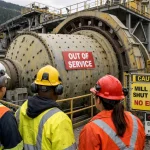
The contractual workforce at the site will be reduced by half. That is not a minor adjustment. It is a strategic throttle.
While Rio Tinto maintains it remains committed to the project, the move signals a growing discomfort with the escalating capital requirements of the lithium-hydroxide facility. Inflation in the construction sector, coupled with complex engineering hurdles, has forced a rethink. The “white gold” rush is hitting the brick wall of industrial economics.
More Read

The Bécancour Bottleneck: Why the Slowdown Matters
The Bécancour plant was designed to be the centerpiece of an integrated lithium supply chain in Canada. By converting spodumene concentrate into battery-grade lithium hydroxide, Rio Tinto aimed to solve what many call the missing middle: the gap between raw extraction and the final battery cell.

But building a refinery is not the same as digging a hole. It is a chemical engineering feat that requires precision, massive energy inputs, and, increasingly, more cash than originally budgeted. The $500 million price tag is now being viewed as a floor rather than a ceiling.
The decision to cut the contractor workforce by 50% suggests that Rio Tinto is prioritizing capital preservation over speed. In a market where lithium prices have remained volatile and interest rates have stayed stubbornly high, the margin for error has vanished. Mining professionals know the drill: when costs spiral, you stop the bleeding first and ask questions later.
More Read


Whabouchi vs. Galaxy: The Spodumene Question
At the heart of the slowdown is a deeper evaluation of where the plant’s raw material will actually come from. Rio Tinto is currently weighing the Whabouchi deposit against the Galaxy project.
The evaluation is ongoing. That’s industry-speak for a tactical pivot.
Whabouchi has long been the primary candidate for feed, but the logistics and costs of bringing it into full production are being scrutinized against the Galaxy assets. Rio Tinto assumed majority control of the project to ensure supply security, but “security” doesn’t mean “at any cost.” The company is effectively running a stress test on its entire Quebec portfolio to see which asset provides the most resilient spodumene supply strategy.
This isn’t just about geology. It’s about the brutal math of the lithium update and timeline. If the spodumene feed costs too much to extract or transport, the refinery at Bécancour becomes an expensive paperweight. Rio is betting that a six-month delay today is better than a decade of unprofitability tomorrow.
Timeline Shifts: 2028 is the New 2026
The original roadmap for Nemaska Lithium was aggressive. Commissioning was slated for 2026, with full-scale production expected by 2028. Under the new slowdown, those dates are shifting.
While some optimistic reports suggest first production could restart in 2027, the halving of the workforce makes that a tall order. Construction at the Bécancour plant was approximately 60% complete at the end of 2025. Finishing the remaining 40% with a skeleton crew is a recipe for a “slow-walk” project.
Investors should brace for a 2028 target that looks more like a 2029 reality.
The strategic calculus here isn’t subtle: Rio Tinto is watching the market. They are looking at the global lithium surplus and realizing that being the first to market is less important than being the most efficient. This is a classic “insider” move: publicly affirming commitment while privately pulling the levers of capital control.

The Macro Perspective: A Regional Squeeze
Quebec isn’t the only jurisdiction feeling the pinch. From the Smackover in Arkansas to the salt flats of Chile, lithium projects are facing a “day of reckoning” regarding their CAPEX assumptions. Rio Tinto’s move mirrors broader trends where even the majors are blinking.
When a company like Rio Tinto slows down, it sends a ripple through the entire ecosystem. Subcontractors, equipment providers, and even local government officials in Bécancour are suddenly looking at a much longer horizon for their ROI. The Quebec government, which has been a staunch supporter through Investissement Québec, now finds itself in a position of having to wait for a project it has heavily subsidized.
The irony? This is happening as the long-term copper price forecast for 2026 and other critical minerals suggest a massive structural deficit is still looming. The demand for electric vehicles isn’t disappearing, but the capital to build the supply chain is becoming more discerning.
Workforce Reductions: The Human and Operational Cost
Cutting a workforce by 50% isn’t just a line item on a spreadsheet. It’s a loss of institutional knowledge and momentum. In the mining industry, once you let go of specialized contractors, getting them back isn’t as simple as flipping a switch.
The “contractual workforce” being halved means that the engineering firms and specialized builders: the people who actually know where the pipes are buried: are heading to other projects. When Rio Tinto decides to ramp back up in 2027 or beyond, they will likely be paying a premium to re-recruit that talent.
This suggests that the cost concerns at Nemaska are profound. You don’t gut a project team unless the numbers are looking truly grim.

Investor Takeaway: The Long Game vs. The Short Squeeze
For investors, the Rio Tinto slowdown is a Rorschach test.
If you believe in the “white gold” super-cycle, this is a buying opportunity: a major miner de-risking a project by ensuring the economics work before pouring in the next $250 million. It’s a sign of discipline.
If you’re a skeptic, this is the beginning of the end for the Quebec lithium hype. It’s a sign that even with government backing and a tier-one operator, the hurdles of North American refining are too high.
The truth, as always, is somewhere in the middle. Rio Tinto isn’t Anglo American; they don’t pivot their entire strategy on a whim. They are likely using this time to renegotiate contracts, optimize the flow sheet, and wait for the lithium market to find its floor.
The project isn’t dead. But it is in a coma.
Summary of Key Risks
- Capital Intensity: If costs continue to rise, the $500M budget will be eclipsed, potentially requiring another round of equity from the Quebec government or Rio itself.
- Resource Evaluation: If the Whabouchi/Galaxy comparison favors a site with less-developed infrastructure, the timeline will slip even further.
- Labor Scarcity: Re-hiring 50% of the workforce in 2027 will be significantly more expensive than retaining them now.
- Market Timing: By pushing production to 2028/2029, Rio Tinto risks entering the market at the same time as several other massive projects, potentially cannibalizing their own margins.
The narrative of an easy transition to a green economy was always a myth. Rio Tinto’s Friday the 13th announcement is just the latest chapter in that reality check. You can’t disrupt geology, and you certainly can’t ignore the balance sheet.
For now, the cranes in Bécancour will be moving a lot slower.