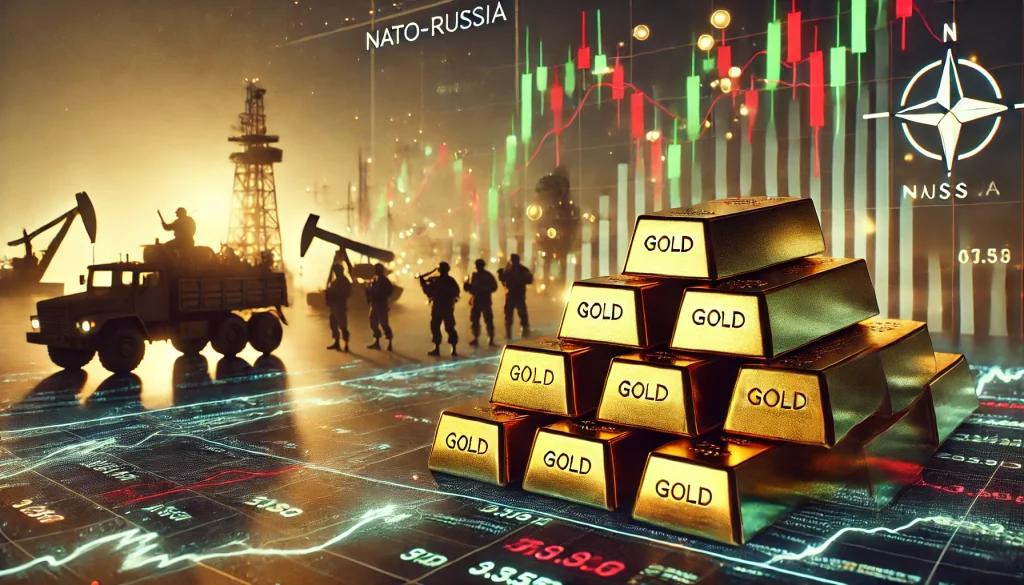
The Russia-Ukraine war has already reshaped global geopolitics, but the tacit approval of long-range missile use by Western allies signals a perilous escalation. As Ukraine targets strategic sites within Russia using advanced munitions like ATACMS and Storm Shadow missiles, Moscow has issued stark warnings. Potential retaliation could extend the conflict beyond Ukraine’s borders, possibly involving NATO and setting the stage for a broader confrontation.

Such a scenario—essentially a global war—would have profound repercussions for financial markets, with gold likely emerging as a significant beneficiary. Historically regarded as a “safe-haven” asset in times of turmoil, gold prices could soar to unprecedented levels, driven by escalating investor demand, inflationary pressures, and fractured global trade.
Related News
- Cybersecurity in Mining: The High-Stakes Challenge of Securing Digital Frontiers
- Antimony: Alaska’s Emerging Role in America’s Strategic Mineral Supply
- Sayona Mining to Acquire Piedmont Lithium in All-Stock Deal Amid Market Consolidation
- BHP Warns of Rising Low-Cost Competition, Challenges for Australian Mining Sector
Geopolitical Uncertainty: A Catalyst for Gold Demand
Gold has long served as a refuge for investors during geopolitical crises, economic instability, and market downturns. If the Russia-Ukraine conflict spirals into a NATO-Russia confrontation, panic-driven investments in gold are likely to surge.
Financial markets, already jittery amid war and inflation concerns, could experience rapid sell-offs in equities and other high-risk assets. Consequently, capital would flow into gold and similar safe-haven investments.
“Geopolitical tensions like these inject a profound sense of uncertainty into markets,” says Daniel Briesemann, a commodities analyst at Commerzbank. “Gold tends to benefit as both institutional and retail investors seek stability.”

Economic Instability and Inflationary Pressures
War has a well-documented history of disrupting global supply chains, and a NATO-Russia conflict would almost certainly exacerbate these vulnerabilities. Sanctions on Russia—a key exporter of energy and essential commodities—could trigger severe supply shortages and dramatic price spikes in oil, gas, and agricultural products.

Inflation, a natural byproduct of such disruptions, has historically driven up gold prices. For instance, in the 1970s, oil crises paired with inflationary pressures pushed gold to record highs.
Additionally, wars often necessitate massive military expenditures, compelling governments to take on debt and print money. This devalues fiat currencies, enhancing gold’s appeal as a stable alternative.

“If inflation accelerates, as it tends to during wars, gold’s status as an inflation hedge becomes incredibly valuable,” explains Ole Hansen, head of commodity strategy at Saxo Bank.
Energy Markets and Currency Risks
The interconnected nature of global energy markets introduces another layer of complexity. Both Russia and NATO-aligned nations play critical roles in the oil and gas sectors. A direct conflict could send energy prices soaring, exacerbating inflation worldwide.
Meanwhile, reliance on fiat currencies may wane during such a crisis. A weakening U.S. dollar or euro—caused by central banks injecting liquidity to sustain wartime economies—could make gold an even more attractive store of value.
“Energy and currency markets are the first dominoes to fall in a geopolitical crisis,” says John Reade, chief market strategist at the World Gold Council. “Gold serves as insurance when confidence in traditional systems falters.”
Central Banks Fuel Gold Momentum
Central banks play a pivotal role in the gold market, often increasing reserves during periods of geopolitical instability. In recent years, they have been net buyers of gold, diversifying holdings away from the U.S. dollar.
A major global conflict would likely accelerate this trend. Nations seeking to shield their reserves from market volatility and currency risks would drive central bank demand for gold, further propelling prices upward.
Historical Precedents: Lessons from the Past
Historical conflicts underscore the strong correlation between war and gold price surges. During World War II and the Cold War, gold remained a critical asset for wealth preservation. Similarly, the Gulf War in the early 1990s saw gold prices spike as Middle Eastern tensions disrupted global oil supplies.
Modern wars, however, pose even greater economic risks due to today’s deeply interconnected financial and trade systems. These dynamics could amplify gold’s appeal as an asset immune to counterparty risks.
What’s Next for Gold?
A broader escalation of the Russia-Ukraine war presents profound risks for global stability but creates a “perfect storm” for gold. Economic uncertainty, inflationary pressures, and diminishing trust in fiat currencies could drive gold prices to record highs, potentially surpassing $3,000 per ounce—a level some analysts foresee under extreme conditions.
As the conflict unfolds, gold remains the ultimate hedge against geopolitical and economic chaos. For investors, its allure is clear: in a world marred by war, gold shines brightest.