By Charles Pitts

The global nuclear landscape is undergoing its most significant structural shift in decades. While large-scale reactors in China and India continue to anchor the industry’s growth, the emergence of Small Modular Reactors (SMRs) has transformed uranium from a niche utility commodity into a high-stakes investor magnet.
As we approach 2026, the market is moving past theoretical discussions and into the phase of “contractual reality.” Investors are no longer just looking at spot prices; they are dissecting the long-term supply chains required to fuel a new generation of versatile, smaller-scale nuclear plants. With uranium supply 2026 already facing headwinds from operational disruptions, the added layer of SMR demand is tightening an already thin market.
Below is a market snapshot of the current and projected fundamentals for the uranium sector as we head toward the 2026 pivot.
2026 Uranium Market Snapshot
| Metric | 2024 (Actual/Est.) | 2025 (Forecast) | 2026 (Outlook) |
|---|---|---|---|
| Uranium Spot Price (U3O8) | $80 – $95/lb | $90 – $105/lb | $110+ /lb |
| Global Reactor Demand | ~170 Mlb | ~175 Mlb | ~182 Mlb |
| SMR Demand Share | < 0.5% | ~1.0% | ~2.5% (Contractual) |
| Structural Deficit | ~20 Mlb | ~25 Mlb | ~32 Mlb |
| Kazatomprom Production | ~54 Mlb | ~65 Mlb | ~73 Mlb (Est.) |
1. SMRs are a Narrative Catalyst, Not Just a Volume Driver
While the physical tonnage of uranium consumed by SMRs in 2026 will still be a fraction of the total global demand, their impact on market sentiment is outsized. In the commodity world, price is often driven by the “marginal buyer.” SMR developers, backed by government mandates and private equity, represent a new, price-insensitive buyer class. By 2026, the market will treat SMR demand as a permanent, growing fixture in long-term models, rather than a speculative variable.
More Read

2. The $110/lb Price Threshold
Consensus among analysts from Citi, Sprott, and the World Nuclear Association points toward a sustained bull market. By mid-2026, many experts expect uranium to breach the $110/lb mark. This pricing is necessary to incentivize new production, as project valuations for greenfield mines now require significantly higher internal rates of return. Investors should view the 2026 window as the period when “incentive pricing” becomes the new baseline.


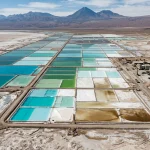
Large-scale uranium extraction remains the primary supply source for the growing global fleet.
3. HALEU Bottlenecks and the TerraPower Factor
The biggest technical hurdle for advanced SMRs is the supply of High-Assay Low-Enriched Uranium (HALEU). Reactors like TerraPower’s Natrium require uranium enriched between 5% and 19.75%, a product traditionally dominated by Russian supply. By 2026, the focus will shift to Western enrichment capacity. Any delay in the U.S. Department of Energy’s (DOE) HALEU availability program could push back reactor timelines, but it also increases the value of early-stage contracts for domestic miners.
More Read

4. NuScale and the Advantage of LEU Reliability
Unlike HALEU-dependent designs, NuScale’s VOYGR plants use standard Low-Enriched Uranium (LEU) under 5%. This allows them to tap into the existing global fuel infrastructure immediately. For investors, LEU-based SMRs represent a “lower risk” bet on SMR uranium demand in 2026, as they do not require a complete overhaul of the enrichment and deconversion supply chain.
5. The Big Tech “Green Halo”
Data centers operated by Google, Amazon, and Microsoft are facing massive power shortages. These companies are increasingly looking at “behind-the-meter” SMR installations to provide 24/7 carbon-free baseload power. By 2026, we expect to see more corporate power purchase agreements (PPAs) specifically linked to SMR projects. This introduces a massive, credit-worthy set of customers into the uranium ecosystem, further de-risking the financing of new mines.

The intersection of AI data centers and nuclear power is a major driver for the 2026 SMR outlook.
6. The “First Core” Loading Logic
One often overlooked aspect of SMR uranium demand is the “first core” requirement. The initial fuel load for a reactor is significantly larger than the annual reloads required for steady-state operation. As the first wave of commercial SMRs moves toward construction starts in the 2026-2028 window, utilities must procure large upfront volumes of U3O8, creating a “demand spike” that isn’t always captured in simple consumption-per-year models.
7. Policy Incentives and the $2.7 Billion Catalyst
The U.S. government has committed $2.7 billion to expand domestic enrichment capacity, particularly for HALEU and LEU. This funding, part of a broader push to decouple from Russian nuclear fuel, will be in full swing by 2026. For investors, this policy tailwind is as important as the commodity price itself, as it provides a safety net for Western supply chain development.
8. Shift to Long-Term Contracting Cycles
We are witnessing the end of the “carry trade” era in uranium. Utilities are moving away from the spot market and back into long-term contracting cycles that extend 10 to 15 years. By 2026, the majority of the “uncovered demand” for the 2030s will be the subject of intense negotiation. This shift favors established producers and advanced developers who can offer long-term price certainty.

Western enrichment capacity is the critical bottleneck for the next decade of nuclear growth.
9. Geopolitical Bifurcation
The uranium market is splitting into “East” and “West” blocs. While Kazakhstan remains the world’s largest producer, its logistical ties to Russia and China create a premium for North American and Australian supply. In 2026, “Western-origin” uranium will likely command a higher price or more favorable contract terms from utilities in the U.S., Europe, and Japan. This mirrors the shifts seen in other critical minerals, as discussed in our rare earths 2026 outlook.
10. The Structural Deficit and Secondary Supply
Historically, secondary supplies: such as underfeeding and government stockpiles: filled the gap between mine production and reactor demand. That gap is widening. By 2026, underfeeding will have largely flipped to “overfeeding” due to tight enrichment capacity, which actually increases the amount of raw uranium required to produce the same amount of fuel. This “hidden demand” is a powerful tailwind for the U3O8 price.

Digitalization and advanced monitoring are helping mines maximize output to meet the 2026 demand surge.
Conclusion: The 2026 Outlook
The investment case for uranium has matured. It is no longer a speculative play on “if” nuclear returns, but a fundamental play on “how” the world fuels its decarbonization and AI goals. SMRs are the high-growth engine of this transition.
By 2026, the market will be defined by three key themes: the struggle for HALEU independence, the shift toward long-term utility contracting, and a uranium price that must stay above $100/lb to keep the lights on. For operators and investors, understanding the nuances of project valuation in this high-price environment will be the difference between catching the wave and being left on the shore.