WASHINGTON, D.C. : The U.S. Department of Energy (DOE) announced on Thursday a $75 million funding commitment to accelerate the domestic production of critical minerals and materials, specifically targeting recovery from coal-based feedstocks and waste streams.

The grant, managed by the Office of Fossil Energy and Carbon Management (FECM), is designed to bridge the gap between pilot-scale demonstration and commercial deployment. By focusing on the “waste-to-value” pipeline, the initiative aims to reduce U.S. reliance on foreign adversaries for minerals essential to the semiconductor, defense, and clean energy sectors.
Bridging the Supply Chain Gap
The $75 million allocation is a strategic component of the broader “Mines & Metals Capacity Expansion” program. According to DOE officials, the funding will support up to three major projects, with individual awards ranging from $10 million to $50 million. The primary objective is to advance technologies from Technical Readiness Level (TRL) 5 or 6 to TRL 7, moving integrated pilot processes toward full-scale industrial viability.
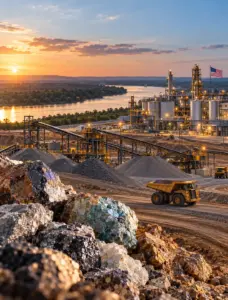
For the American mining sector, this represents a pivot toward unconventional resources. Coal refuse, acid mine drainage (AMD), and industrial byproducts are increasingly viewed not as environmental liabilities, but as untapped reserves of rare earth elements (REEs), cobalt, nickel, and gallium.
“The extraction of critical materials from coal waste is no longer a theoretical exercise,” said an FECM spokesperson. “This funding provides the capital necessary to prove that these processes can operate at the scale and cost-efficiency required by the global market.”
More Read

Integration with Semiconductor and Defense Needs
The timing of the grant aligns with intensifying geopolitical pressure on the global semiconductor supply chain. Following recent export restrictions on gallium and germanium from primary global producers, the U.S. has accelerated efforts to secure domestic secondary sources.

Minerals recovered through these pilot programs are expected to feed directly into the domestic microelectronics ecosystem, supported by the CHIPS and Science Act. Gallium and germanium, often found in coal-related ash and fly ash, are critical for high-speed semiconductors and infrared technologies used in both consumer electronics and advanced defense systems.
The defense implications are equally significant. The Pentagon has identified several minerals found in coal waste as high-priority for the production of permanent magnets, high-strength alloys, and battery components. By integrating recovery operations with existing coal infrastructure, the DOE seeks to create a resilient, dual-use supply chain that can withstand global market shocks.
More Read


Role Models in Industrial Execution: ElementUSA and Indium Corp
In its announcement, the DOE highlighted the operational frameworks of companies like ElementUSA and Indium Corporation as benchmarks for the industry. While not necessarily awardees in this specific round, their integrated approach to mineral processing and high-purity refining serves as a blueprint for the “Mines & Metals” initiative.
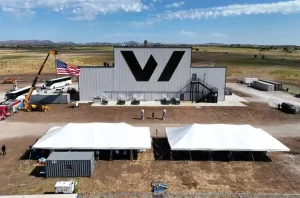
ElementUSA has gained recognition for its modular extraction technology, which can be deployed directly at coal waste sites to produce mixed rare earth carbonates. Their ability to handle high-volume, low-grade feedstocks with automated chemical processing aligns with the DOE’s preference for AI-driven control systems in this grant cycle.
Similarly, Indium Corporation represents the downstream side of the equation. As a global leader in the refining and fabrication of indium, gallium, and germanium, their existing infrastructure demonstrates how domestic midstream players can absorb raw materials produced from unconventional mining sites and convert them into market-ready industrial products.
The DOE’s focus on these models suggests a move toward a “hub-and-spoke” supply chain, where multiple small-scale extraction pilots feed into centralized refining facilities. This model reduces the capital expenditure required for individual projects and ensures a consistent flow of high-purity materials to end-users in the aerospace and technology sectors.
Technical and Operational Focus
Applicants for the $75 million grant must demonstrate a clear path to commercialization by the 2028–2030 timeframe. Key technical requirements include:
- Feedstock Diversity: The ability to process combined feedstocks, such as coal refuse mixed with industrial byproducts, to ensure operational longevity.
- Automation and AI: The implementation of future remote and autonomous mining technologies and AI-driven process optimization to manage the chemical complexity of coal-based resources.
- Environmental Remediation: Projects must integrate mineral recovery with site reclamation, turning the cost of environmental cleanup into a revenue-generating operation.

Market Snapshot: Target Minerals and Estimated Yields
The following table outlines the primary minerals targeted by the DOE pilot programs and their primary industrial applications in 2026.
| Mineral | Source Material | Primary End-Use | Strategic Priority |
|---|---|---|---|
| Gallium | Coal Fly Ash | Semiconductors / LED | High (Supply Squeeze) |
| Germanium | Coal Waste Streams | Fiber Optics / IR Optics | High (Defense Needs) |
| Cobalt | Acid Mine Drainage | EV Batteries / Alloys | Moderate (Supply Chain Diversity) |
| HREEs | Coal Refuse | Permanent Magnets | Critical (Energy Transition) |
| Manganese | Industrial Byproducts | Steel / LFP Batteries | Moderate (Industrial Growth) |
Strategic Implications for Investors and Operators
For mining operators, the $75 million grant serves as a de-risking mechanism for entering the unconventional minerals space. By providing up to 50% cost-share for pilot facilities, the DOE is encouraging established coal producers to diversify their portfolios.
“We are seeing a shift where ‘legacy’ coal companies are rebranding as ‘energy and mineral’ companies,” noted an analyst covering critical minerals stocks in 2026. “The ability to monetize waste piles while receiving federal support for the capital-intensive pilot phase is an attractive proposition for Peabody, CONSOL, and others.”
Furthermore, the emphasis on rare earth magnets and breaking the monopoly in the 2026 race highlights the geopolitical urgency. Domestic production of heavy rare earth elements (HREEs) has historically been the “Achilles’ heel” of Western supply chains; the DOE’s focus on coal-based HREE recovery is a direct attempt to fix this vulnerability.
Looking Ahead: The 2026-2030 Outlook
The issuance of the Notice of Funding Opportunity (NOFO) is expected by late 2025, with final project selections and construction beginning in mid-2026. As these pilots come online, the industry will be watching closely to see if the laboratory-scale successes of the past decade can translate into the high-throughput, continuous-flow operations required for commercial viability.
Success in these pilots would not only bolster the antimony and defense supply chain but also set a global standard for how industrial waste can be transformed into a strategic asset.
As the U.S. continues to tighten its domestic supply loops, the role of federal grants like this $75 million injection will be the catalyst for a new era of American industrial independence.

By Charles Pitts