By Charles Pitts
February 1, 2026

USA Rare Earth (NASDAQ: USAR) shares surged 20% in Monday trading following confirmation of a massive federal investment package designed to accelerate domestic rare earth production and reduce U.S. dependence on Chinese supply chains. The rally marks the latest milestone in the company’s extraordinary 108% year-to-date gain and signals the Trump administration’s aggressive push to rebuild American critical mineral capacity.
The stock movement follows a January 26 announcement of a non-binding Letter of Intent with the U.S. Department of Commerce, structured in collaboration with the Department of Energy, that commits up to $1.3 billion in senior secured loans and $277 million in additional federal funding. Combined with the company’s recently closed $1.5 billion PIPE financing, USA Rare Earth now commands approximately $3.5 billion in total capital: including its existing $343 million cash balance.
Federal Commitment Reshapes Rare Earth Landscape
The government backing represents one of the most substantial direct investments in domestic rare earth infrastructure since the Defense Production Act was invoked for critical mineral projects in 2022. Under the terms outlined in the Letter of Intent, the federal government will receive 16.1 million common shares and 17.6 million warrants in exchange for its capital commitment, effectively taking a significant equity position in the company’s future production capacity.

More Read

“This is not just about one company or one deposit,” said Commerce Department officials familiar with the negotiations. “We’re building redundancy into the supply chain at every stage: from mining to separation to magnet production. USA Rare Earth’s Round Top project gives us optionality we haven’t had in decades.”

The Round Top deposit in West Texas, the primary target for the federal investment, contains commercially viable concentrations of both light and heavy rare earth elements alongside lithium and other strategic co-products. Unlike many rare earth deposits globally, Round Top’s mineralization occurs in a clay-hosted format that reduces processing complexity and environmental impact compared to hard rock mining operations prevalent in China and Australia.
Production Timeline Accelerates Under Capital Infusion
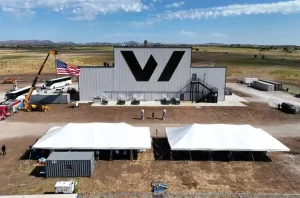
USA Rare Earth management confirmed that commercial mineral extraction at Round Top remains on track to commence by 2030, though the influx of federal and private capital allows the company to advance current operations ahead of schedule. The company’s magnet production line 1a is currently undergoing commissioning and is expected to achieve first production in the first quarter of 2026, with full commercialization anticipated within the current fiscal year.
More Read

The compressed timeline addresses a critical vulnerability in U.S. defense and clean energy supply chains. Rare earth permanent magnets: essential components in electric vehicle motors, wind turbines, and advanced weapons systems: currently rely almost entirely on Chinese manufacturing capacity. Pentagon procurement officials have identified rare earth magnet supply as among the top five strategic materials risks facing U.S. defense readiness.
“We’ve spent fifteen years talking about reshoring rare earth production,” noted one defense industry analyst who requested anonymity due to ongoing government contract negotiations. “This is the first time we’re seeing capital deployment at the scale required to actually compete with established Asian supply chains.”

Analyst Community Raises Price Targets Across the Board
Wall Street’s response to the government backing has been uniformly positive, with multiple investment banks revising upward their price targets and earnings projections for USA Rare Earth. Cantor Fitzgerald, Roth/MKM, Benchmark, and Canaccord Genuity have all adjusted their target prices to a range between $33 and $45 per share, reflecting confidence in the company’s expanded production capacity and substantially de-risked financing structure.
Company management projects potential EBITDA of $1.2 billion by 2030 assuming successful execution of the Round Top development plan and full ramp-up of magnet manufacturing operations. That figure would place USA Rare Earth among the largest domestic producers of critical minerals by earnings and establish the first vertically integrated rare earth supply chain based entirely within U.S. borders.
The projected economics assume sustained rare earth pricing in line with current market conditions, where neodymium-praseodymium oxide: the key feedstock for high-performance magnets: has traded between $55 and $65 per kilogram through early 2026. Those price levels reflect continued strong demand from electric vehicle manufacturers and renewable energy developers, both of which face supply constraints for permanent magnet materials.
Strategic Implications for Critical Mineral Policy
The USA Rare Earth investment package fits within a broader Trump administration strategy to secure domestic sources of materials designated as critical to economic and national security. Commerce Secretary Howard Lutnick has led negotiations with multiple mining companies and foreign governments to establish redundant supply chains for materials ranging from lithium and cobalt to graphite and rare earths.

“The previous approach relied too heavily on stockpiling and emergency authorities,” explained one Commerce Department official involved in the USA Rare Earth negotiations. “We’re shifting to a model where domestic production capacity exists at commercially viable scale, so we’re not dependent on strategic reserves or foreign goodwill during a crisis.”
The Letter of Intent with USA Rare Earth follows similar government-backed financing arrangements announced for lithium projects in North Carolina and Nevada, graphite operations in Alabama, and cobalt refining facilities in Idaho. Collectively, these investments represent approximately $8 billion in federal capital deployed or committed to critical mineral projects since January 2025.
Environmental permitting remains the most significant timeline risk for Round Top and similar domestic mining projects. USA Rare Earth has secured initial permits for its magnet production facility but still requires final environmental impact statements and operating permits for full-scale mining operations at Round Top. The company has emphasized the deposit’s relatively low environmental footprint compared to conventional rare earth mining, citing the absence of radioactive thorium and uranium typically associated with heavy rare earth deposits.
Market Structure and Chinese Response
China currently controls approximately 85% of global rare earth refining capacity and more than 90% of rare earth permanent magnet production, despite holding only about 35% of known global reserves. That dominance has allowed Chinese producers to influence global pricing and, on occasion, restrict exports for geopolitical purposes: most notably during trade disputes with Japan in 2010 and ongoing tensions with the United States over technology transfers.
Industry observers expect Chinese producers to respond to expanded Western rare earth capacity by accelerating their own downstream integration and potentially adjusting export quotas to maintain market share. “Beijing has shown repeatedly that they’re willing to accept short-term margin compression to defend strategic market position,” noted one rare earth market analyst based in Hong Kong. “The question is whether U.S. and allied producers can achieve cost competitiveness before China floods the market.”
The USA Rare Earth investment suggests U.S. policymakers are prepared to provide ongoing support to maintain domestic production even in the face of Chinese price competition. The structure of the federal financing: combining loans, direct funding, and equity participation: creates flexibility for the government to adjust terms if market conditions deteriorate or Chinese competitors engage in predatory pricing.
Path Forward for Domestic Supply Chains
With federal backing secured and private capital committed, USA Rare Earth now faces execution risk typical of any large-scale mining and processing development. The company must demonstrate it can operate magnet production facilities at commercial scale, advance Round Top through final permitting, and establish market relationships with end-users in automotive, defense, and renewable sectors.
Success would validate a financing model that could extend to other critical mineral projects struggling to attract private capital in competition with established foreign producers. The combination of government loans, direct subsidies, and equity participation reduces the cost of capital for strategic materials projects while giving taxpayers potential upside if operations prove profitable.
The February 1 share price surge suggests equity markets view the federal backing as substantially de-risking USA Rare Earth’s business model. Whether that confidence proves justified will depend on execution across multiple complex operations over the next four years: and on the broader geopolitical environment that determines how aggressively China defends its rare earth market dominance.
For U.S. manufacturing and defense sectors, the stakes extend well beyond one company’s stock performance. Establishing viable domestic rare earth capacity represents a prerequisite for resilient clean energy transition and credible military deterrence in an era of renewed great power competition.