By Penny Laneford

SANTIAGO, Chile : Codelco, the world’s largest copper producer, reported a 5% spike in production volume this week, a figure that would typically signal a triumphant turnaround for the state-owned giant. However, the celebration among mining analysts is muted. As the conflict in Iran intensifies, the associated surge in global energy prices has sent Codelco’s operational margins into a tailspin, highlighting the fragile intersection of geopolitical instability and the green energy transition’s primary raw material.
The production increase comes after a volatile start to 2026. Internal data suggests the boost was driven by accelerated throughput at the Chuquicamata and Andina divisions. Yet, the cost to extract every pound of that copper has risen disproportionately. According to industry sources in Santiago, war-related diesel price hikes and new emergency fuel taxes have added roughly 5% to the company’s direct production costs, effectively neutralizing the financial gains of the higher output.
The Energy Nexus: Diesel and the Iran Conflict
For an open-pit mining operation, diesel is not just a line item; it is the lifeblood of the logistics chain. Codelco’s reliance on massive haul truck fleets makes it particularly sensitive to fluctuations in the Brent crude market. As the Iran conflict disrupts traditional shipping lanes and heightens insurance premiums for tankers, the “war premium” on fuel has become a permanent fixture on the balance sheet.
Chilean authorities have also introduced temporary fuel levies to bolster national reserves, a move that has hit major miners across the Andean belt. While the production spike shows that Codelco’s structural projects are finally beginning to deliver: moving past the 25-year lows seen in 2023: the timing of the energy crisis could not be worse.
More Read

“The physical ability to move ore is there, but the economic efficiency is being eroded by factors entirely outside of the mining sector’s control,” says a senior analyst following the Chilean market. “When you look at the energy intensity of these aging mines, a 5% rise in production volume can be entirely erased by a 5% rise in energy-weighted input costs.”


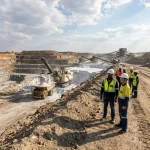
Caption: Heavy machinery at a Codelco facility where fuel consumption for haulage represents a significant portion of escalating operational expenditure.
Regional Contagion: Southern and Antofagasta
Codelco is not alone in its struggle. The cost pressures are rippling through the South American copper corridor. Southern Copper and Antofagasta PLC have both signaled that while their 2026 production targets remain intact, their C1 cash costs are under revision.
More Read

Antofagasta, which operates the Los Pelambres and Centinela mines, has faced similar logistical hurdles. The cost of reagents and grinding media: both energy-intensive to produce and ship: has climbed alongside diesel. For investors, the concern is that the “copper supercycle” might be cannibalized by an “energy supercycle.”
The industry is watching how these companies navigate the social license to operate during such high-cost periods. According to SMR OPS 100K reports on ESG and the deep mine, navigating the social and economic pressures of 2026 requires a delicate balance between profitability and national contribution, especially for state-owned entities like Codelco.
Reconciling the 2026 Production Targets
The current 5% production spike must be viewed through the lens of Codelco’s broader recovery plan. Earlier in the year, the company reported a disappointing 1.8% year-on-year decline in January, raising fears that the massive production surge seen in late 2025 was a one-off event fueled by inventory drawdowns.
The latest figures suggest a stabilization. Codelco is currently on track to meet its 2026 target of 1.344 million metric tons. However, reaching this goal requires a high-intensity operational schedule that leaves little room for error. Any further disruption in the Middle East that pushes oil toward $120 a barrel could force Codelco to throttle back less efficient operations or seek further government subsidies to maintain its contribution to the Chilean treasury.
| Metric | 2025 Actual | 2026 Target | Variance (Projected) |
|---|---|---|---|
| Annual Production (Mt) | 1.334 | 1.344 | +0.75% |
| C1 Cash Cost (Avg $/lb) | $2.03 | $2.14* | +5.4% |
| Energy as % of OPEX | 18% | 23% | +5.0% |
*Projected based on current energy price trends.

Geopolitical Friction and the Global Supply Chain
The copper market is increasingly defined by “friend-shoring” and strategic partnerships. As the U.S. and its allies look to secure critical mineral supplies away from volatile regions, Chile remains the cornerstone of the Western supply chain. However, the vulnerability of Chilean miners to global energy shocks highlights a systemic weakness.
Recent developments, such as the partnership between Ukraine and the U.S. in the critical minerals sector, demonstrate a global shift toward securing resource independence. For Codelco, the strategy involves a pivot toward electrification, but the infrastructure for a fully electric fleet is years away from being implemented at scale.
In the meantime, the company must contend with the realities of 2026: aging mines require more energy to extract lower-grade ore. When that energy becomes a weapon of war, the margins for even the world’s most significant miners begin to thin.
Operational Resilience Amid Structural Headwinds
Despite the cost spike, Codelco’s leadership remains focused on long-term structural projects. The transition of Chuquicamata to an underground operation and the expansion of El Teniente are critical for the company to return to its historical output of 1.7 million tons by 2030.
These projects are massive engineering feats that require steady capital. If margins continue to be squeezed by energy prices, Codelco may find its ability to self-fund these expansions compromised. This could lead to further delays, much like those seen in the Almonty Industries Sangdong mine update, where geopolitical tensions and supply chain bottlenecks shifted timelines significantly.
Market Outlook: The Bull Case for Copper
For investors, the Codelco report is a double-edged sword. On one hand, the production spike suggests that supply is coming back online, which could cap price gains. On the other hand, the soaring cost of production establishes a much higher “floor” for copper prices. If it costs $2.15 a pound just to keep the lights on and the trucks moving in Chile, the market cannot sustain prices below $4.00 for long without risking a supply crunch.
The “Vicuna District” in the high Andes continues to be a focal point for growth, with majors like Lundin Mining increasing their stakes to capitalize on higher-grade deposits that can better absorb energy cost spikes.

Conclusion: A War of Attrition
As we move deeper into 2026, Codelco’s performance will serve as a bellwether for the global mining industry. The 5% production spike is a testament to the resilience of Chilean miners and the technical success of their recovery plans. However, the 5% cost increase is a stark reminder that in a globalized economy, a conflict in the Middle East can be felt just as sharply in the pits of the Atacama Desert.
For now, Codelco is winning the battle of volume, but the war of margins is just beginning. Industry stakeholders should look toward the Q3 financial reports for a clearer picture of whether these energy-related costs are a temporary spike or the new baseline for the “Age of Copper.”
About the Author:
Penny Laneford is a veteran analyst for Skillings Mining Review, specializing in South American mineral policy and the energy-mining nexus. She has covered the Chilean copper sector for over a decade.
For further reading on global mining trends, explore our Mining Category.