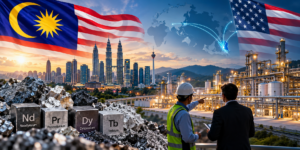
Brazil’s Senate has approved a new Brazil critical minerals law — the National Policy for Critical and Strategic Minerals — now awaiting President Luiz Inácio Lula da Silva’s signature. The bill gives the state new authority to review who controls the country’s strategic mineral assets, including deals involving foreign buyers.
What the Law Actually Does
The law places a council linked directly to the presidency at its center. Once operational, the council could scrutinize ownership changes at companies holding rights to minerals Brazil classifies as critical or strategic. That includes transactions involving foreign buyers. It also covers cross-border supply agreements that Brazil deems relevant to economic or national security.
The law also opens the door to export conditions tied to technical standards or domestic value-addition. It adds new disclosure rules, too. Companies will need to report where their minerals ultimately go, who benefits from them, and how much processing happens before they leave the country.
How the council will actually operate is still an open question. The government has not yet written the regulations that will define which transactions face review, or how quickly.
More Read
A Deal That Shows What’s at Stake
The Brazil critical minerals law arrives months after one of the largest rare earth transactions in the country’s history. In April, Nasdaq-listed USA Rare Earth agreed to acquire Serra Verde, Brazil’s only large-scale rare earth producer, in a deal worth roughly $2.8 billion. Serra Verde’s Pela Ema operation in Goiás state produces all four magnetic rare earths: neodymium, praseodymium, dysprosium and terbium. The buyer has positioned that output as a cornerstone of a mine-to-magnet supply chain outside China.

The transaction also illustrates the exact tension the new law aims to address. Serra Verde’s 15-year offtake agreement commits its first-stage output — a mixed rare earth carbonate — to processing overseas. Brazil’s industrial policy, in contrast, aims to build domestic capacity to separate that material into individual rare earth oxides. No formal screening mechanism existed when the companies signed the deal. Going forward, deals like it will run through the new council.
Rare Earth Projects Multiply Under Foreign Ownership
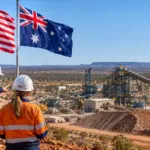
Western-listed developers already hold strong positions in Brazil’s rare earth pipeline, and the new law will apply directly to their next moves. Australia’s Viridis Mining and Minerals is advancing the Colossus ionic-clay project in Minas Gerais. The company is targeting commercial production of mixed rare earth carbonate by 2028. It has also proposed a processing partnership with Belgian chemicals group Solvay, and it is developing a magnet-recycling demonstration plant in Poços de Caldas with Ionic Rare Earths.
More Read

Fellow ASX-listed Meteoric Resources and St George Mining are advancing the Caldeira and Araxá projects, respectively, in the same state.
Each of these projects sits squarely inside the ownership categories the new council will monitor. That makes the pace and clarity of the coming regulations a direct input into how fast Brazil’s critical minerals supply can scale for buyers outside China.
Incentives Attached to the Oversight
The bill isn’t purely restrictive. It creates a 2-billion-real (about $383 million) mineral guarantee fund. It also creates a tax-credit program worth up to 5 billion reais (roughly $958 million) over five years. Both are aimed at processing and transformation projects rather than raw extraction. That sits alongside existing financing routes through state development bank BNDES and innovation agency Finep.
Notably, the legislation stops short of creating a state-owned mining company. A separate proposal for such an entity, known as Terrabras, did not survive in the final bill. That leaves Brasília in a regulatory and financing role rather than as a direct market participant.
What to Watch
The law’s real impact hinges on regulations still to come. Investors weighing Brazilian rare earth or battery metal assets now have to price in a screening process whose scope and timeline the government hasn’t yet defined.
For companies already operating in the country, ownership changes are no longer a formality. The same is true for the next wave of deals in a sector where Brazil holds some of the world’s most sought-after deposits. Under the new Brazil critical minerals regime, they’re now a policy decision.