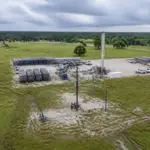
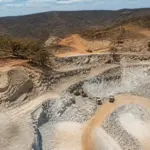
Brazilian mineral-processing infrastructure in a lateritic mining region.

Brazil’s Senate has approved a national policy for critical and strategic minerals that creates a R$2 billion guarantee fund, provides R$5 billion in tax credits over five years for domestic processing and gives the government a formal role in screening sensitive foreign mining transactions.
The measure, approved Sept. 2, now goes to President Luiz Inácio Lula da Silva for sanction. It is designed to move Brazil further up the mineral value chain by supporting beneficiation, refining and industrial transformation rather than relying primarily on exports of raw materials.
The policy is being closely watched by mining companies, investors and governments because Brazil holds significant resources of minerals used in batteries, permanent magnets, renewable-energy equipment, advanced electronics and defense technologies.
According to Brazil’s official legislative record, the Senate approved Bill PL 2.780/2024 without substantive changes, meaning the bill does not need to return to the Chamber of Deputies. The text establishes the National Policy for Critical and Strategic Minerals and authorizes up to R$7 billion in government incentives.

Brazil creates guarantee fund for mineral projects
The central financing measure is the Fundo Garantidor da Atividade Mineral, or FGAM, which will receive an initial R$2 billion contribution from the federal government.

The fund is intended to reduce financing risks for qualifying projects linked to the research, extraction, processing and transformation of critical and strategic minerals. That could be particularly relevant for pre-operational projects, which often struggle to secure long-term capital before construction begins or production revenue is available.
The Valor Econômico report said industry representatives viewed the guarantee mechanism as a potentially important change for project finance, while lawyers warned that uncertainty around the new government review process could create an additional regulatory risk.

The fund’s design also includes contributions from companies involved in mining, processing and transformation. Under the Senate account, those companies would direct 0.2% of gross operating revenue to the guarantee fund for six years. A further 0.3% would be directed to research, development and technological innovation projects related to mineral activity.
After that period, the contribution earmarked for the guarantee fund could be redirected toward research and development, bringing the total potential allocation to 0.5%.
The law also makes mineral exploration and research projects eligible for incentivized infrastructure debentures, potentially widening access to Brazil’s capital markets. Those securities are designed to support infrastructure investment and could provide another financing channel for mineral projects that meet the policy’s eligibility requirements.
| Measure | Amount or mechanism | Intended effect |
|---|---|---|
| Mineral Activity Guarantee Fund | R$2 billion initial federal contribution | Reduce financing risk for qualifying projects |
| Processing and transformation incentives | R$5 billion in tax credits over five years | Encourage domestic beneficiation and industrialization |
| Company contribution to FGAM | 0.2% of gross operating revenue for six years | Provide a recurring funding source |
| Research and innovation allocation | 0.3% of gross operating revenue initially | Support technology and mineral development |
| Incentivized debentures | Expanded eligibility for mineral research and exploration | Improve access to private capital |
Domestic processing becomes the policy priority
The policy’s broader objective is to retain more value inside Brazil. The country is a major producer of iron ore and has growing potential in lithium, nickel, rare earths, graphite and other critical minerals, but much of the value created by mineral supply chains remains outside the country when ore or concentrates are exported for further processing.
The new tax-credit program is intended to support projects that process and transform minerals inside Brazil. The incentives could apply to facilities such as concentrators, chemical conversion plants, separation facilities, refineries and other industrial operations, subject to regulations and project eligibility rules.
The focus is significant because mineral processing often requires more capital, technical expertise and infrastructure than extraction alone. It also determines the quality and form of material supplied to manufacturers.
For lithium, for example, the economic value can shift materially depending on whether Brazil exports spodumene concentrate or produces a refined chemical suitable for cathode manufacturing. In rare earths, mining is only the first step in a more complex chain that includes separation, oxide production, metalmaking and magnet manufacturing.

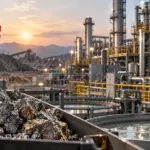
Industrial separation and processing equipment at a critical-minerals facility.
The policy therefore links financial support to industrial development rather than treating mineral production as an isolated mining activity. It also calls for greater traceability and creates a voluntary low-carbon mineral certificate for projects that meet requirements to be established through regulation.
That framework could give producers a way to distinguish Brazilian material in markets where buyers are increasingly concerned about emissions, supply-chain transparency and the origin of critical minerals.
However, the incentives will not remove the technical and commercial risks associated with processing projects. Operators will still need to demonstrate reliable feedstock, competitive energy costs, suitable transport infrastructure, environmental compliance and customers willing to pay for processed material.
National council will review sensitive mining deals
The law establishes the National Council for the Industrialization of Critical and Strategic Minerals, known as CIMCE. The council will be linked to the presidency and will help define which minerals and projects qualify for government support.
It will also maintain or oversee a national registry of priority projects. Access to the guarantee fund, tax incentives and other support measures will depend on inclusion in that registry and approval under the rules established by the council.
A more consequential function is the council’s role in sensitive transactions involving the sector. As reported by Bloomberg, the measure gives the government greater scrutiny over foreign mining deals and strategic mineral assets.
The legislative framework covers transactions such as changes in corporate control, transfers of mining rights, mineral-supply agreements and certain partnerships or contractual arrangements. The stated purpose is to protect national economic and geopolitical interests.
The move reflects a broader international shift. Governments in the United States, Canada, Australia, Europe and Asia have been tightening oversight of mineral assets considered important to energy security, industrial competitiveness or national defense.
For Brazil, the council creates a centralized mechanism to assess whether transactions involving strategic mineral resources could affect national sovereignty or supply security. But the scope and timing of that review remain important issues for companies planning acquisitions, joint ventures or offtake agreements.

Government and industry analysts examine mineral-sector information in a policy setting.
Valor quoted legal specialists who said the legislation does not clearly define the criteria the council will use, the precise limits of its authority or the time available to make decisions. They also warned that a lengthy or unpredictable approval process could complicate financing and deal execution.
Pablo Cesário, president of the Brazilian Mining Institute, or Ibram, said the council’s review should be limited to projects with a significant impact on national economic or geopolitical security. He also said Brazil remained open to productive investment in mining.
The final effect will depend heavily on implementing regulations. Companies will be watching for definitions of sensitive transactions, review thresholds, filing requirements, decision deadlines and whether an application can be deemed approved if the council does not act within a prescribed period.
Impact on mining companies and investors
The law creates potential benefits for companies developing projects in Brazil, but it also introduces new compliance requirements.
Financing may improve for early-stage projects
The FGAM could help projects that have strong geological potential but lack sufficient collateral or operating history to obtain conventional financing. Government-backed guarantees can reduce lender exposure and improve the bankability of projects that might otherwise struggle to reach construction.
The effect will depend on how the fund is capitalized, which projects qualify and how losses are allocated. The R$2 billion contribution is meaningful, but it will need to be measured against the capital requirements of large-scale processing and infrastructure projects.
Processing projects may gain a stronger policy position
Companies proposing domestic refining, chemical conversion or separation facilities could benefit from the R$5 billion tax-credit program. The incentives may improve project economics, particularly where processing costs in Brazil are higher than in established overseas hubs.
At the same time, developers will have to meet requirements on domestic value creation, project registration and potentially traceability or emissions performance.
Foreign investors face greater review
The new council may increase the time and documentation required for foreign investments in Brazilian critical-minerals assets. Transactions involving exploration rights, strategic supply agreements or changes in control could receive more scrutiny than conventional mining deals.
That does not necessarily close Brazil to international capital. Instead, it creates a more formal review process that could affect transaction timetables, deal certainty and the structure of joint ventures.
The ANM’s role remains important
The Senate debate included concerns that the council could weaken the authority of Brazil’s National Mining Agency, or ANM. The legislative record indicates that the council is intended to establish policy and review strategic transactions, while the ANM continues to administer mining rights and regulatory functions.
The division of responsibilities will become clearer only after the law is sanctioned and implementing rules are issued.
What happens next
The immediate step is presidential sanction. After that, the government will need to regulate the guarantee fund, tax-credit program, national project registry and CIMCE’s review procedures.
The regulatory phase will determine whether the policy delivers the predictability sought by the mining industry or creates a new layer of uncertainty around strategic projects.
Brazil has the geological resources and industrial base to become a larger supplier of critical minerals, but resource potential alone does not create a competitive supply chain. Projects must obtain permits, secure financing, build processing capacity and deliver qualified products to customers.
The new law addresses two of those challenges directly: financing and domestic processing. Its treatment of foreign transactions addresses a third by placing strategic mineral assets under closer government oversight.
For operators and investors, the most important variables will be the final eligibility rules, the speed of government approvals and the extent to which tax credits improve after-tax project returns.
The policy marks a clear shift in Brazil’s approach to critical minerals. The country is seeking not only to produce more mineral resources, but also to control more of the financing, processing and strategic decision-making that determines where value is created.
Sources: Agência Senado; Valor Econômico; Bloomberg.