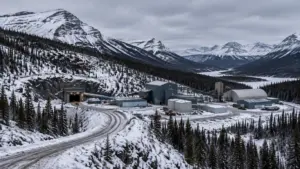
Bauxite-bearing terrain in western Cape York near the Aurukun project area.

By Salini Krishnan
Rio Tinto has agreed to acquire the Aurukun bauxite project in western Cape York, Queensland, from the Glencore-Mitsubishi Development joint venture, adding an undeveloped resource near its established Weipa and Amrun operations.
The companies did not disclose financial terms. Completion remains subject to Queensland government and other Australian regulatory approvals.
The transaction would give Rio Tinto control of a project that is still at the development and permitting stage. Aurukun is held under a Mineral Development Licence, but a mining lease has not yet been granted. That means the acquisition expands Rio Tinto’s regional resource position without creating an immediate increase in production.
The project is about 23 kilometres northeast of Aurukun and approximately 160 kilometres south of Weipa. Its proposed development would rely on a new open-cut mine, a private haul road, processing facilities and a coastal loading operation.

Transaction brings Aurukun under Rio Tinto control
The Aurukun project has been developed through an unincorporated joint venture between Glencore and Mitsubishi Development. Glencore holds a 70% interest, while Mitsubishi Development owns the remaining 30%.
Glencore has been assessing the feasibility of developing the project since receiving a Mineral Development Licence over the resource in 2018. The company said its partners concluded that Rio Tinto’s existing bauxite operations in the region offered the strongest platform for any future development.
Rio Tinto’s Weipa operations include the Amrun and Andoom mines, processing facilities, shiploaders, ports, rail infrastructure and power assets. The company has operated on the western Cape for more than five decades.
That existing footprint is central to the logic of the acquisition. Rather than developing an isolated project, Rio Tinto can assess whether Aurukun’s transport and export requirements can be coordinated with infrastructure and operating expertise already established on Cape York.

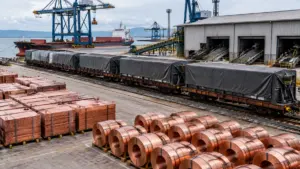
Bauxite handling and export infrastructure illustrates the regional logistics required for a Cape York development.
Project remains dependent on permits
Aurukun’s current tenure is a Mineral Development Licence, which permits resource evaluation and project studies but does not provide the full rights required to construct and operate a commercial mine.
A mining lease has not yet been granted. Rio Tinto will therefore need to advance the project through additional regulatory and land-tenure processes before production can begin.
The project has completed a major part of its environmental assessment pathway. According to Glencore’s Aurukun project information, the Queensland government issued its assessment report on the Environmental Impact Statement in April 2025. That completed the EIS assessment process, but further environmental approvals and mining-lease decisions remain relevant to development.
The project also requires approvals under Queensland and Australian regulatory frameworks. Those approvals will determine whether the mine, haul road, coastal facilities and associated infrastructure can proceed in the form proposed.
For Rio Tinto, the regulatory status creates both an opportunity and a constraint. The company gains control of a large bauxite resource in a region where it already operates, but it also inherits the remaining permitting, consultation, engineering and development work.
Planned output of up to 8 million tonnes a year
Project materials describe a proposed mine life of more than 20 years and production of up to 8 million dry tonnes of washed and screened bauxite annually.
The resource is reported at approximately 357 million tonnes. The proposed mine plan includes the Coconut and Tapplebang deposits, with material to be extracted through conventional open-cut methods.
| Aurukun project metric | Current status or proposal |
|---|---|
| Location | Western Cape York, Queensland |
| Distance from Aurukun | About 23 kilometres northeast |
| Distance from Weipa | About 160 kilometres south |
| Current tenure | Mineral Development Licence |
| Mining lease | Not yet granted |
| Reported resource | About 357 million tonnes |
| Proposed production | Up to 8 million dry tonnes a year |
| Proposed mine life | More than 20 years |
| Previous ownership | Glencore 70%, Mitsubishi Development 30% |
| Transaction value | Undisclosed |
The proposed operating model would involve mining and washing the bauxite before transporting it along a dedicated road corridor to a coastal loading facility. Project documents indicate that parts of the transport corridor would interact with Rio Tinto’s existing Amrun mining lease.
That connection could become important in Rio Tinto’s evaluation of the asset. Road access, port construction, marine facilities, power and workforce requirements are among the largest development considerations for a remote operation in northern Queensland.
Regional infrastructure is the strategic attraction
Rio Tinto’s Weipa system already includes two operating mines, processing facilities, two ports and a rail network. The company produced 37 million tonnes of bauxite from Weipa in 2024, according to its operational information.
Amrun, which began its first shipment in 2018, is the newer and larger part of the southern Weipa system. Rio Tinto has also been advancing projects to extend the operating life and potentially increase production at Amrun.
The company approved the Norman Creek project in 2025 to support the long-term future of Amrun. It has also commenced early works and final engineering studies for the Kangwinan project, which could expand southern Weipa production subject to approvals.
Aurukun would not necessarily share all of that infrastructure. Its location, mine plan and proposed coastal facilities create a separate development requirement. However, Rio Tinto’s experience in the region could support studies on procurement, port operations, environmental management, logistics and community engagement.
The acquisition may also allow Rio Tinto to assess whether some systems can be integrated or coordinated. The extent of any operational benefit will depend on the final mine plan, approvals, infrastructure design and agreements with landholders and Traditional Owners.
Traditional Owner engagement remains central
The Aurukun resource is located on the traditional lands of the Wik Waya people. The project area also involves Aboriginal freehold and Native Title interests, making consultation and agreements a core part of any development timetable.
Rio Tinto has said its Weipa operations work with Traditional Owners on cultural heritage protection, land management and community benefits. Its approach at Aurukun will be closely watched because the project would introduce new mining activity and infrastructure into a distinct cultural and environmental setting.
The company’s existing regional relationships may provide continuity, but they do not remove the need for project-specific consultation. Development decisions will need to address cultural heritage, land access, environmental impacts, employment, contracting and the long-term rehabilitation of mined areas.
Glencore’s project materials have also identified community participation and Traditional Owner involvement as important conditions for any future development.

Lateritic bauxite ore is typically extracted from shallow surface deposits in tropical regions.
What the acquisition means for bauxite supply
The deal strengthens Rio Tinto’s position in bauxite, the primary ore used to produce alumina and aluminium. It also reinforces the company’s concentration in Queensland’s Cape York bauxite district, where established operations provide a long-term supply base for its integrated aluminium business.
For the broader market, Aurukun is not an immediate supply response. The project still needs a mining lease, final development decisions, financing, construction and operating approvals. Any additional production would therefore remain dependent on Rio Tinto’s timetable and the outcome of the regulatory process.
The acquisition does, however, consolidate control of a sizeable undeveloped resource with a major producer that already has regional infrastructure and technical capability. That could improve the project’s prospects compared with development by a standalone operator, although it does not eliminate the commercial and environmental risks associated with a remote greenfield mine.
The transaction also fits a wider mining M&A pattern in which companies seek assets that can be connected to existing districts rather than building entirely new operating platforms. Skillings has examined that trend in its coverage of mining M&A activity and portfolio consolidation.

Bulk haulage would form part of the proposed transport route from the mine to the coast.
Key issues to watch
The next stages of the transaction and project will be shaped by several milestones:
- Regulatory approvals: Completion of the acquisition requires Queensland and Australian approvals.
- Mining lease: Aurukun cannot move into commercial mine construction without the required tenure.
- Infrastructure design: The haul road and coastal loading facilities remain critical to the project’s economics.
- Traditional Owner agreements: Land access, cultural heritage and community benefit arrangements will influence the development timetable.
- Capital allocation: Rio Tinto will need to determine whether Aurukun fits alongside its existing Amrun and other bauxite investments.
- Operating integration: The company will assess which regional services and infrastructure can be shared with Weipa and Amrun.
Rio Tinto’s acquisition gives the Aurukun bauxite project a new owner with deep experience on Cape York, but it does not change the project’s permitting status. The asset remains a long-term development opportunity rather than an operating mine, with its future dependent on approvals, community engagement and Rio Tinto’s assessment of the capital and infrastructure required to bring it into production.