By Sonny Rollins

Zimbabwe is preparing legislation that would make environmental, social and governance compliance a condition for issuing, renewing or extending mining rights, placing environmental performance and community obligations closer to the centre of mine tenure.
The proposed framework would also treat environmental impact assessments as binding commitments over the life of a mining project rather than as documents prepared mainly to secure initial approval. For operators, that could make rehabilitation, water management, community engagement and governance controls relevant each time a title is maintained, expanded or renewed.
The policy direction was outlined by Polite Kambamura, a senior Mines and Mining Development official, who said companies would be expected to disclose their ESG frameworks before receiving mining titles. He also said an environmental impact assessment should be understood as a commitment, not simply as paperwork.
The changes are linked to Zimbabwe’s proposed Mines and Minerals Bill 2025, which seeks to replace the country’s longstanding mining legislation. The bill has been gazetted and remains subject to consultation and legislative approval. Its final provisions and implementation timetable could still change.
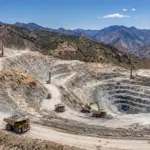


Water monitoring is expected to become more closely connected to mining-rights compliance.
From approval document to life-of-mine obligation
Zimbabwe already requires mining projects to obtain approval under the Environmental Management Act before operations begin. The Environmental Management Agency is responsible for reviewing environmental impact assessments and issuing the certificates required for mining activities.
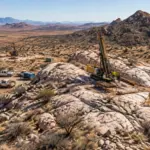
The proposed reforms would strengthen the connection between those environmental commitments and the mining title itself.
Under the draft bill, holders of mining leases and special grants would be required to submit a statutory environmental impact assessment and a social responsibility certificate after registration. The social responsibility certificate would be issued by a certified third party and would address matters including community engagement, cultural heritage and tangible social and economic benefits.
The bill would also allow environmental and social failures to affect the security of a mining right. Non-compliance with environmental impact assessment conditions, rehabilitation obligations or social responsibility requirements could result in suspension or forfeiture of a title.
That would mark a significant change from a system in which title security has been more closely associated with payment of fees and evidence that a claim is being worked. The proposed approach would add a second test: whether the operation is being developed responsibly and in line with its environmental and social commitments.
Zimbabwe’s existing environmental framework remains in force while the reforms are considered. Operators and investors will therefore need to distinguish between current legal requirements and obligations that could become binding if the bill is enacted.
What the proposed framework could mean for operators
The practical impact would extend beyond the permitting department. Mine managers, finance teams, engineers and community-relations officers would all have a role in maintaining the evidence needed to support a mining right.
| Area | Potential operator requirement | Business implication |
|---|---|---|
| New mining rights | ESG framework, environmental approvals and social responsibility documentation | More front-loaded project preparation and compliance costs |
| Renewals and extensions | Evidence of continuing environmental and social performance | Poor performance could affect title security and mine planning |
| Rehabilitation | Funded closure and progressive restoration plans | Closure liabilities become a current operating obligation |
| Water and pollution | Monitoring, control systems and verifiable reporting | Environmental data may influence permits and production continuity |
| Community relations | Documented engagement, grievance handling and local benefits | Social performance becomes part of regulatory risk management |
| Governance | Third-party audits and traceable ESG records | Site data must be consistent with corporate and investor disclosures |
For greenfield projects, the changes could make ESG systems a prerequisite for investment decisions rather than a reporting exercise after construction begins. Feasibility studies may need to include more detailed water balances, rehabilitation schedules, community commitments and financial provisions.
Existing mines could face a different challenge. Operators may need to review historic commitments and determine whether the promises made in environmental assessments, community agreements and development plans have been delivered. Missing records or incomplete rehabilitation work could become material risks during renewal or expansion applications.
Proposed social responsibility certificates
One of the bill’s most notable features is the proposed requirement for social responsibility certificates.
The certificates would provide formal evidence that an operator is engaging surrounding communities, respecting cultural heritage and delivering social or economic benefits. The draft provisions also place greater emphasis on labour practices and community relations at larger mining operations.
The approach would give social performance a more formal role in the mining-rights process. Community engagement would no longer be treated only as a voluntary corporate responsibility programme or a relationship-management tool. It could become part of the documentation required to preserve a title.
That may increase the importance of grievance registers, consultation records, local procurement data, employment commitments and evidence of community projects. It could also require companies to clarify which commitments are legally binding, which are operational targets and which are discretionary corporate initiatives.
The proposal does not resolve every issue surrounding community rights. Civil society groups have raised concerns about the absence of a clear framework for free, prior and informed consent, displacement linked to mining investment and the distribution of mineral revenues to local communities.
Those gaps could remain sources of dispute even if the ESG provisions are enacted.
Rehabilitation and environmental financial security
Zimbabwe’s proposed bill also includes a Mining Industry Environmental Protection Fund. According to analysis of the draft legislation, the fund could be supported through insurance or a levy equivalent to 0.1% of gross mineral production.
The proposed fund is intended to provide resources for rehabilitation, pollution control and compensation if a company fails to meet its obligations. Its significance lies in addressing a recurring risk across the mining industry: the public cost of abandoned or inadequately rehabilitated sites.
For operators, the fund could add a direct cost to production. It could also create clearer expectations around financial security for closure and environmental liabilities. Lenders and investors may view such arrangements positively if they reduce the risk that rehabilitation costs will fall on the state or local communities.
The cost and administration of the proposed fund will be important. Companies will want clarity on how contributions are calculated, whether existing insurance or trust arrangements receive credit, how claims are assessed and how the fund is governed.
The draft bill proposes a multistakeholder structure involving government agencies, the Ministry of Finance, the Chamber of Mines and small-scale mining representatives. Effective transparency will be important if the fund is to build confidence among operators and communities.

Community engagement could become part of the documentation required to maintain mining rights.
Greater scrutiny of inactive or speculative titles
The reforms are also expected to strengthen Zimbabwe’s “use it or lose it” approach.
Under the proposed system, titleholders would be expected to demonstrate active development through approved programmes, inspection certificates and environmental compliance. Holding a concession without meaningful development or responsible management could expose the title to enforcement action.
This could affect companies with large exploration portfolios, particularly where projects have been delayed by financing constraints, infrastructure shortages or changes in commodity prices. Operators may need to show not only that work is taking place, but also that environmental and social obligations are being managed while development is pending.
A digital mining cadastre is another proposed reform. A centralised register would be intended to improve the tracking of licences, titleholders and related obligations. Better records could reduce title conflicts and improve transparency, although the effectiveness of the system will depend on the quality and accessibility of the data.
For investors considering acquisitions, the changes increase the importance of ESG due diligence. A mining title may carry obligations that are not fully visible in corporate reporting or transaction documents. Buyers will need to examine environmental certificates, rehabilitation provisions, community commitments, outstanding complaints and the status of regulatory inspections.
Implementation will determine the impact
The proposed legislation points toward a mining regime in which ESG compliance is tied directly to tenure. But the practical effect will depend on how the rules are written, enforced and applied across large-scale and small-scale operations.
Zimbabwe will need sufficient regulatory capacity to review environmental and social evidence, conduct inspections and resolve complaints. Companies will need clear guidance on the timing, format and scope of ESG disclosures, audits and social responsibility certificates.
The government will also need to manage the transition between existing permits and the proposed framework. Retroactive application of new requirements could create uncertainty for operators, while weak enforcement could limit the reforms’ credibility.
For now, the direction of policy is clear. Environmental impact assessments are being reframed as long-term commitments, and social responsibility is moving closer to the legal foundation of mining rights.
Operators preparing for the change should begin by mapping their existing obligations against mine plans, budgets and title conditions. Priority areas include:
- Updating environmental impact assessments and mitigation registers.
- Linking rehabilitation plans to approved budgets and production schedules.
- Establishing reliable water, emissions and waste-monitoring systems.
- Maintaining auditable records of community engagement and grievances.
- Reviewing labour, cultural heritage and local-benefit commitments.
- Testing whether ESG data can be traced from site records to corporate disclosures.
- Identifying financial security for closure and environmental liabilities.
Zimbabwe’s proposed reforms could make responsible mining a condition of continued access to mineral resources. For companies, the central question will be whether ESG commitments can be demonstrated through funded plans, reliable data and measurable performance: not simply described in a report.
Related reading: Mining ESG compliance: rights, water and permit risk
Sources: Mining Zimbabwe’s analysis of the Mines and Minerals Bill; ICLG’s Zimbabwe mining laws and regulations guide; Centre for Natural Resource Governance analysis of the proposed bill.