American Critical Minerals Corp. (CSE:KCLI)(OTCQB:APCOF)(Frankfurt:2P3) closed a non-brokered private placement this week, raising $2,535,000 to fund drilling at its Green River potash project in Utah’s Paradox Basin. It’s a modest raise. But it’s moving inside a district that already counts an ASX-listed lithium producer and a royalty-holding partner among its neighbors.

The Vancouver-based company issued 12,675,000 units at $0.20 each. Each unit pairs one common share with one warrant, exercisable at $0.35 through September 9, 2029. Arm’s-length brokers who placed the offering were paid $161,000 in cash and 799,750 warrants. The securities carry a statutory hold period expiring January 10, 2027. Directors and a senior officer took 300,000 of the units, a related-party transaction under Multilateral Instrument 61-101. The insider participation fell under 25% of the company’s market capitalization, so the company relied on standard exemptions from formal valuation and minority-shareholder approval.
Where the Green River Financing Is Going
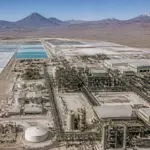
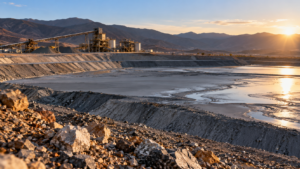
Proceeds will complete the AP-S-2 Duma Point well and cover working capital into the fourth quarter, the company said. Drilling is expected to wrap later this month. Green River sits about 20 miles northwest of Moab within the Paradox Basin. American Critical Minerals holds mineral leases, federal lithium-brine claims, and federal potash prospecting permits there across roughly 32,530 acres, with authorization to drill seven holes. The ground isn’t purely conceptual. An October 2025 NI 43-101 exploration target for the project put potash tonnage at 0.6 to 1.0 billion tonnes of sylvinite. A separate target covers lithium and bromine, defined from historical well data. The financing also coincided with a board change: director Simon Clarke resigned effective immediately, citing other opportunities, and will continue as an advisor.
A Paradox Basin Potash District With Company
American Critical Minerals is not exploring the Paradox Basin alone. Neometals, the ASX-listed battery-materials company, holds a 51% stake in Utah Brine Corporation. That adjacent project has outlined an exploration target of 94 to 325 million tonnes of muriate of potash and up to 6.5 million tonnes of lithium carbonate equivalent. Ascent Resources holds a gross smelter royalty over that project. Anson Resources, also ASX-listed, controls neighboring Green River and Paradox Basin lithium ground at a more advanced stage. That density of activity is one reason the USGS has described the Paradox as the only U.S. sedimentary basin carrying a super-basin classification for potash.
The Critical Minerals Policy Backdrop
The basin’s appeal has sharpened alongside federal policy. The Department of the Interior published its final 2025 List of Critical Minerals on November 6, 2025. The list added potash and phosphate along with eight other minerals, bringing the total to 60 designated critical minerals. USGS’s 2026 Mineral Commodity Summaries puts U.S. net import reliance for potash at 92%, with Canada supplying the large majority of those imports. Critical-minerals status can open access to federal loan and grant programs and streamlined permitting under FAST-41 — tools already used to accelerate lithium and rare-earth projects elsewhere. It’s worth noting that the Paradox Basin’s current activity predates the designation. Neometals, Anson, and American Critical Minerals were all advancing exploration work well before last November. The designation adds a policy tailwind to a district that was already drawing capital, rather than creating the interest from scratch.
More Read
What to Watch Next
Results from the AP-S-2 Duma Point well are the more immediate test. They’re expected this month, and the core and brine data will either confirm or complicate the October 2025 exploration target. Beyond that, a few basin-wide questions matter most. Can any of the active players convert exploration targets into defined NI 43-101 resources? Will direct lithium extraction and comparable potash-recovery methods prove economic at basin scale? And will critical-minerals federal support actually reach junior-stage companies, rather than concentrating among larger, better-capitalized developers?

For now, this remains a financing story with real basin context behind it — not yet a confirmed-resource story, and not yet a supply story in its own right.