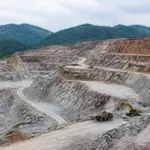
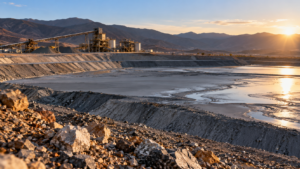
The Mt Lyell mining district on Tasmania’s rugged West Coast.

By Charles Pitts
Sibanye-Stillwater has approved the restart of the Mt Lyell copper-gold mine near Queenstown, Tasmania, clearing the way for construction to begin in the first half of 2027 and first production in early 2029.
The project will be Sibanye-Stillwater’s first copper operation and is expected to produce about 26,000 tonnes of copper, 16,000 ounces of gold and 116,000 ounces of silver a year once it reaches steady state. The company has outlined an initial mine life of 23 years and expects the operation to employ more than 300 employees and contractors.
The decision comes as the South African-based miner seeks to broaden its portfolio beyond platinum-group metals, gold and lithium. Sibanye’s headline earnings per share more than tripled to R6.01 in the six months to June 30, from R1.90 a year earlier, helped by stronger realised prices for precious metals.
More Read

Chief Executive Richard Stewart told Reuters that Mt Lyell met the company’s investment criteria because copper is a future-facing metal and the project is located in a jurisdiction where Sibanye already operates.

“That should be within certain jurisdictions where we operate, in certain metals that are future-facing,” Stewart said. “Copper is one of those metals.”
Mt Lyell restart: key project figures
| Metric | Current project basis |
|---|---|
| Planned construction and execution start | First half of 2027 |
| First production target | Early 2029 |
| Steady-state copper output | About 26,000 tonnes a year |
| Steady-state gold output | About 16,000 ounces a year |
| Steady-state silver output | About 116,000 ounces a year |
| Initial mine life | About 23 years |
| Total project capital | About US$340 million |
| Average all-in sustaining cost | About US$2.56 per pound of copper |
| Expected workforce | More than 300 employees and contractors |
| Mineral Resource | 79.4 million tonnes |
| Contained copper | About 1.61 billion pounds |
| Contained gold | About 500,000 ounces |
Source: Sibanye-Stillwater’s Mt Lyell project information and company reporting. Production figures represent expected steady-state levels, not initial ramp-up output.
Brownfield restart after more than a decade offline
Mt Lyell entered care and maintenance in 2014 after three workers died at the operation within a six-week period. Two workers were killed in a shaft accident in December 2013, followed by the death of another worker in a mud rush incident in January 2014. A rockfall also damaged underground infrastructure.
More Read

The mine was previously operated by Copper Mines of Tasmania before Sibanye-Stillwater acquired the asset in 2023. The company has since advanced feasibility and assurance work to assess whether the historic operation could be restarted using existing infrastructure and underground development.
Sibanye-Stillwater said the project received board approval in the third quarter after completion of an AACE Class 2 feasibility study and an internal assurance review. Technical, permitting and operational-readiness work will continue as the project moves into execution.
The company describes Mt Lyell as a brownfield development with existing mine access, underground workings, tailings infrastructure, logistics and other site facilities. That infrastructure is expected to reduce the upfront capital and execution complexity compared with a new greenfield copper mine, although significant refurbishment and construction will still be required.
The project’s Mineral Resource is estimated at 79.4 million tonnes, containing about 1.61 billion pounds of copper and 500,000 ounces of gold across several underground and open-pit deposits.
Capital program includes new processing facilities
Sibanye-Stillwater has put total project capital at approximately US$340 million, equivalent to about A$490 million. The company has also identified a maximum cash draw of approximately US$370 million, or around A$530 million.
The capital program is expected to fund a new processing plant, refurbishment of the existing shaft and upgrades to ventilation, power, water management and pumping systems. These activities will need to be coordinated with mine development and environmental controls across the site.
The Tasmanian government has said the restart would support more than A$490 million in investment in the state. It has provided A$9.5 million for early works and reconfirmed a further A$25 million support package to be delivered through payroll-tax and mining-royalty arrangements once operations resume, according to ABC News.
Sibanye-Stillwater expects to spend approximately A$11 million, or US$7.5 million, during 2026 as the project advances toward execution. Larger capital commitments are expected once engineering, procurement and construction activity begins.

Processing, power and water systems will require upgrades before production can begin.
The schedule places major construction and refurbishment work in 2027 and 2028, followed by commissioning and ramp-up ahead of the early-2029 production target. Equipment delivery, underground conditions, permitting, workforce availability and construction performance will remain key schedule risks.
Copper strategy expands Sibanye’s metals portfolio
Mt Lyell marks Sibanye-Stillwater’s first direct copper project as the company seeks exposure to metals used in electrification, power transmission, renewable energy infrastructure, electric vehicles and industrial equipment.
The project complements Sibanye’s investment in battery metals through the Keliber lithium project in Finland. That operation is intended to provide exposure to European lithium supply, while Mt Lyell would give the group a long-life copper asset in Australia.
Sibanye-Stillwater said Mt Lyell is aligned with its strategy of developing internal organic opportunities while maintaining disciplined capital allocation. The company also highlighted the project’s access to renewable hydropower, which is expected to reduce the carbon intensity of production.
The planned all-in sustaining cost is approximately US$2.56 per pound of copper, placing the operation in the company’s expected second quartile of the cost curve. The project’s post-tax net present value is estimated at about US$550 million, or A$790 million, using a 7.4% discount rate, with an expected post-tax internal rate of return of roughly 20%, according to the company’s project summary.
Those estimates remain sensitive to copper prices, construction costs, operating performance, recovery rates and the timing of the production ramp-up.
Earnings provide financial backdrop
Sibanye announced the Mt Lyell approval alongside its half-year results, which showed a sharp improvement in earnings as precious-metals prices strengthened.
Headline earnings per share rose to R6.01 for the six months ended June 30, from R1.90 in the same period of the previous year. The company declared an interim dividend of R2.01 per share, representing a total distribution of R5.7 billion.
Average realised prices for platinum-group metals increased by 67% in southern Africa and 70% in the United States, while gold prices were 35% higher during the period, according to Reuters reporting published by Mining Weekly.
The stronger earnings position gives context to Sibanye’s decision to advance a capital-intensive project, but the company said the approval was based on the project’s long-term strategic and financial characteristics rather than a short-term move in copper prices.
Jobs and regional impact
Mt Lyell was a central employer on Tasmania’s West Coast for more than a century, and its closure weakened economic activity in Queenstown and surrounding communities.
The planned restart is expected to create more than 300 direct jobs at steady state, in addition to work for contractors and suppliers during construction. Potential flow-on benefits include increased demand for engineering services, transport, accommodation, equipment maintenance, hospitality and other local businesses.
The project will also require a workforce capable of operating modern underground mining, processing, automation and environmental-management systems. Because the mine has been offline since 2014, the workforce is likely to include a mix of returning employees, newly trained workers and specialist contractors.
Tasmanian Resources Minister Felix Ellis said the state government had worked with Sibanye-Stillwater on regulatory arrangements, power supply, housing and other practical requirements associated with a restart.
The timing and scale of local economic benefits will depend on construction progress, procurement decisions and the speed of workforce recruitment.
Safety and environmental obligations remain central
The history of Mt Lyell means safety will be closely monitored as the project advances.
Sibanye-Stillwater has identified mud rushes as a major underground risk and plans to use increased automation, including tele-remote equipment, to remove workers from higher-risk areas near drawpoints.

Tele-remote mining equipment can reduce worker exposure near underground drawpoints.
Automation will not eliminate the need for ground control, ventilation, water management, maintenance, emergency response and rigorous operator training. The company’s ability to integrate modern technology with older underground infrastructure will be an important test during the restart.
Environmental management is another significant consideration. Historic mining activity has affected parts of the King and Queen river systems, where acidity and elevated metal concentrations have been documented.
Sibanye-Stillwater said it would remain responsible for environmental, rehabilitation and closure obligations arising from both the restart and future operations. The company is evaluating mine-water treatment and reuse, progressive rehabilitation and the engineered placement of potentially acid-forming material in suitable existing mine voids.
It also said the operation would remain within the existing and previously disturbed footprint, while access to renewable hydropower should help reduce operational emissions.

Mt Lyell is expected to restore a major industrial employer to Tasmania’s West Coast.
Next steps
The board approval gives Mt Lyell a defined path toward construction, but it is not the final milestone before production. The project must still move through detailed engineering, procurement, site preparation, infrastructure upgrades, underground development, workforce recruitment and commissioning.
For Sibanye-Stillwater, the restart offers a way to add copper production without acquiring a new asset or building an entirely greenfield operation. For Tasmania, it represents the potential return of a major employer and a long-standing source of regional economic activity.
The planned 26,000 tonnes of annual copper production would be modest compared with the world’s largest mines. Its significance lies in the combination of existing infrastructure, a defined resource, renewable power access and the opportunity to restore production in a mature mining jurisdiction.
The next test will be whether Sibanye-Stillwater can convert its investment approval into safe construction progress and reliable first metal in early 2029.
Sources: Sibanye-Stillwater; Mining.com.au; Mining Weekly; ABC News.