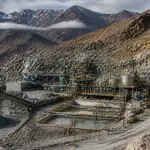
Morowali’s nickel processing infrastructure faces simultaneous ore, water and power risks as Indonesia tightens mining quotas.

Indonesia’s decision to limit 2026 nickel ore production to roughly 260–270 million wet metric tons (WMT) is reshaping the global nickel market. The quota is about one-third below the 379 million WMT target cited for 2025 and sits well below estimated domestic smelter requirements of approximately 340–350 million WMT.
That gap is forcing Indonesia’s processors to look offshore for feedstock, particularly to the Philippines. At the same time, dry weather linked to El Niño is creating a second supply risk at Morowali, one of the world’s most important nickel-processing hubs. Park authorities have warned that output could be reduced by 30% to 40% if water shortages persist.
The result is a market in which Indonesian production remains large, but no longer appears as operationally flexible as it did during the previous period of rapid supply growth. For class-one nickel and battery-related intermediates, the key question is whether lower ore availability, HPAL disruptions and weather risk can offset continued concerns about demand and global inventories.
Indonesia’s quota creates a structural ore shortfall
Indonesia dominates global nickel supply, accounting for around 60% of mine production by many industry estimates. Its integrated mining and smelting model has allowed the country to expand nickel pig iron (NPI), ferronickel, matte and mixed hydroxide precipitate (MHP) production rapidly.

The 2026 quota changes that operating equation.

| Metric | 2025 reference | 2026 outlook | Market implication |
|---|---|---|---|
| Indonesian nickel ore quota | 379 million WMT | 260–270 million WMT | Approximately one-third reduction |
| Estimated smelter ore requirement | : | 340–350 million WMT | Potential 70–90 million WMT shortfall |
| Philippine ore imports to Indonesia | About 15 million tonnes | 25–30 million tonnes, working estimate | Greater dependence on seaborne feedstock |
| Morowali output risk | : | 30%–40% potential reduction | Exposure to water and power constraints |
| Weda Bay 2026 quota | About 42 million WMT reference | About 12 million WMT | More than 70% reduction cited by market reports |
The quota is administered through Indonesia’s RKAB permitting system. While permits can be adjusted, government officials have signaled that broad increases are unlikely unless individual smelters face acute shortages.
The immediate operational effect is not necessarily a uniform nationwide shutdown. Smelters can draw on inventories, prioritize higher-margin products, reduce utilization or source imported ore. But the system has less room to maintain maximum run rates across every facility.

Reports cited by market participants indicate that RKEF utilization has already fallen from roughly 84% to 76%. That is consistent with a market in which ore availability, rather than installed furnace capacity, is becoming the binding constraint.

Ore stockpiles can smooth temporary shortages, but they cannot replace a sustained reduction in permitted mining volume.
Inventory is a timing buffer, not a permanent solution
Inventory conditions are central to the outlook, but publicly available market reports do not provide a consistent, current measure of total nickel ore stocks held at Indonesian mines, smelters, ports and industrial parks.
That makes the inventory question more operational than purely financial. The important issue is how long smelters can continue running before stockpiles are exhausted or replenishment becomes uneconomic.
If annual smelter demand is close to 340–350 million WMT and the approved quota remains near 260–270 million WMT, existing stocks would need to cover a substantial portion of the difference. Even a large stockpile would only shift the timing of curtailments unless additional ore is approved or imported.
This raises the risk of a front-loaded production pattern:
- Smelters maintain relatively strong utilization while inventories are available.
- Domestic ore prices and import demand increase as stockpiles decline.
- Plants with weaker feedstock access move into rotational maintenance.
- Production cuts become more visible later in the year, particularly if Philippine shipments weaken seasonally.
The market should therefore watch inventory drawdown at individual industrial parks rather than rely only on national production totals. A facility that has exhausted its allocation may reduce output even while another plant continues operating normally.
Philippine imports are rising, but supply is seasonal
Indonesia imported 11.4 million tonnes of nickel ore from the Philippines between January and July, according to Statistics Indonesia data reported by Reuters. The shipments were valued at approximately $696.5 million, compared with 6.82 million tonnes during the same period of the previous year.
That represents a year-on-year increase of roughly 67% for the seven-month period.
If the first-half pace continues, full-year imports could exceed 20 million tonnes. A working market estimate of 25–30 million tonnes is plausible if Indonesian domestic ore remains constrained, although the upper end remains an assumption rather than a confirmed government forecast.
The Philippines is becoming the marginal supplier for Indonesia’s smelters, but its production profile creates a difficult timing problem. Philippine nickel ore output typically rises during the drier second quarter and declines sharply during the second half as monsoon conditions affect mining and shipping. Industry commentary has described output falling by roughly half from the second quarter to the third quarter, with another substantial decline possible in the fourth quarter.
This means Indonesia may need the most imported ore just as Philippine availability begins to weaken.
A cooperation agreement between Indonesian and Philippine nickel industry groups could support more structured trade flows, but it does not remove weather, port or mine-level risks. Nor does it guarantee that sufficient ore will be available during the wet season.

Rising Philippine shipments provide flexibility for Indonesian smelters, but monsoon seasonality remains a major constraint.
Morowali adds water and power risk
Morowali’s importance extends beyond conventional NPI production. The industrial park hosts RKEF facilities as well as high-pressure acid leach (HPAL) plants that produce MHP and other intermediates used in battery-material supply chains.
According to Argus reporting, dry weather and weaker river flows are threatening operations at the park. HPAL plants are particularly water-intensive, with consumption estimated at approximately 200–400 cubic meters of water for every tonne of nickel produced.
RKEF plants use less water but remain exposed to electricity and logistics disruptions. Low water levels can affect hydropower generation and the movement of coal used by captive power plants.
Morowali officials have warned that production could be cut by 30% to 40% if alternative water sources are not secured. That should be treated as a risk scenario, not a confirmed realized reduction across the entire park. However, the threat is significant because it would compound the national ore quota cuts.
Indonesia’s Energy and Mineral Resources Ministry has said it will monitor power supplies to smelter regions. Mysteel reported that reduced rainfall could affect facilities dependent on hydroelectric power, with a South Sulawesi smelter already experiencing reduced output and planning a temporary furlough of workers.

HPAL plants require substantial water and stable power, increasing their exposure to prolonged dry conditions.
What the tightening means for class-one nickel
The impact on class-one nickel is not one-for-one. Indonesian NPI is generally considered class-two nickel, while class-one nickel refers to high-purity material suitable for applications such as nickel sulfate, cathode production and specialty alloys.
However, Indonesia’s production mix matters because:
- Lower ore availability limits NPI and matte output.
- HPAL disruptions reduce MHP availability for conversion into battery-grade chemicals.
- Higher feedstock costs can weaken the economics of marginal nickel units.
- Reduced Indonesian supply narrows the surplus that has weighed on refined nickel prices.
- Stronger demand for class-one units may emerge if battery producers compete for fewer intermediates.
HPAL material is not itself the same as class-one refined nickel, but it is an important feedstock pathway. If Morowali’s HPAL plants face water-related curtailments while Indonesian ore quotas remain tight, the battery-grade supply chain could experience greater stress than the stainless-steel market alone would suggest.
At the same time, class-one nickel demand remains sensitive to electric-vehicle sales, stainless-steel production, substitution and battery chemistry. Supply constraints do not automatically create a sustained deficit if demand weakens or if other producers increase output.
Bull, base and bear cases
| Scenario | Core assumptions | Likely market effect | Class-one nickel implication |
|---|---|---|---|
| Bull | Quota remains near 260–270 million WMT; Morowali cuts 30%–40%; Philippine shipments weaken during the monsoon; HPAL outages persist | Sharp tightening and higher volatility | Stronger competition for MHP and refined nickel; inventory drawdown risk increases |
| Base | Quota remains tight but selected revisions occur; Philippine imports reach 25–30 million tonnes; Morowali manages partial operating reductions | Tight but supplied market with periodic price spikes | Class-one premiums and conversion economics improve, but no sustained shortage is guaranteed |
| Bear | Indonesia raises quotas materially; Philippine shipments outperform; drought eases; demand remains soft | Surplus returns and Indonesian output recovers | Class-one nickel remains under pressure as NPI and intermediate supply expand |
The base case is a constrained but functioning Indonesian supply chain. Imports from the Philippines prevent an immediate collapse in smelter utilization, while inventories provide a short-term buffer. The greatest tightening risk arrives when domestic stocks are low, Philippine ore is seasonally scarce and Morowali’s water or power restrictions become operational.
Indicators for operators and investors
The most useful indicators to monitor through the remainder of the year are:
- Actual RKAB approvals and any mid-year quota revisions.
- Ore stock levels and utilization at Morowali and other major industrial parks.
- Monthly Philippine exports to Indonesia.
- River levels, hydropower output and coal-barging conditions in Sulawesi and Kalimantan.
- HPAL operating rates and MHP availability.
- LME warehouse stocks and regional off-exchange inventories.
- Nickel sulfate, MHP and NPI spreads rather than the headline nickel price alone.
The Skillings battery metals coverage provides broader context on how supply-chain constraints are affecting energy-transition commodities. Readers tracking regional policy risk can also review Skillings’ analysis of Philippines critical minerals policy.
Indonesia’s quota policy has introduced a meaningful supply constraint, but the market’s direction will depend on the interaction between regulation, inventories, imports and weather. For class-one nickel, the most important development is not simply a lower mining target. It is the possibility that several vulnerabilities: ore shortages, Philippine seasonality, Morowali water stress and HPAL disruptions: occur at the same time.
Distribution snippets
LinkedIn:
Indonesia’s 2026 nickel quota of 260–270 million WMT is well below estimated smelter demand. Rising Philippine imports may close part of the gap, but Morowali’s potential 30%–40% output reduction and El Niño-related water risks leave class-one nickel exposed to tighter feedstock conditions. Read the full bull/base/bear outlook.
X:
Indonesia’s nickel market is facing a three-part test: tighter 2026 ore quotas, rising but seasonal Philippine imports, and potential 30%–40% Morowali output cuts linked to El Niño. The result could be a tighter, more volatile class-one nickel market.
Sources
- Reuters via Kitco: Indonesia nickel ore imports from the Philippines rise to 11.4 million tonnes
- Argus: Dry weather threatens Indonesian nickel production
- Mysteel: El Niño impacts nickel smelter power supply
- Reuters: Eramet says Indonesia nickel permit volume was slashed
- Reuters: Nickel market plays Indonesia’s numbers game