By Penny Langford

The lithium market is moving toward a more fragile balance as mine closures, delayed project ramps and export restrictions remove supply that producers once expected to deliver. A cumulative 500,000 tonnes of hard-rock concentrate has become a useful milestone for measuring that disruption.
The figure needs careful interpretation. It does not represent one confirmed shutdown, nor does it mean 500,000 tonnes of lithium carbonate equivalent (LCE). Instead, it describes an aggregate volume of spodumene concentrate that may have been removed, delayed or placed at risk against earlier operating and project plans across 2025 and 2026.
That distinction matters for operators, battery manufacturers and investors. Depending on grade and recovery rates, 500,000 tonnes of concentrate converts into a substantially smaller quantity of LCE. Even so, the potential loss is material in a seaborne market that relies heavily on Australian and African hard-rock supply.
The central question is whether these curtailments will be enough to move lithium from a narrowing surplus into a sustained deficit.

What the 500,000-tonne milestone measures
Public data do not identify a single independently verified 500,000-tonne cut confined to hard-rock mines. The milestone is better understood as a cumulative supply-risk scenario that combines:

- Production cuts at higher-cost Australian hard-rock operations
- Delayed or slower project ramp-ups
- Chinese mine suspensions and permitting disruptions
- Zimbabwe’s restrictions on raw-mineral and concentrate exports
- Announced capacity that may not return quickly when prices recover
Consultancy CRU has estimated that announced mine cuts and postponed projects reduced expected global lithium mine output by about 228,000 tonnes in 2025 compared with earlier plans. That broader figure should not be added directly to the 500,000-tonne hard-rock estimate. The two measures use different scopes and supply categories.
The more useful conclusion is that lithium supply has become less responsive. Capacity remains on company plans and geological models, but not all of it is producing at commercial rates.


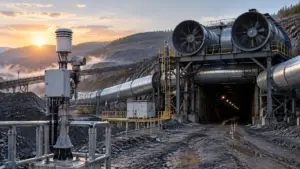
Hard-rock lithium supply is increasingly divided between low-cost producers and operations vulnerable to curtailment.
Mine closures are changing the supply curve
The Australian closure cycle illustrates the economics behind the shift.
Bald Hill was placed into care and maintenance after operating costs remained too high. Pilbara Minerals suspended the Ngungaju processing plant, while Mt Cattlin also halted operations during the downturn. At Kathleen Valley, the issue has been a slower ramp-up rather than a permanent closure.
Other producers have moved in the opposite direction. Mineral Resources increased guidance for Wodgina and Mt Marion, showing why the market cannot be assessed simply by counting mine closures. When prices recover, lower-cost producers can increase output or defend margins, while marginal operations may require a much higher price before restarting.
This creates a two-tier supply curve:
| Supply category | Operating response | Market implication |
|---|---|---|
| Low-cost hard-rock mines | Maintain or expand output through weaker prices | Cap upside when spare capacity is available |
| Mid-cost operations | Reduce output, defer expansions or operate selectively | Return only when margins improve |
| High-cost or technically constrained mines | Enter care and maintenance | Remove flexible supply from the market |
| New projects | Delay ramp-ups or construction decisions | Extend the period before new tonnes arrive |
The effect is important for price forecasting. A mine does not need to be permanently closed to tighten the market. A delayed restart or lower utilization rate can remove nearby supply during a period when converters and battery producers need certainty.
China adds permitting risk
China’s lithium market is facing a separate disruption linked to environmental approvals and mine classifications.
CATL’s Jianxiawo operation in Jiangxi has become a focal point. Benchmark Mineral Intelligence reduced its forecast for the mine’s 2026 output to 32,000 tonnes LCE from 62,500 tonnes, removing approximately 30,500 tonnes LCE from the earlier expectation.
The revised estimate does not mean the mine’s full nameplate capacity has disappeared. Jianxiawo has been associated with annual capacity of roughly 150,000 tonnes LCE. Rather, the lower forecast reflects the risk that environmental approvals could delay sustained commercial production.
The operation previously secured a safety production permit, but remained closed pending environmental approval. Its mineral designation also changed from ceramic clay containing lithium to lithium ore, requiring a new environmental impact assessment.
That sequence has turned permitting into a major supply variable. Maintenance activity or limited site work does not necessarily indicate a commercial restart. Market participants will need evidence of sustained ore movement, crushing and feed into the conversion chain.
A prolonged suspension would have an impact beyond the mine’s global percentage share. Jianxiawo is connected to China’s domestic carbonate network, meaning a local feedstock shortage can influence converter procurement, regional inventories and spot-market expectations.
The broader risk is that other lepidolite mines in Jiangxi face similar reviews. The outcome may not be a province-wide shutdown, but longer approval timelines, lower utilization rates and higher compliance costs could still reduce supply.

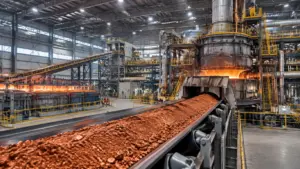
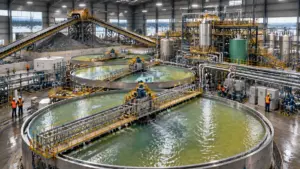
Processing capacity and permitting timelines determine how quickly mine supply reaches battery-grade chemicals.
Zimbabwe reinforces the policy risk
Zimbabwe has introduced another layer of uncertainty by restricting exports of raw minerals and lithium concentrates and moving toward a quota framework linked to domestic processing.
The country became an important supplier of spodumene concentrate to Chinese converters. A temporary export interruption therefore affects more than shipment volumes: it also changes inventory planning, shipping schedules and the availability of feedstock for conversion plants.
Zimbabwe’s policy reflects a wider trend among producing countries. Governments are seeking to capture more value domestically by encouraging refining and chemical production rather than exporting untreated material. For miners, that can create new investment opportunities, but it can also introduce higher compliance costs and delays before product reaches international buyers.
For the global market, the risk is cumulative. A disrupted shipment from Zimbabwe, a delayed restart in Australia and slower output in Jiangxi may each appear manageable in isolation. Together, they can remove the surplus that has kept prices under pressure.
Demand is broadening beyond electric vehicles
Electric vehicles remain the largest structural source of lithium demand, but stationary energy storage is becoming a more important swing factor.
Grid-scale battery deployment is expanding as utilities manage renewable intermittency, transmission constraints and rising electricity demand from data centers. Storage also supports lithium carbonate demand because lithium iron phosphate batteries, widely used in stationary applications, rely on carbonate rather than hydroxide.

Lithium demand is increasingly tied to both electric vehicles and utility-scale energy storage.
This does not guarantee a deficit. Higher lithium prices can encourage battery makers to reduce inventories, delay purchases or alter chemistry where technically possible. But it does mean that demand is no longer determined solely by monthly passenger EV sales.
The market can tighten in stages. Converter inventories may fall before shortages appear in finished batteries, while buyers may begin rebuilding raw-material stocks ahead of expected policy or supply disruptions.
Base, bull and bear cases
The 500,000-tonne milestone is most useful as a framework for testing market outcomes rather than as a fixed price signal.
| Scenario | Supply assumption | Market balance | Operational implication |
|---|---|---|---|
| Bear case | Idled Australian mines restart, Chinese approvals improve and new projects ramp on schedule | Surplus remains above 100,000 tonnes LCE | Prices stay under pressure and marginal mines remain uneconomic |
| Base case | Supply returns selectively while some closures and delays persist | Market approaches balance or develops a modest deficit | Low-cost producers gain share; buyers compete for reliable feedstock |
| Bull case | Hard-rock curtailments persist, Zimbabwean restrictions disrupt shipments and Jiangxi approvals remain delayed | Deficit develops as inventories decline | Higher prices improve restart economics but increase battery-cost pressure |
Published forecasts reflect this uncertainty. S&P Global has projected 2026 lithium chemical consumption of about 1.48 million tonnes LCE, with supply near 1.58 million tonnes, implying a surplus of roughly 100,000 tonnes. Fastmarkets has taken a tighter view, pointing to a potential small deficit, while other market forecasters continue to expect surplus if restarts occur quickly.
The difference is largely about timing. If supply returns before inventories are depleted, the market may remain oversupplied. If delays persist while storage demand accelerates, even a modest disruption can have an outsized effect on prices.
What investors and operators should monitor
The most important indicators are operational and administrative rather than headline price movements:
- Restart decisions at Bald Hill, Mt Cattlin and other idled operations.
- Actual concentrate shipments from Zimbabwe under the new quota framework.
- Environmental approval milestones at Jianxiawo and neighboring Jiangxi mines.
- Evidence of sustained ore movement, crushing and stockpile growth.
- Chinese carbonate and converter inventories as a measure of physical tightness.
- Energy-storage deployment in China, the United States and Europe.
- Conversion margins for lithium carbonate and hydroxide.
Investors should also distinguish between announced capacity and available supply. A project under construction, a mine awaiting permits and a qualified producer shipping product to customers are not equivalent assets.
For operators, the lesson is similar. Cost position, permitting certainty, conversion access and logistics may matter more than resource size alone. A project with reliable downstream access can remain commercially relevant even in a volatile market, while a technically sound mine without approvals or conversion capacity may struggle to deliver.
Conclusion
The 500,000-tonne milestone should not be read as proof that the lithium market has lost 500,000 tonnes of LCE. It is a measure of cumulative hard-rock concentrate that may be removed, delayed or placed at risk against earlier plans.
That distinction does not make the disruption insignificant. It shows how lithium supply is becoming more dependent on timing, permitting and operating costs. If lower-cost producers restart quickly, the market could remain in surplus. If curtailments persist while energy-storage demand grows, the same supply gap could help push the market into deficit.
The key question is no longer whether lithium capacity exists on paper. It is whether that capacity can produce, receive approvals and deliver material when battery manufacturers need it.
LinkedIn snippet
Lithium’s supply outlook is being reshaped by a cumulative hard-rock disruption that could approach 500,000 tonnes of concentrate against earlier plans. The figure is not one confirmed shutdown or 500,000 tonnes of LCE. It captures mine closures, delayed ramps and export restrictions across Australia, China and Zimbabwe. Our analysis examines the operational risks and base, bull and bear cases for the market.
X snippet
Lithium’s 500,000-tonne milestone refers to hard-rock concentrate at risk against earlier plans: not 500,000 tonnes of LCE. Mine closures, delayed ramps, China’s permitting reviews and Zimbabwe’s export restrictions are tightening a market that could move from surplus toward deficit.